
Op/Ed
Editorial: 12% is shocking, but don’t let the number fool you
One problem with numbers is they can skew a story as much as enlighten it. Consider the headlines this week on rising property taxes, which, headlines shouted, are projected to jump 12%.
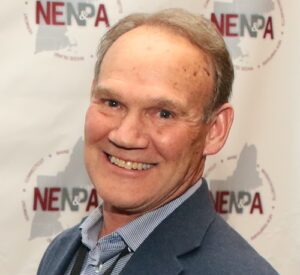
ANGELO LYNN
The figure came from the state’s Tax Department in its infamous “Dec. 1 letter” released Monday. Headlines around the state focused on the shock factor, and rightly so. A 12% hike in taxes is something no one wants and poses significant problems to many property owners.
True to form, the Scott administration jumped on the number to emphasize what they’ve been supporting for the past year — consolidation — regardless of information developed by the Legislative Task Force formed under Act 73 that found consolidation itself isn’t likely to reduce much cost.
Nonetheless, Saunders and Scott were at it again, championing consolidation of districts as the only way forward and suggesting, again, that not only had the Task Force “failed” to follow that assumption, but that the 12% projected tax hikes reinforced their bias.
Even Senate President Pro Tempore Philip Baruth and House Speaker Jill Knowinski, both progressive Democrats, said the projective tax rate was alarming, while steering clear of any specific solution.
But let’s examine that 12% figure.
First, just half of the projected increase is due to anticipated increases in higher school budgets in the 2026-2027 school year. The other half of the increase comes from not allocating about $100 million used last year to reduce the tax rate — a common step the legislature has taken for the past several years. Second, the projected tax increase announced in the Dec. 1 letter has historically been higher than the average tax bill ultimately passed. That’s because the legislature often uses one-time funds to reduce the rate, and school districts reduce their early budget proposals to meet voters’ concerns.
Still, of the almost 6% increase over the prior year due to education expenses, lawmakers and voters should look most closely at the cause of the increase. The Task Force presented a list of the Top 5 fastest-growing educational costs — healthcare, construction/maintenance of facilities, support services, duplication/privatization, and agency capacity challenges — and found that consolidating districts did not address those main cost drivers.
Put aside the 12% shock factor for the moment, and remember what the Task Force did say in what was a well-considered 170-page report. In short, after four months of deliberation, the 11 members of the task force rejected Act 73’s notion of forced consolidations and recommended financial incentives that encouraged districts and schools to merge voluntarily.
Their thinking is insightful.
According to a lengthy story of the Task Force’s deliberations after its Nov. 10 meeting, the Mountain Times reported a few of the members’ comments at length. Here’s a snippet:
“No one thinks mergers are going to save money,” former Education Secretary and now state Rep. Rebecca Holcombe said. “The savings are coming from the new funding formula, which is going to force pretty significant cuts in some regions.”
The foundation formula, the Times explained, will make tax rates equal across the state and give schools an allocation of funds based on weighted factors. It would be a top-down approach that severely limits local control.
“This bill (Act 73) really called for redistricting to support a new funding formula,” Rep. Holcombe told the Times. “The plan to lower spending is to cap at the state level what districts are allowed to spend…The foundation plan was outside our purview, but the conversation at the Task Force did raise some questions that need to be addressed before implementation of a foundation plan.”
The Task Force also heavily favored the idea of shared services through Regional Cooperative Education Service Areas (CESAs, aka BOCES). A map that outlined five service areas would not mandate governance changes but would rather create partnerships of existing supervisory unions and districts to improve buying power and share resources.
According to the Time’s story, Mountain Views Supervisory Union (MVSU) Superintendent Sherry Sousa told her board the CESAs plan was the only one put forward that would save taxpayers’ money — and could be implemented almost immediately.
“Of all the proposals, this is the one that allows for the creativity to combine school districts,” Sousa wrote in a letter to district parents. “The underlying potential consolidation beneath the BOCES structures would be voluntary and based heavily on research and local context.”
Task Force members also were concerned that any map that forced mergers on school districts would do more harm than good.
“My reason for voting no (on the CTE map — an earlier map based on the state’s Career and Technical Education centers) is the forced merger aspect,” explained task force member Dr. Jay Badams. “I think we’re going down the wrong path if we force mergers…All of this is not to say that we don’t need big changes. But at the outset, it’s time for a deep breath before we do damage that’s going to be really, really hard to undo… Looking at targeted voluntary mergers is a step in that direction. Admittedly, it doesn’t get us anywhere near what was envisioned in Act 73, but it at least sets the stage for real collaboration.”
Badams added that “based on all the research I did looking at other states that are performing higher and costing less money to educate their kids, they reach scale through much larger service-providing areas” — similar to what the Task Force endorsed.
Representative Edye Graning, Task Force co-chair, agreed with Badams. “I don’t see the benefit of a CTE map going forward, and I think it actually will distract from making things better in the state,” she said. “I just don’t see how these larger districts are going to improve things statewide.”
Such reason, nonetheless, can pale against the stark simplicity of a number that screams doom. Hopefully, voters and legislators will get beyond today’s headlines and work through the more complex reasons that demonstrate cost savings can be secured in more ways than one.
Angelo Lynn
More News
Op/Ed
H.955 vs Gov. Scott’s veto?
After 10 years of Scott’s rule as governor, the state is worse off on the major issues: he … (read more)
Op/Ed
A lose-lose for Trump
Trump supporters must stop rationalizing his outrageous conduct as a wily negotiating tact … (read more)
Op/Ed

Legislative Report: We’re balancing land-use and housing priorities
Legislative Report by Sen. Ruth Hardy, D-Middlebury