
Op/Ed
From the Amazon to Addison: Conservation happens when regular people act
Hello, Addison County readers! I’m thrilled to write my first monthly feature on conservation for the Addison Independent. As the new executive director of the Middlebury Area Land Trust (MALT), I am honored to join this community that cares deeply about its landscape, wildlife, farms, rivers, and forests.
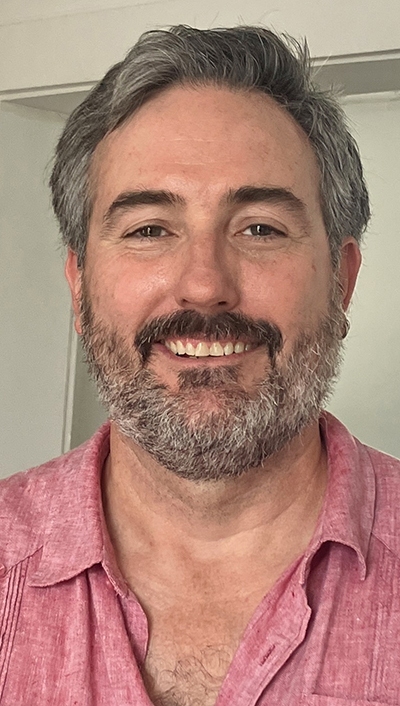
Kevin Fox
For the past 16 years, I served as a Commissioned Foreign Service Officer with the U.S. Agency for International Development (USAID). My career took me to the Caribbean, the Middle East, Sub-Saharan Africa and, most recently, to South America, where I directed USAID’s Amazon Regional Environment Program.
Through this monthly feature, I will explore conservation topics that connect our daily lives in Vermont to regional and global challenges. We’ll discuss how to confront invasive species in the Otter Creek watershed, what Vermont’s environmental policy means for Addison County, the ways wildlife are interconnected, what each of us can do to be trail stewards, and how federal funding changes affect us here in the Green Mountains. I also invite you to reach out and tell me about the topics on your mind. Your questions and curiosities can help shape the future of this column.
Community-based conservation: a common thread
I was drawn to MALT for its strong tradition of community-based conservation. At its core, conservation is about people as much as it is about land and nature. MALT’s work over the past 38 years — conserving over 3,500 acres of land, farms, forests and wetlands; our annual summer and after-school environmental camps for youth; and providing year-round outdoor recreation opportunities through our 30 mile Trail Around Middlebury (TAM) biking and hiking trails — demonstrates how powerful it can be when a community rallies around the places it loves.
This model of conservation is deeply familiar to me. While working in the Amazon basin, I saw how critical it was to partner with local and Indigenous communities to protect forests and rivers. The Amazon is vast — covering eight countries and home to one out of every 10 known species on Earth. But despite its immensity, this mighty forest’s fate ultimately hinges on the decisions and rights of the people who live there.
A Lesson from the Amazon
I’d like to share a story from my time in South America that reminds me why community-centered conservation matters everywhere, including here in Vermont.
In 2023, I traveled to a remote area along the Napo River in the Ecuadorian Amazon. The Napo is a major tributary of the Amazon River, running through dense rainforest rich in wildlife, medicinal plants and cultural heritage. Our U.S. Embassy team was meeting with an Indigenous federation representing dozens of communities along the river. They were alarmed by a new illegal gold mining operation that had moved upstream.
When we arrived by boat, the problem was immediately visible. Areas of the riverbank were deforested and scarred with piles of rock and sand. The water, usually dark with tannins, was now clouded with milky brown sediment, certainly poisoned with toxic mercury. These encroachments threatened community lands where children swam, drinking water was drawn, and fishermen unloaded their catch. One elder told me quietly, “The river is life. If the river dies, we die too.”
His words struck me. Illegal mining not only pollutes rivers, but destroys forests, drives away wildlife, and fuels organized crime and even human trafficking. But what was most striking was — despite the odds — how this small, but mighty community then organized to defend their river. With support through local NGOs, they created river monitoring committees, mapped illegal mining sites with drones, and negotiated with government officials to increase enforcement and invest in alternative livelihoods like sustainable fisheries and agroforestry.
Their scrappy determination in the face of adversity reminded me that real conservation happens when local people have the tools, rights and voice to protect the places they depend on. The community recognized the value of nature and it is not about outsiders imposing rules; it is about working alongside communities to empower their stewardship.
Connecting Global and Local
You might ask, what does illegal mining in the Amazon have to do with conservation in Vermont? Everything, in a way. Both here and there, conservation is rooted in relationships — our relationship to the land, to each other, and to future generations. Whether defending a river from toxic pollution in Ecuador or protecting a meadow from invasive species in Cornwall, the principle is the same: local action sustains healthy ecosystems and strong communities.
At MALT, we continue to deepen these relationships — partnering with farmers to preserve nature through conservation easements, with trail users to maintain public access, with schools to connect children to the outdoors, and with community stakeholders to increase flood resiliency. This shared conservation partnership is what makes MALT and our Addison County community special.
In the coming months, I hope this column will be a space to learn together, celebrate conservation successes and confront challenges honestly. I welcome your suggestions on topics you care about, questions you have, or stories you would like to share.
Please reach out to me at [email protected] or stop by our office in the historic Marble Works. I am eager to meet you, hike the TAM together, and listen to your hopes for the land we call home.
Conservation may begin with protecting forests, rivers or wildlife, but ultimately, it is about sustaining the communities that depend on them. Thank you for welcoming me to Addison County. I look forward to exploring our shared conservation journey with you each month.
More News
Op/Ed
Editorial: Gov. Scott’s one-sided story
Last year, Phil Scott took the lead on education reform and he spent his address on Wednes … (read more)
Op/Ed
Schools, housing, healthcare are Legislature’s top priorities
“I want to give folks an update on what might be on the legislative agenda, as well as sha … (read more)
Op/Ed
Ways of Seeing: Age doesn’t define us
“I’d had it with hearing about yet one more thing anyone over 40 can’t, shouldn’t, or won’ … (read more)