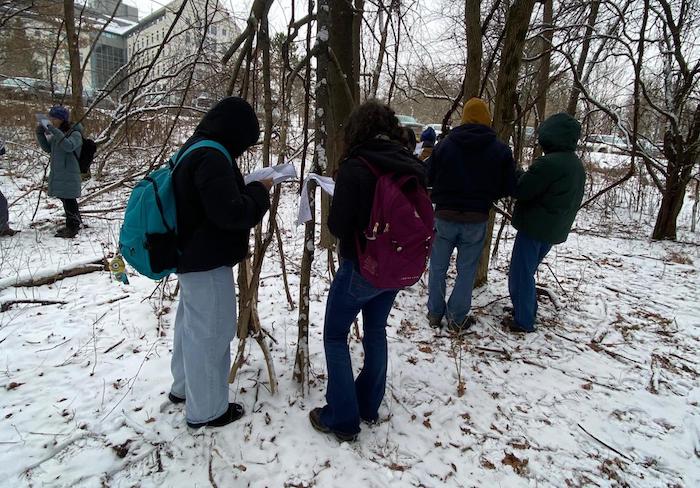
MIDDLEBURY — A new year is well underway, and with it, another winter term at Middlebury College.
The college’s winter term — often called J-term as it takes place in January — offers students and instructors an opportunity to dive deeply into one class over the course of four weeks. Visiting instructors and Middlebury College alums join college faculty in offering a variety of courses on topics ranging from staging a musical to building the Japanese teahouse.
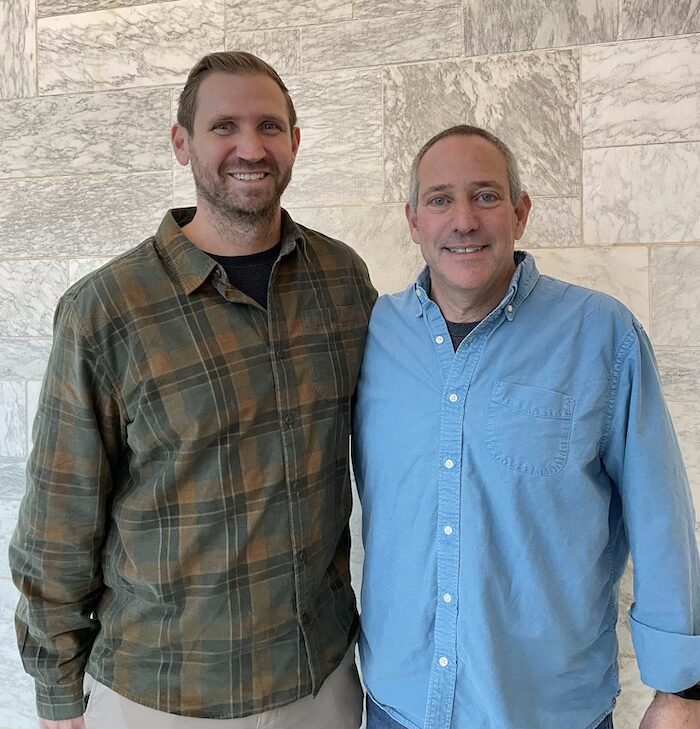
This January marks the third that Middlebury College Head Baseball Coach Mike Leonard and alum Scott Langerman ’87 have teamed up to offer a class on “Sports & Society: How Sports Transcend Their Sidelines.”
“The one thing that Scott and I feel really strongly about as a learning goal for this class is, ‘Can students think more critically about something that maybe they just observed at face value,’” Leonard said. “Our goal at the end is that students look at sports in a more complex way, in a more critical way.”
Reflecting on the origins of the course, Leonard and Langerman said they saw a lack of courses on sports and the impacts sports have on society. They knew there was a strong interest in sports at the college and had both seen first-hand how lessons learned through sports extended far beyond the fields and courts they unfolded on.
Langerman has over 25 years of experience in the sports and entertainment industries, including serving as founder and CEO of ACE Media, the content arm of the NFL Players Association. Before taking over the reins of the college’s baseball program in 2016, Leonard played baseball at the University of Connecticut and spent time in the Boston Red Sox system.
Independent photo/Marin Howell
My identity is very much wrapped up into sports, both as an athlete and now as a coach,” Leonard said. “Where I have evolved and grown is thinking about the ways in which sport impacts so many things, and it’s a very liberal arts subject to look at the world through because we’re looking at business, we’re looking at social impact, we’re looking at transferable skills like leadership and communication and resilience.”
Langerman noted the goal is for the course to follow a narrative throughout the month, with students exploring a different theme each week. For example, looking at the personal impact, economics of and social impact of sports.
Students also get to connect with professionals working in various parts of the sports industry. Leonard and Langerman both share their stories with students, who also hear from current coaches at Middlebury, college alums working in areas like professional baseball, and a variety of other guests speakers.
“A lot of people say, ‘Oh, I want to go work in sports,’ but they don’t really know what that means or the breadth of opportunities that might be available,” Langerman said. “Part of what we try to do is touch as many aspects of the sports industry as we can, so those people who are still trying to figure out what they want to do with the rest of their life, or if they’ve said they really want to work in sports, hopefully we open a few more eyes on what that means.”
Students complete weekly journal entries and work in small teams to put together presentations throughout the course. Leonard pointed to the different topics those presentations center around, such as ideas students have for changing sports or pitching a docuseries or reality show.
In addition to helping students look at sports through a more critical lens, Langerman and Leonard are also hoping the course allows pupils to build relationships.
“The class dynamic is important in relationship building,” Langerman said. “I’m really pleased this year, we’ve got a diversity of sports, of ages, we have of nonathletes, we have athletes, which I think is really important. I think it’s really important for a freshman and a senior to get to know each other, and they’ll both bring different things to each other.”
ENDANGERED FOOD
Alexa Duchesneau is in her second year of teaching a winter term course on “Endangered Food.” Duchesneau is an Anthropology Ph.D. candidate at Yale University, studying the nutritional ecology of monkeys.
“My research is trying to figure out what the nutritional requirements of monkeys are,” she said. “I’m trying to figure out if what individuals eat throughout their lifetime influences their lifespan, how many kids they can have, other fitness metrics, and if what they’ve eaten throughout their lifetime makes them more or less resilient to climate disasters, specifically drought.”
She noted that a lot of the framing of her research is centered around the human diet, which is how she became interested in how the human diet has changed and what new dietary changes mean for humans’ health and fitness.
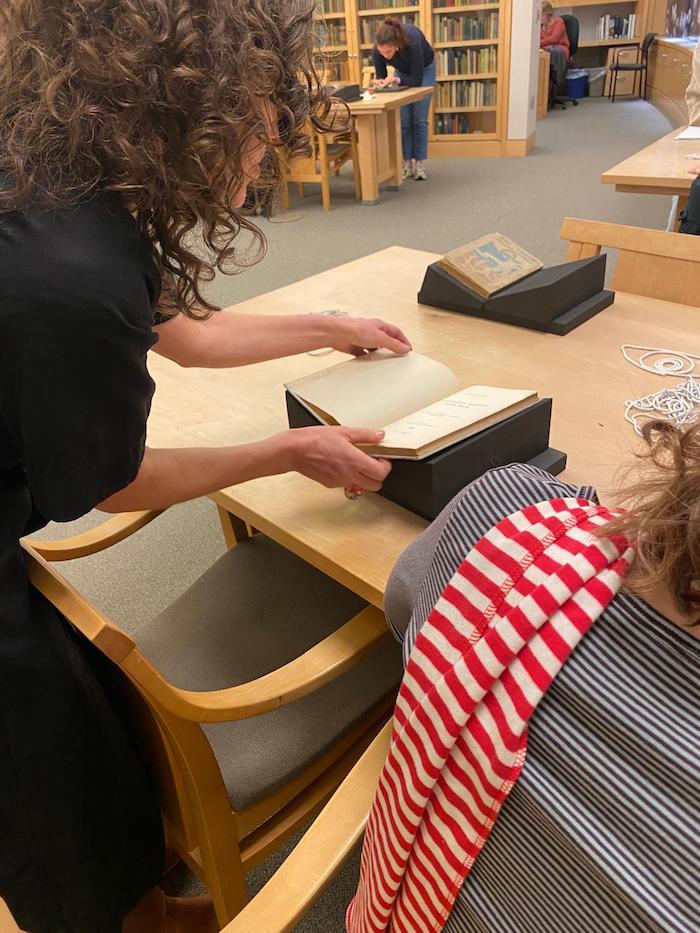
Photo courtesy of Alexa Duchesneau
Duchesneau’s class looks at the evolution of the human diet with a focus on specific foods, “following their trajectory from our first archeological record to how they’ve transformed to what we’re eating today,” she said.
Throughout the course, students explore what diets have looked like during different time periods, study historical cookbooks in the college’s Special Collections, and heard from naturalists and farmers working to bring back “diverse and wild food systems.”
For example, students have learned about restoration efforts focused on the American chestnut, a tree that was common in eastern U.S. forests until a blight wiped out millions of American chestnut trees in the 1900s. Students also visit local farms, such as Middlebury’s Werner Tree Farm and Champlain Orchards in Shoreham.
Students’ final project focuses on a native foodway, a term that refers to the diet and culinary practices of a specific group, region and/or time period. Diving into various foods through the final project has been a favorite part of the course for students, and one that Duchesneau enjoys as well. She said past projects have explored foods like cider jelly, ancient beer and birch syrup.
“A variety of things,” Duchesneau summed up.
DEVELOPING DEATH LITERACY
This January, Francesca Arnoldy is teaching a new course on “Developing Death Literacy,” something she said she’s seen more community members engaging with throughout her career as a community doula and educator. Through her work, Arnoldy supports individuals through birth, death and grief. She is also the author of several books on death literacy and loss.
“The pandemic shifted many people’s perceptions. It felt like a reckoning,” Arnoldy said. “Death came close, and loss was everywhere — from mourning those who had died to grieving life as we had known it. Those of us in deathcare recognized it as a call to action.”
Students in Arnoldy’s course have identified their own care webs, addressed death in letter form and reviewed explanations of death literacy, “and the importance of increasing awareness as individuals and as a society,” Arnoldy said. Pupils have also discussed the natural process of dying with support from experts, including local guest speaker Dr. Diana Barnard.
“Each student is currently completing a comprehensive ‘Resource Directory’ focused on a town or city of their choosing that includes services related to end-of-life care,” Arnoldy added. “They’ll be offering the finished file to organizations that might find it beneficial.”
Students have also been exploring the power of storytelling as a tool, beginning by setting expectations for talking about death respectfully.
“We consider how our words might land. When details have been heavy for us to carry, we can assume they might be for others as well, so we look for thoughtful ways of safely explaining. And we find the line between what is personal and what is private to avoid over-sharing and feeling too vulnerable,” Arnoldy explained. “Storytelling is an ancient form of passing down wisdom, though, and we’re built for it. Real-life stories help us connect with complex concepts. The process enables us to humanize death and grief, which is the ultimate goal.”
Those lessons and other coursework prepare students for the culmination of the class — a “Death Literacy Story Share” event, where students will share a story about a personal loss.
“It doesn’t need to be about a death but will include an ending that held significance,” Arnoldy explained. “They’ll be weaving some of what they’ve learned about death and grief literacy into their narrative. It’s a brave, generous act, and I’m so proud of their efforts.”
The event will be open to a small audience, with pupils receiving two tickets to give to college faculty, staff or fellow students.
Arnoldy said her hope is that students in the course will leave “a small space in their living for the reality of loss — that it will quietly, gently encourage them to be present and engaged throughout their days.
“I also hope they now have more language and understanding to be able to navigate endings, both for themselves and others,” she continued. “Lastly, I hope that as their knowledge has increased, their fear has somewhat decreased, but that they allow their relationship with death to be naturally complicated and ever-changing.”