
Op/Ed
Editorial: A resolution worth making
As 2026 beckons, the sense of renewal and rejuvenation, of starting with a fresh slate, has a strong cultural pull. In Vermont, that yearning to improve the common good is likely to be focused on familiar themes: creating more affordable housing, working to create a cost-effective educational system that preserves Vermont’s rural character, and figuring out a health care system that doesn’t bankrupt the state and each other.
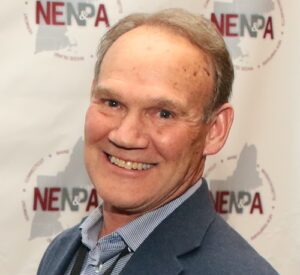
ANGELO LYNN
The hope going into the upcoming legislative session is Gov. Phil Scott will work with the legislature to reach a better place.
On housing, there are signs of progress. On education, there’s movement but also partisan finger pointing that hinders progress. Don’t hold your breath on lowering the cost of health care and health care insurance — a political issue that will sizzle throughout 2026 and the mid-term elections.
Of the three issues, housing may set a template for progress. After eight years of handwringing, last year Gov. Scott got behind a legislative initiative, promoted in part by the nonprofit Let’s Build Housing, to back H.479 and its Senate counterpart, S.127.
The bill was a comprehensive effort to tackle Vermont’s housing crisis with a mix of regulatory reforms, financial incentives, tenant protections, and an effort to include rural development as well as urban. One of the key developments in the bill is the Community and Housing Infrastructure Program (CHIP), which allows communities to create tax increment financing districts for housing projects, retaining up to 80% of education property tax incremental revenue and 100% of municipal tax incremental revenue for up to 20 years. This creates the seed capital to make high-density housing affordable.
The bill also imposed several measures to curtail costly regulations (including streamlining the appeals process) and addressed aspects of rental housing, manufactured homes, tenant protections and barriers to development. It also created revolving funds to ensure the programs were sustainable and emphasizes data collection to analyze outcomes to craft future housing policies.
The bill’s housing initiatives offer concrete items towns can implement and then attract developers to build. Importantly, it’s a two-step process. It will be up to town leaders (selectboards and planning commissions) to first adopt applicable incentives (CHIP projects, for example) and to streamline regulations where possible. The second step is to solicit developers to take advantage of new opportunities. Particularly in smaller towns, it’s important to realize developers are busy with existing projects. Enticing them to pursue projects in smaller towns won’t just happen; it will take determined efforts by local leaders.
Interestingly, the catalyst behind at least some of the legislative push on housing has come from Let’s Build Homes, a nonprofit headed by Miro Weinberger. (See the story on the front page of today’s Addison Independent.) Weinberger, the former mayor of Burlington and a former builder, not only had the experience to help craft housing policy but as a builder knew some of the problems the legislation needed to address. He’s spent the past year-plus building a network of supporters and working through viable ideas that became part of the housing legislation.
Weinberger’s effort dovetails well with the Vermont Futures Project, led these past few years by Kevin Chu, which has been advocating to boost the state’s population to 802,000 by 2035 — a goal that would require building over 60,000 housing units over the next decade. Both groups point to steady growth as the most realistic way to solve some of Vermont’s toughest issues: a labor shortage that drives almost all costs higher (particularly in education and health care), high housing costs due to tight supply, and a lack of opportunity caused by both.
It is an interesting question to ask what legislative impact these two outside groups have had in advancing their respective goals, and then ask if something similar might work with health care. That is, to what extent does legislative action — when addressing tough political issues — require a consistent effort by knowledgeable interest groups to keep the issue on the front burner?
Consider that in 2022, the Vermont legislature passed Act 167, which funded investigations into how to improve the state’s health care system. From that came a 156-page report by the consultant OliverWyman. While it’s unfair to suggest nothing has happened since, it is also obvious no active public discourse has continued even as the problem has worsened.
The report also advocated for continued public involvement.
Health care, because its funding has a large federal component, is certainly a different beast than housing, but it’s also clear that public interaction may prove helpful to bring pressure on those parts of the system Vermonters can influence. Unfortunately, the public’s heightened awareness of the issue back in 2024 has taken a back seat to today’s focus on housing and education reform.
Education is the issue Vermonters are most familiar with because it has been inherently local. It’s fair to ask, under Act 73’s consolidation mandates if enacted as envisioned by the Scott administration, would that continue? As a counterpoint to the administration’s proposal, the education task force’s report advocates for voluntary consolidation, as well as much more. That sets in motion what should be an opportunity this session to reconsider the next best steps.
No special public focus groups are needed here — as there is already an abundance of local school boards, organizations and lobbying groups — though a nonpartisan clearing house of the best “proven” ideas in education is something to put on your wish list.
Whichever path Vermonters choose when addressing these issues, let us all resolve to move forward with the least amount of political shaming possible. Let’s remind ourselves how lucky we are to live in a state where politics, for the most part, isn’t determined by whether we’re Republican or Democrat but by good ideas that advance the public good. And let’s be open enough to recognize most perspectives are made with that good intent. If we can do that and stay focused on moving forward, that’s a resolution worth making.
Angelo Lynn
More News
Op/Ed
H.955 vs Gov. Scott’s veto?
After 10 years of Scott’s rule as governor, the state is worse off on the major issues: he … (read more)
Op/Ed
A lose-lose for Trump
Trump supporters must stop rationalizing his outrageous conduct as a wily negotiating tact … (read more)
Op/Ed

Legislative Report: We’re balancing land-use and housing priorities
Legislative Report by Sen. Ruth Hardy, D-Middlebury