
Op/Ed
Faith Gong: Singing an old song
After my most recent column appeared, I ended up taking an unintentional sabbatical from writing. Teaching full-time while ushering my family through the winter holidays occupied most of my energy. Then, on New Year’s Eve, various members of our family began falling ill with what would become a cycle of every virus on the market. (I’m still not sure we’re completely in the clear, but we’re running out of germ options).
During this time, a Presidential election occurred. Now that I have enough bandwidth to lift my head and survey the terrain, I find that the landscape is depressingly familiar. Some people are triumphant, some are grieving, and nearly everyone is angry at someone else. Despite knowing better, mature adults can’t seem to resist posting polarizing items on social media; despite knowing better, other mature adults can’t seem to resist responding, and our divisions deepen and harden. It’s a difficult time for those who prioritize kind discourse and caring for others, who flinch at policies and rhetoric that seem designed to shock and divide further; these people stare at each other with desperate eyes and whisper, “What can we do? How can we help?”
We have been here before. Same song, second verse, a little bit louder and a little bit worse.
Of course, it’s not just the second verse: It’s an old, old song. I was reminded of this recently, when I took my children to New York City for February vacation to see the Broadway musical Hadestown, written by our Addison County neighbor, the brilliant Anais Mitchell.
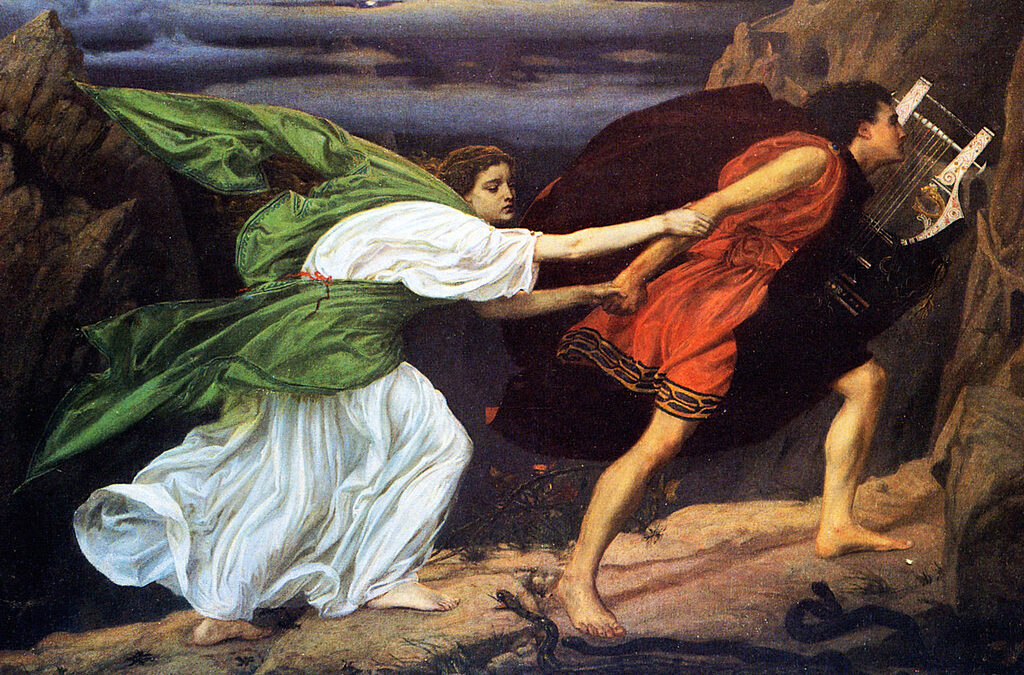
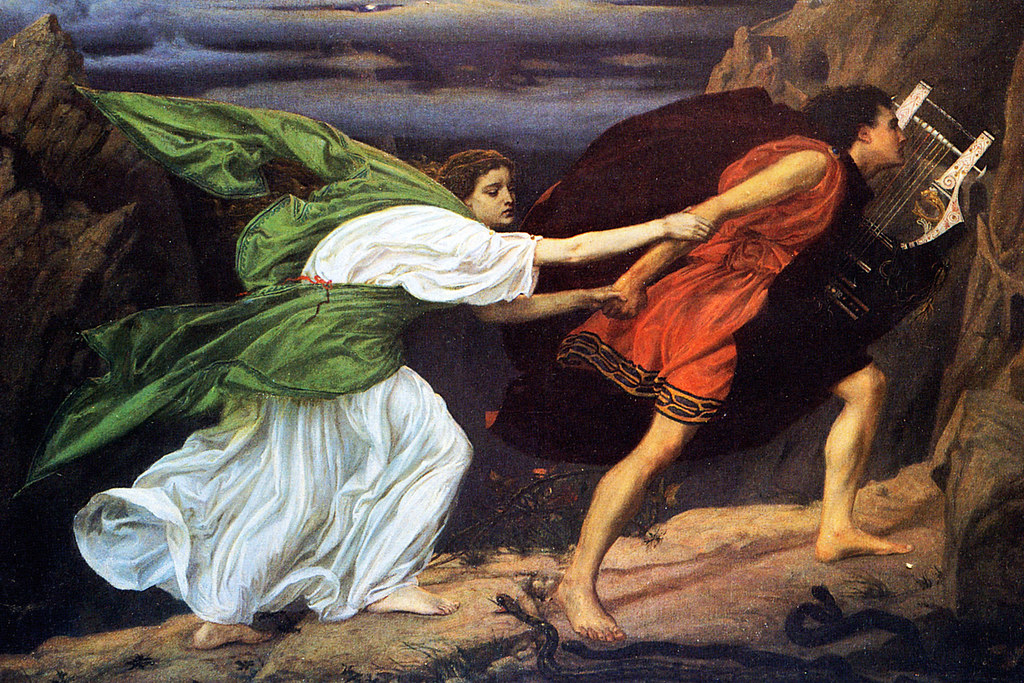
Hadestown is a retelling of the ancient Greek myth of Orpheus and Eurydice. Mitchell portrays Orpheus’s attempt to rescue his beloved Eurydice from Hades’s underworld as a struggle of art, beauty, and love against the forces of death, industrialization, and power. Mitchell re-tells the myth faithfully rather than concocting a Disney-fied happy ending, which is to say: death, industrialization, and power win in the end.
Or do they?
I challenge anyone to listen to the song that Hades sings at the end of Act I, “Why We Build the Wall,” without feeling a chill of recognition. If you haven’t heard it, stop reading right now, look it up, and listen. Sound oddly familiar?
Anais Mitchell wrote “Why We Build the Wall” sometime around 2010. When I first realized this, I thought, Anais Mitchell is a prophet!
But upon a closer listen, within the context of the entire musical, I changed my mind: In writing the songs of Hadestown, Anais Mitchell is not so much a prophet as a historian.
Like all good art, Hadestown contains truths that are timeless, universal. “Why We Build the Wall” isn’t just a song for 2010 or 2016 or 2025, it’s a song of humanity down the ages: We’re drawn to leaders who use us/them language and promise the security of walls, both literal and figurative. I suspect that future generations will continue listening to “Why We Build the Wall” with chills of recognition.
My own Christian tradition teaches that sin and death entered the scene right at the beginning; barely had the world been created than we got busy destroying it. We have always been living on the brink of the end of the world. Or, as Hermes, the narrator of Hadestown, sings:
The song was written long ago
And that is how it goes
It’s a sad song
It’s a sad tale
It’s a tragedy
Orpheus had a heart full of love, the gift of music, a belief in beauty, and he made some progress, but ultimately it wasn’t enough to overcome death, power, and industry — or his own doubt. This does seem to be the lesson of history, but is it the final word? If so, then the answer to, “What can we do? How can we help?” is: “Do nothing. There’s no point.”
The genius of Hadestown, and the moment that shreds my heart, is when Hermes continues singing:
It’s a sad song
But we sing it anyway
‘Cause here’s the thing:
To know how it ends
And still begin to sing it again
As if it might turn out this time
THAT is as gorgeous an image of hope as I’ve ever heard: To know it ends badly, but to begin anyway, as if it might turn out differently. To know there are evils bigger than us, powers stronger than us, but still to believe in love and act in kindness — even if nothing seems to change. The struggle doesn’t have to be newsworthy or national: I think this kind of hope mostly looks like waking up to another day, after the previous day’s heartbreaks, and beginning again — and again. To do our best, maybe even to become a little bit better.
Because, after all, what’s the alternative? It’s death, physical or spiritual.
I don’t have a specific answer to, “What can we do? How can we help?” On that same trip to New York City, I stood with two friends in their kitchen and we looked at each other while our children laughed together in the next room, and we whispered those questions. My friends said that they felt a little guilty because things have been so good in their family, in their home, while everything outside seems to be falling apart.
I thought about this later, and it brought to mind a scene at the end of J.R.R. Tolkien’s classic, The Hobbit, in which the dying Thorin Oakenshield says to Bilbo Baggins, “If more of us valued food and cheer and song above hoarded gold, it would be a merrier world.”
In Peter Jackson’s film version of The Hobbit, for all its many faults, I love that “food and cheer and song” was changed to “home.” If more of us valued home above hoarded gold, it would be a merrier world. I want to say to my friends: Don’t feel guilty that there is love and joy in your home; that’s how it should be. The world is made up of homes; imagine what could happen in all of our homes if we began singing songs of hope and teaching them to our children.
I do understand the guilt, though, the need to feel like we are doing something. Whenever times seem dark and desperate, my impulse is to cast about for something, anything that feels like productive action. But age is teaching me that the best things we can do, the things we’re meant to do, usually present themselves to us when the time is right. We don’t have to search so much as to be open. For instance, my friend Annie, who wondered what she could do, is a high school English teacher. She told me about the kind counsel and support she offered a student who was terrified for her immigrant relatives. She told me about giving her students the words and inspiration to put their concerns into writing. She is raising three children with enormous hearts. She is doing something. And as opportunities for love and care continue to present themselves, I know she will keep helping.
She will begin singing again and again.
My Christian tradition tells how we broke the world, but it also promises that, at some point, the song will turn out. We begin singing in hope again and again because someday there will be a happy ending. To paraphrase Sam Gamgee in another Tolkien classic, The Return of the King, “everything sad [is] going to come untrue.” It may take many more verses, but one day Orpheus and Eurydice will reach the end of that tunnel of death, clasp hands, and, blinking, emerge at last into the bright spring sunshine.
Faith Gong has worked as an elementary school teacher, a freelance photographer, and a nonprofit director. She lives in Middlebury with her husband, five children, one feisty cat, and two quirky dogs. In her “free time,” she writes for her blog, The Pickle Patch.
More News
Op/Ed
Editorial: Epic Fury or Epic Fail?
With his tail tucked between his legs, President Donald Trump signaled early Wednesday mor … (read more)
Op/Ed
Opinion: Vermont can’t conserve working lands by undermining them
When crafting bills about rural Vermont, get rural Vermonters at the table.
Op/Ed
Opinion: Show your heart, don’t cave to bullies
As an organization allegedly dedicated to educating our children, the MAUSD decision to ca … (read more)