
Sports
Old man still plays with his baseball cards
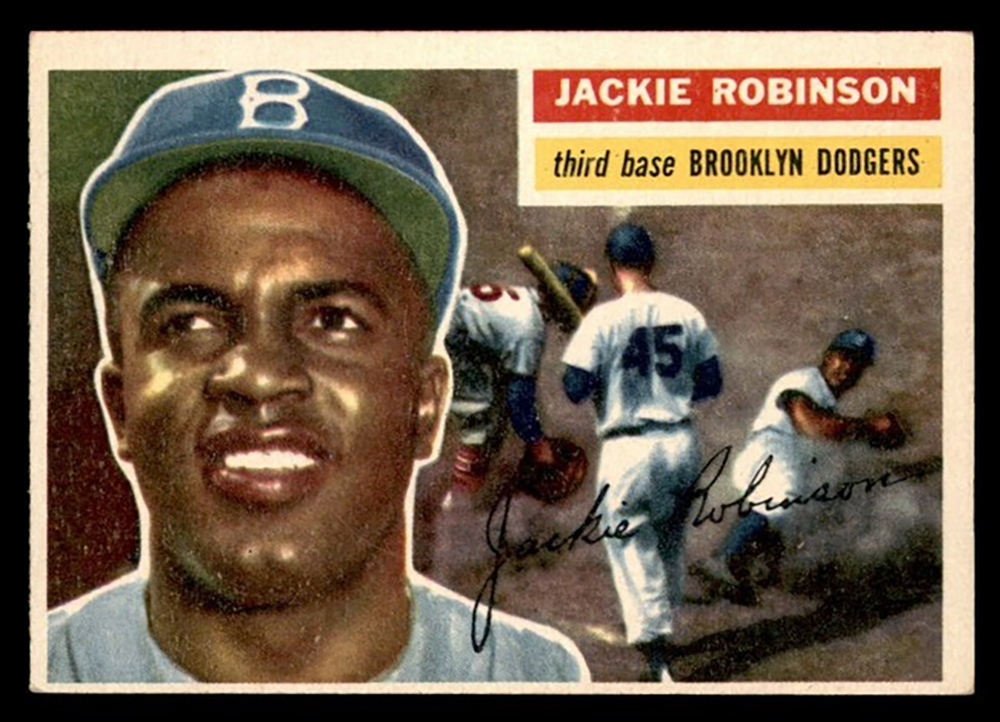
This 1956 Topps Jackie Robinson card was taped onto the office door of the columnist in 1976, and it raised the ire of a friend who accused him of ruining a valuable item (he was right!)
 I’m old now, but I still enjoy playing with my baseball cards.
Not the Topps baseball cards I bought in nickel packs on my way to school in the 1950s. No, those I sold to my Middlebury College professor-friend Rudi Haerle, a serious collector, a long time ago.
There’s a story, of course.
When I first came back to Middlebury to work in the Dean of Students Office in 1976, I taped some colorful images to the door of my office in Old Chapel, one of which was a 1956 Topps Card of Jackie Robinson.
Professor Haerle came into the office one day, saw this display and was horrified. “What are you doing!” he exclaimed. “That’s a valuable card, worth a lot of money. You’ve ruined it.”
On the contrary, I thought. I liked it right where it was. I saw it every day, and others did too. It was well placed, not hidden away out of sight, in a box, increasing in value.
Rudi was right though. A recent quick search of eBay revealed that that Robinson card, in really good condition, could fetch as much as $1,500.
I collected cards, one pack at a time for a few years, on my way to school. I ended up with every Topps card in grades 5 and 6 for those two years (and lots of duplicates) — and my mother did not throw away the shoebox of cards in the attic of my home in Lewiston, Maine.
I tried to give them to Rudi, but he would have none of that, fearing that there would be later recriminations on my part, despite my assurances. He rated every single card and paid me fair value.
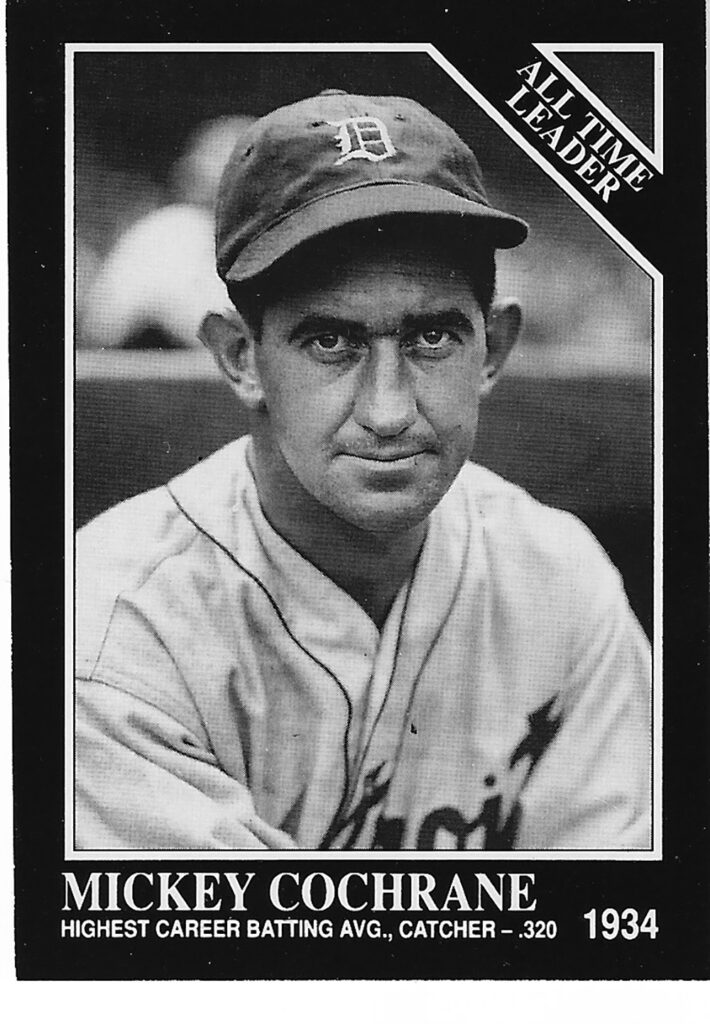
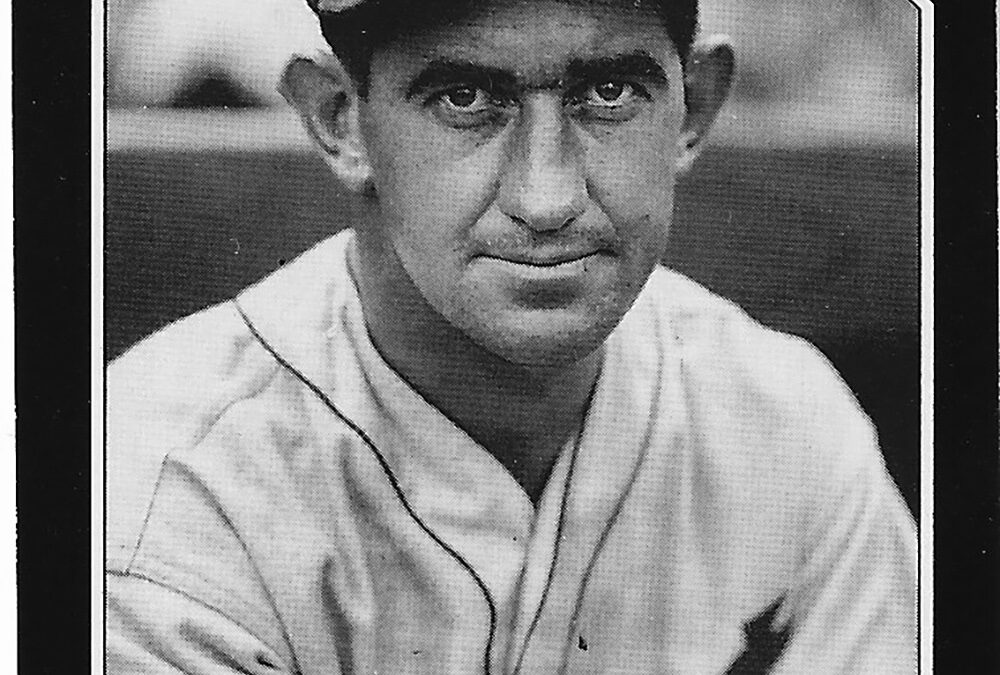
This is Hall of Fame catcher Mickey Cochrane of the Philadelphia A’s from the Charles Conlon Collection. A photographer for the New York World Telegram, Conlon photographed Major League ballplayers from 1905-1942, making 8,000 images in all.
He did note that there were 25-30 cards missing from my collection. These were cards I had given away when I was in college to the boy who lived next door in Lewiston who was showing an interest in baseball.
Those cards were worth well more than all the other cards, hundreds of them, combined. They were cards of the great stars of the day: Mays, Koufax, Mantle, Williams, Dimaggio, Aaron, and so on. I hope the kid who I gave them to saved them and later bought a nice car (or sent his child to college!) with the money.
No, the baseball cards I play with now are quite different. The era of nickel pack of Topps cards with stale bubble gum was over long ago, though you can still buy “factory sealed” full sets (700 cards) for 60 bucks. No gum.
I have three collections of cards that entertain me now. One is a 276-card set from the Charles Conlon collection; another is 184 cards of Black players, Negro Leaguers, from the collection by artist Graig Kreindler; and the third is a set of 124 Cuban players from the early 1990s, a collection of cards produced in Cuba and printed by a Canadian company.
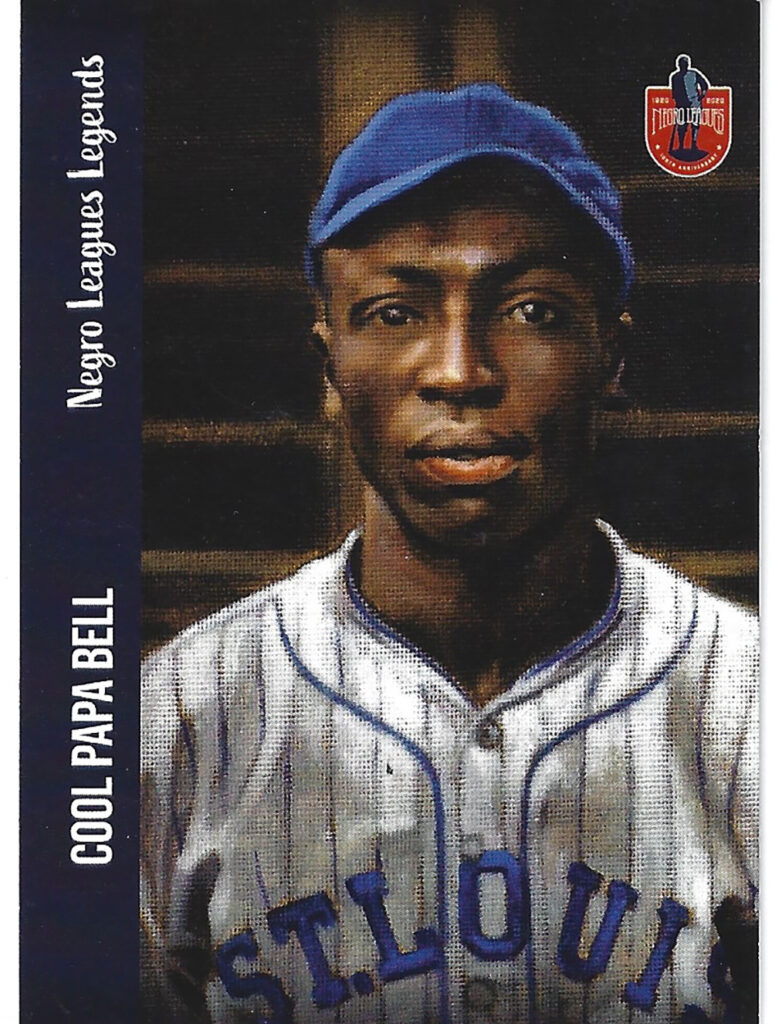
Hall of Famer Cool Papa Bell was the fastest man in baseball during his Negro League career. He is depicted here by artist Graig Kreindler and is part of the Negro Leagues Centennial Legends card set.
For nearly four decades (1904-1942), Charles Martin Conlon, a photographer for the New York Telegram newspaper, assiduously photographed baseball players of the era. In all, he created over 30,000 images using the equipment of the day.
Any student or fan of baseball history should own the book “Baseball’s Golden Age: the Photographs of Charles M. Conlon” (New York: Henry N. Abrams, 1994). The photographs are stunning and the accompanying text informative indeed, bringing the first half of 20th-century baseball alive in striking images.
I don’t have a complete set of the cards made from the Conlon Collection (770 in all), but I have a wonderful selection. Each photo is an image of a batter taking a swing, or a pitcher at some stage in his throwing motion, or a full-face portrait. On the backside of the cards are stats and stories.
They are fun just to look through and perhaps categorize in the mind. All of the great ones are there: Babe Ruth and Ty Cobb, Honus Wagner, Christy Matthewson, Walter Johnson (the original five members of the Hall of Fame in Cooperstown), and many other Hall of Famers and stalwarts — Lou Gehrig, Jimmy Foxx, Hank Greenberg, Vermont’s own Larry Gardner, and dozens of others I was familiar with only faintly or not at all.
Some have such evocative names: Bubbles Hargrave, Urban Shocker, Johnny Gooch, Ivey Wingo, Jimmy Ripple, Ski Melillo.
Every one of Conlon’s players has one characteristic in common: their white skin. In the nearly 40 years Conlon took his photographs, Major League Baseball was racially segregated.
In serendipitous compensation, the legendary Black players of the Negro leagues and before are represented in their own beautiful collection of images on a set of cards.
To celebrate the centennial of the Negro Leagues in 2020, Jay Caldwell of Dreams Fulfilled (NegroLeaguesHistory.com) commissioned artist Graig Kreindler to paint portraits of 230 legendary Black players. These portraits, each about 5-by-7 inches, were collected in an exhibit called “Black Baseball in Living Color” first shown at the Negro Leagues Museum in Kansas City.
I was able to view the entire collection in 2023 at the Detroit Historical Society when I attended the Negro Leagues Conference there. Just wonderful.
I was exhilarated to learn that 180 of these 230 images had been collected into a set of baseball cards. When I write here in the Independent about Black baseball, the Negro Leagues, as I do now and then, I am able to get permission to use the beautiful Kreindler portraits to illustrate my words, lucky me.
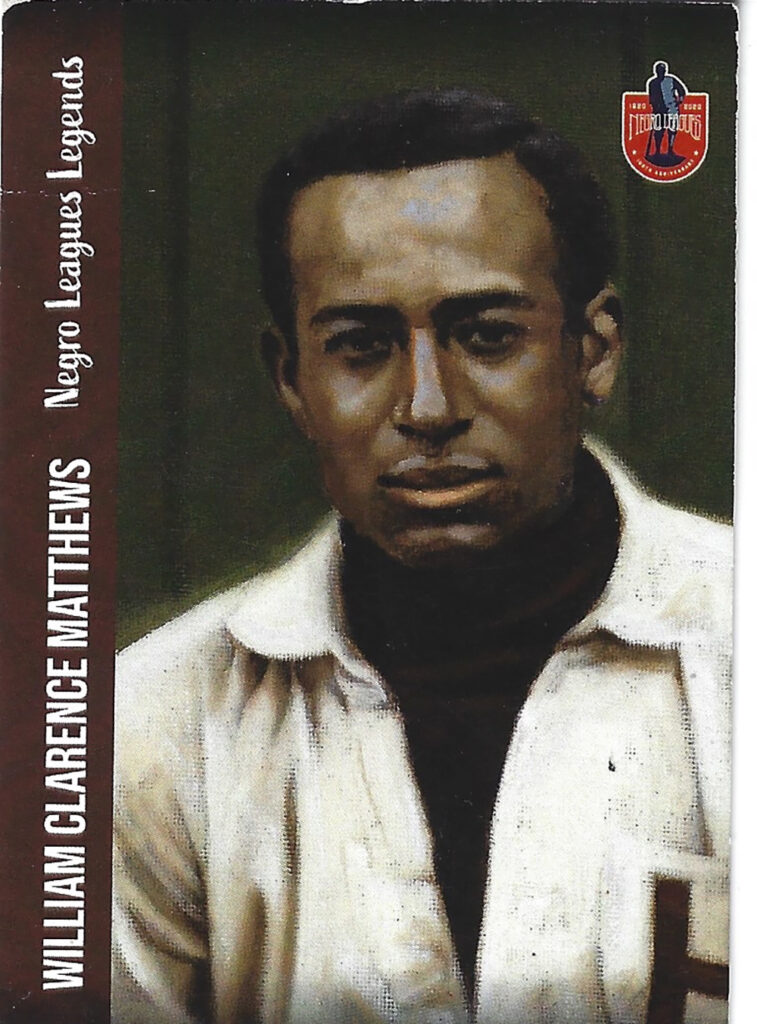
William Clarence Matthews was a great player for Harvard College in the early 1900s. He is depicted here by artist Graig Kreindler and is part of the Negro Leagues Centennial Legends card set.
Baseball in Cuba, this small island only 90 miles from Florida, has a long and fascinating history, its origins going almost as far back as the beginnings of the game in the United States. I have been to Cuba twice, in 2001 and 2014.
During the 70 years of (1887-1947) baseball’s segregation at the highest levels, about 240 Afro-Cubans played in the Negro Leagues and 41 Cubans of European descent played in MLB. Black players from the Negro Leagues and white counterparts from MLB played in Cuba in the off season (winter) against and with one another in a vigorous professional league. Integrated baseball.
After the revolution in 1959, Fidel Castro rejected professional play and established a series of competitions based on regions on the island. The Cuban national team, year after year, decade after decade, was the best team in the world in international amateur competitions.
On my first trip to Cuba, I found a few actual baseball cards of Cuban stars at an outdoor market. I skillfully haggled the vendor down to $75 American for the cards of Omar Linares, Victor Mesa, and Orlando Hernandez (who defected and became El Duque, star pitcher for the New York Yankees).
Sometime later, I discovered I could buy a whole set of cards, 124 in all, for less than I paid for those three. In 1994, a Cuban baseball card set was produced by Cubadeportes and printed in Canada. I keep those cards in a cigar box I picked on one of my visits.
Taken together, these card collections are a graphic history of baseball in the 20th century and are among my most prized possessions.
—————
Karl Lindholm Ph.D is the emeritus dean of advising at Middlebury College and assistant professor of American studies (retired). He can be contacted at [email protected].
More News
Sports

Annual yacht races support Maritime Museum
Yachts raced in the Diamond Island Regatta off Ferrisburgh last weekend.
Sports

Summer swim team coach inspired by generations
Marlins Coach Carina Bellman first joined Middlebury team in 1986
Sports

Matthew Dickerson: Three days in Rocky Mountain National Park
Fishing, birding and pre-dawn adventures made for a memorable trip.