“We’re really in a bind about how to provide high quality care to our patients without having access to affordable meds and management.” — Julia Doucet
MIDDLEBURY — Talk to any altruistic leader of a nonprofit, and they’ll tell you they yearn for the day their organization becomes unnecessary.
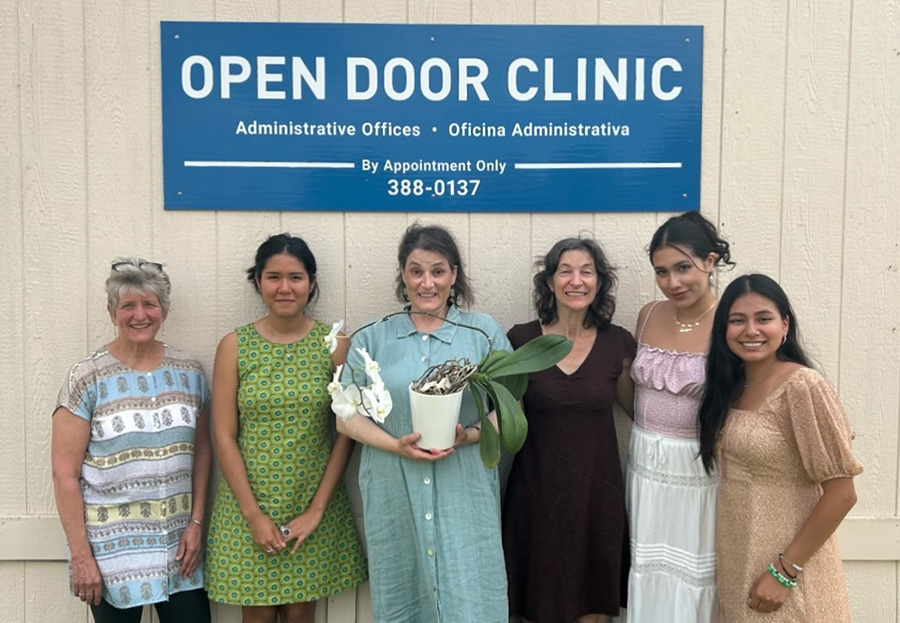
Heidi Sulis, executive director of Middlebury’s Open Door Clinic (ODC), thought that day had arrived in 2013, with the launch of Vermont Health Connect. Fueled by the federal Affordable Care Act and the collective will of Vermonters to extend healthcare to all who needed it, Vermont Health Connect was going to make free clinics superfluous, right?
Sadly, that’s not the way it’s worked out.
Thirteen years later, ODC is having to expand its staff and budget to compensate for a tattered health care safety net that’s becoming even more threadbare, due to a declining federal commitment to insurance subsidies and patients showing more acute needs than ever before.
“What feels bleak is that it’s going to be the (patient) who loses out in the end,” Sulis said during a recent interview at ODC’s makeshift headquarters at 100 Porter Drive on the Porter Medical Center campus.
ODC provides a suite of services to uninsured and under-insured folks, including medical care, dental care, health insurance guidance and outreach.
It’s a list that sadly — and fortunately — keeps growing as more Addison County residents find themselves boxed out of private and public health insurance plans.
The Trump Administration and GOP-led Congress pushed through 2025’s “One Big Beautiful Bill Act,” which allowed the expiration (on Dec. 31, 2025) of enhanced premium tax credits related to the Affordable Care Act — also known as “Obamacare.” The expiration of those subsidies is leading to significantly higher health insurance premiums for millions of Americans and thousands of Vermonters. According to the Vermont Department of Health Access, 2,532 Vermonters had disenrolled from their 2026 health insurance plans (via Vermont Health Connect) as of Jan. 15.
Some Medicaid recipients have already seen changes, and more are in store beginning Jan. 1, 2027, courtesy of the same “One Big Beautiful Bill Act.” This past October, Medicaid — a federally subsidized health care program for qualifying low-income individuals and families — imposed new limits on non-citizens. Come next year, Medicaid beneficiaries age 19-64 will need to show they have some combination of work, volunteering/community service, or education hours. Meeting work requirements can be shown by a monthly income of at least $580 (but not more than the Medicaid limit of 138% of the household federal poverty level); or at least 80 hours spent on community service, education, work programs, jobs or self-employment.
With the federal health care commitment declining, free clinics like ODC are being asked to do more.
Last year, ODC served 1,305 patients, including 395 new patients, 572 migrant workers, 333 health insurance seekers and 92 farm workers, according to the organization’s 2025 impact report. The clinic has been seeing patient increases of around 3% annually, but Sulis expects even bigger bumps in the near future as more folks run out of health care options.
And many of the patients ODC is seeing these days are presenting with more chronic ailments — like hypertension and diabetes — which indicates people are eschewing preventative care because they can’t find it or can’t afford it.
“That means we need to do more, and raise more money,” said Sulis, who, along with ODC RN and Clinical/Program Director Julia Doucet, agree that the hardest thing they can do is tell an ailing person they can’t help them.
With that in mind, Sulis recently won ODC board approval for a 2026 budget of $839,000 — the largest ever for the clinic, which counts 11 full- and part-time workers.
Sulis acknowledged the 2026 spending plan may result in a deficit, but her staff and board are committed to mopping up the red ink, because people desperately need the services.
She outlined some of the ODC’s additions, which include a part-time medical assistant, Claire Bradley.
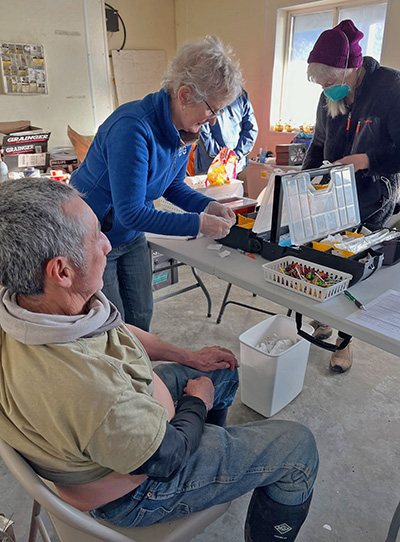
“Our nurses need more help,” Sulis said. “They do a lot of case management and coordination, some of which could very appropriately be done by others. After having a dedicated intern who supported our nurses… it was a good pilot to prove that we need to hire someone. So we hired Claire.”
The clinic has also invested in a community health worker, Lillian Prime, who is “focused on meeting the needs of children and families,” according Doucet.
Prime’s new role is largely a product of the University of Vermont Extension System’s decision to end its relationship with the Bridges to Health program. That program has, among other things, helped agricultural workers — including migrant laborers — access health and social services for themselves and their families.
Beginning July 1, what remains of Bridges to Health will be folded into of Vermont’s Free & Referral Clinics, the statewide association that gives funding, advocacy and technical support to free health-care clinics.
ODC is hoping to fill some of the Bridges void through Prime’s community health worker role. Her duties will include connecting children and pregnant moms to community resources, such as the Women Infants & Children program, the Dr. Dynasaur program, car seats, and the Immigrant Health Insurance Plan.
“It’s the pieces where language gets in the way in enabling people to access the services,” she said of the key service that Prime — a Middlebury College graduate and the ODC’s current patient services coordinator — will be able to provide.
ODC’s 2026 budget also reflects a greater commitment to dental care. The clinic already hires two dental hygienists (part-timers) and has a dedicated partner in Middlebury Dental Group; ODC board member Dr. Adam Fasoli is the volunteer dental director. Plans now call for the University of New England’s dental program to send a rotation of students to ODC — in 12-week assignments — to help patients.
Also, Fasoli is assigned a UVM Dental School student five times per year, in 10-week rotations. He is sharing that student with ODC.
Fernanda Canales — who for years served as principal of Salisbury Community School — continues as ODC’s dental coordinator.
“Many more dental spots will be available to our patients, which is great,” Sulis said of the new strides in dental programming.
EVERY CENT COUNTS
Sulis is currently overseeing 20 grants to help pay for the ODC budget. And the organization, for the first time ever, eclipsed the $200,000 mark in fundraising to help the cause.
Every cent counts in this tenuous health care era.
Case in point: UVM Health Network runs a Health Assistance Program (HAP) that provides free chronic care medications for people who can’t afford them. But the network, due to funding issues, changed the rules this past December in a manner that now requires folks to have health insurance to be eligible for HAP, according to Doucet.
“You also have to have a UVM Health Network provider to be eligible,” she added. “Our outpatients are no longer eligible for that program. It required to shift how we find medications (for ODC patients) because they are very expensive.”
What about drug manufacturers’ discounts?
Yes, they’re available, according to Doucet. But ODC patients who don’t have proper documentation (like a Social Security number) aren’t eligible for many of those discounts.
“We’re really in a bind about how to provide high quality care to our patients without having access to affordable meds and management,” Doucet said. “They’re underserved in many ways because they don’t have access to the tools and treatments people in the U.S. have come to expect with certain chronic diseases. That’s unfair.”
Doucet and Sulis have heard the calls for mass deportations, that undocumented workers shouldn’t benefit from government subsidies. They’ve also heard the argument that undocumented workers are taking jobs from Vermonters.
There are currently an estimated 1,200 to 1,500 undocumented migrant workers employed in the state’s dairy industry, performing jobs that most Vermonters don’t want to do. Those workers pay an estimated $3 million in state and local taxes.
Why don’t undocumented workers get the necessary paperwork to be here legally?
While the U.S. has programs providing legal status to visiting workers on a seasonal basis, there’s no such program for working on a dairy farm — a year-round operation. Federal lawmakers have considered, but failed to pass, a Farm Workforce Modernization Act (of 2021) that would pave the way for legal status for year-round farm workers.
In the meantime, Sulis believes the country should provide at least basic care for guest workers, as fellow human beings.
“We’re all connected and we need to take care of each other,” she said.
So what’s next for Open Door Clinic?
Doucet is seeing a potential paradigm shift.
“For years and years, we saw us as a safety net organization, filling in the gaps for people who have nowhere else to go,” she said. “But if we’re a primary care office, then we’re more preventive, working with patients before they get chronic disease. It’s something we’ve been talking about — who are we, and where do we want to go?”
John Flowers is at [email protected].