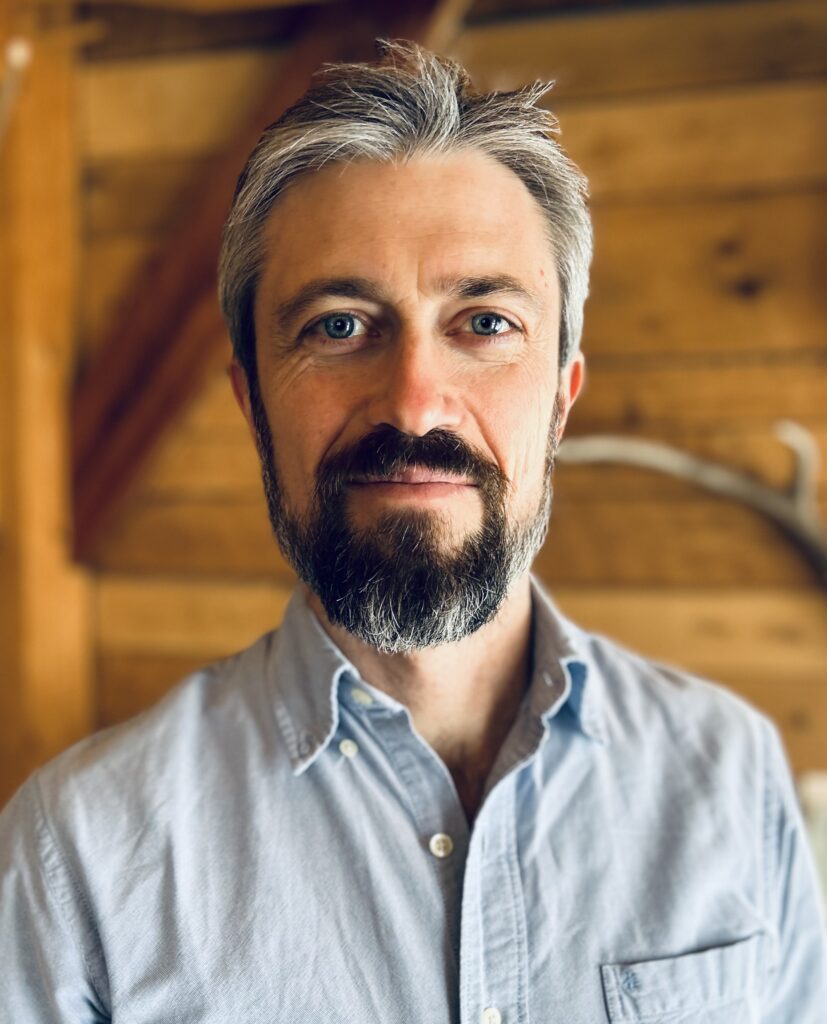
LINCOLN — Lincoln resident Jonathan Mingle has witnessed various changes over the more than 15 years he’s spent as a climate reporter, from shifts in the frequency of extreme weather events and the public interest in reporting on climate change.
What hasn’t changed is the subject at the heart of his work — a warming planet that is only becoming more critical to pay attention to, even as the federal government and some larger companies pull back on efforts to address the climate crisis.
“In this moment there’s a risk that people will just go along with this, what’s been called ‘climate hushing,’ and herd behavior, ‘Well, I guess we’re not talking about that anymore,’” Mingle said during a recent interview. “I would say at this moment it’s more important than ever that people talk about climate change — how it’s affecting their communities and their lives and their utility bills.”
Mingle’s work as a climate reporter has its roots in northern India, where he spent a portion of his 20s in the first decade of this century working seasonally as a teacher.
“My time in India I think really impressed upon me how climate change was rapidly transforming peoples’ lives and livelihoods in other parts of the world,” he recalled.
He brought that experience back to the U.S. and into his time studying energy and resources while in graduate school at the University of California, Berkeley. Mingle thought he’d go on to work in policy, but while in grad school he took a course with journalist and author Michael Pollan that offered him an opportunity to write about an Indian village relocating due to chronic drought.
“Years later, that piece turned into my first book, and so I kind of left that experience thinking, ‘Oh, maybe I should focus on telling stories instead of building spreadsheets,’” he said.
TELLING STORIES
He’s told many stories in the years since, working largely as a freelancer and often writing about climate change. His work has appeared in The New York Times, Yale Environment 360 and MIT Technology Review, among other publications. Mingle was a Middlebury College Fellow in Environmental Journalism in 2011.
When it’s come to finding what to write about over the years, Mingle said he’s just “followed (his) nose.”
“I just default to chasing stories that I find not only interesting but underreported or underdiscussed,” he explained.
Submitted photo
He noted the two books he’s written have centered around such stories. Mingle’s 2015 book, “Fire and Ice,” highlights the same Indian village he wrote about while in grad school. The book tells of how that village navigated the impacts of chronic drought, as well as explores black carbon and soot more broadly.
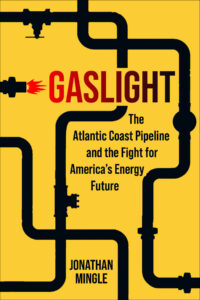
In his second book, “Gaslight,” Mingle follows communities in the mountains of Virginia throughout their years-long fight to oppose the Atlantic Coast Pipeline, which would have constructed a 600-mile natural gas pipeline from West Virginia to North Carolina.
“They’re both focused on climate pollutants that, it seemed to me at the time when I began those reporting journeys, weren’t getting enough attention and discussion,” Mingle said of his books.
Other stories have focused on topics varying from changes in Vermont’s forests and forest products industry to the U.S. biogas industry to the implementation of bans on natural gas in new construction.
As a climate reporter, Mingle acknowledges that part of the challenge of his work is to avoid being inundated by the “immensity of climate change as a subject.”
“As a storyteller, I have an advantage in that any story, whether it’s a 1,000-word piece or a 90,000-word book, it’s not going to work unless you ground it in the lives of particular people and communities,” he said. “You have to particularize these big, sweeping planetary forces and changes that are implied by the phrase ‘climate change.’”
Such climate-related stories used to be harder to pitch to editors, Mingle said, though it’s become easier to do so over the years with an audience interested in reporting on climate change.
“In the course of my career reporting on this issue, I have seen a steady increase in interest and appetite and feedback from readers that, ‘Yeah, we care about this, we want more stories about this,’” he said. “But at the same time, there’s also some fluctuation that inevitably tracks with how our top media outlets and influential people are choosing to highlight this or not, whether it’s the New York Times editorial board or whoever is in the White House.”
CHANGES WITNESSED
Mingle reflected on some of the other changes he’s seen in the work of climate journalism over the years, including improvements in incorporating climate reporting into other subject areas and in deciding how climate-related stories are reported.
“The problem for a reporter is if you just call a spade a spade, if you just put the facts on the table, a lot of people are nervous about looking like they’re biased, and so they’ll bend over backwards to then go ask someone at the American Petroleum Institute for a comment,” Mingle said. “And we should ask them for a comment, but that doesn’t mean you should soft-pedal or back away from the facts of the case…I’ve seen climate journalism get better at just sticking to the facts and not being so afraid of pushback from people who are invested in the status quo.”
Community members got a chance to hear more about Mingle’s work during a recent talk at the Lincoln Library on “Flood Tales: A Climate Reporter’s Notebook.” The event in part highlighted how climate impacts like flooding hitting places like Vermont.
“The speed with which we are changing the atmosphere and, by extension, the risk to our communities here in Vermont and in other parts of the world, I don’t think it’s generally understood just how fast we’re changing these systems we’ve come to take for granted,” Mingle said.
Mingle shared with attendees stories of floods from Vermont to India and what he’s learned from speaking with experts. He noted that when covering climate change impacts like flooding, it’s important to highlight an alternative way forward.
“People want to engage with this stuff, and they want to do it in a way that helps them understand what they can do alongside their neighbors about it,” he said.
That’s something Mingle said he hopes to convey through his work, both the collective impact of climate change and the opportunity for collective action in addressing it.
“I think the great overlooked climate solution is solidarity, at every scale,” he said. “Whether it’s the scale of a village like Lincoln, or Kumik in north India…or at a bigger scale; the degree to which we recognize our shared vulnerability but also our shared agency, the power you can tap into once you understand that your neighbors’ fortunes are wrapped up with your own.”
“Climate change is very revealing once you start to dig into it, just the extent to which our fates our intertwined here,” he continued. “That is another meta subject that I feel is underdiscussed, and as a freelancer I have the freedom to shine my little flashlight on stories that I think surface that truism about our situation.”