Editor’s note: Columnist Karl Lindholm earned a week off and his son Peter is picking up the slack for his dad.

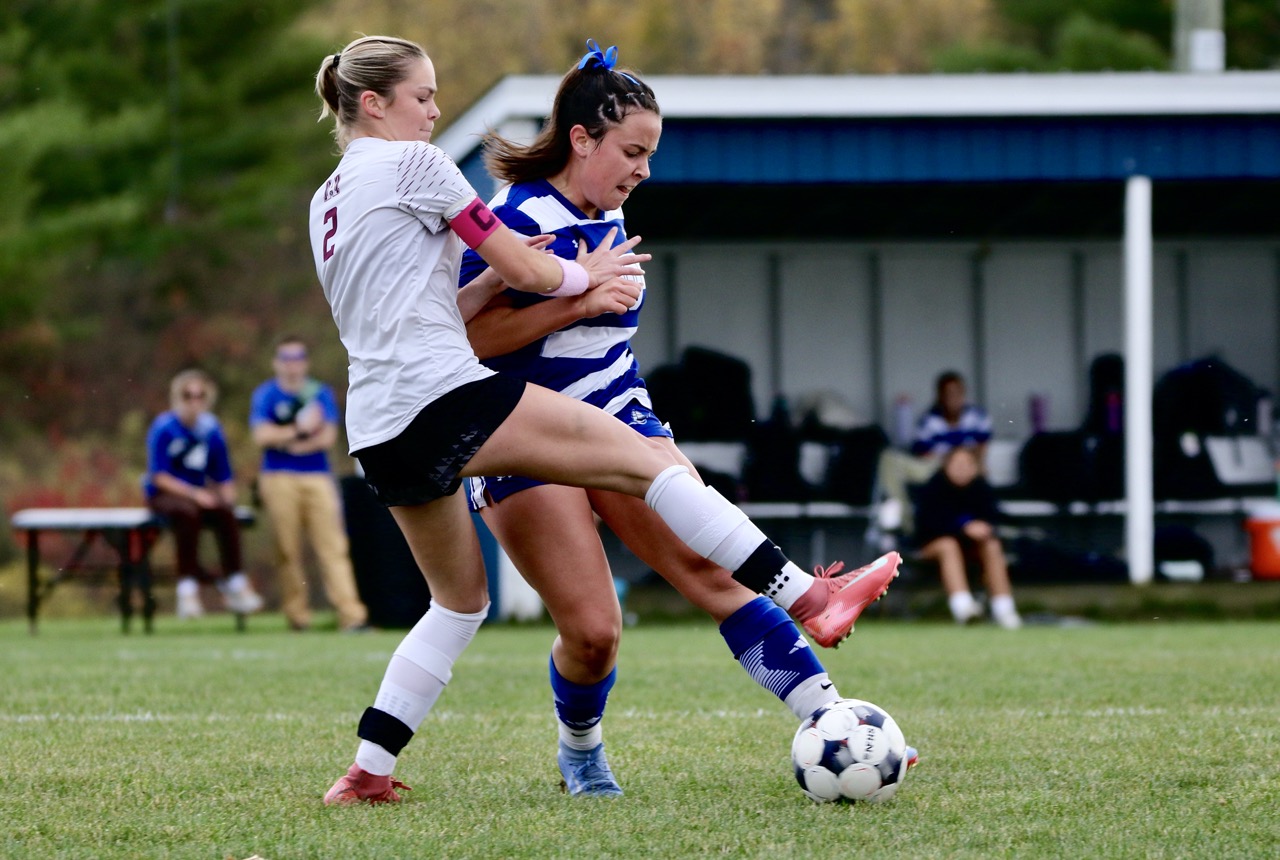
The stalwart Winooski defenseman, whose younger sister was screaming “move your bald a**” at him from behind the goal, had once again swiped the ball away from an overwhelmed Alburgh first-year and advanced the ball to the midfielder, whose parents sat swaddled in winter gear (despite the temperate October weather) on the sidelines.
The midfielder crossed the ball to the striker, who could be found on the weekends riding his bike around downtown and asking questions to amused passersby. He sidestepped a defender and grounded the ball under the keeper’s outstretched arm. 4-0 Spartans.
The teachers in the crowd erupted in cheers, as did the cohort of children on the playground behind us, looking up from burying each other in woodchips and fallen leaves. During the school day this activity would have been my job to address, but I was, as I told the kids, “off the clock.”
Except none of us were off the clock. Earlier that school day, we received a report that two Winooski High School students had been stopped and questioned by ICE on their way back to school from a free block. The report was confirmed by several other community sources, and for the first time, we initiated our “sanctuary school protocol.”
Although we hadn’t yet had ICE at our doors, we’ve grown used to teaching and learning with their specter hanging over our heads. During the summer, our indomitable superintendent, Wilmer Chevarria, was taken into custody and questioned for hours, presumably partially due to the district’s outspoken stance in opposition to the Trump Administration’s immigration policies. A student arrived home from school to find their father in detention; several students had missed school for fear of leaving their families.
And since this day, a student and his mother have been taken into ICE custody in Dilley, Texas, and the district has been the target of a racist online attack campaign after raising a flag in support of our many Somali families. Nationally, ICE agents in Minneapolis shot a woman in cold blood for the “crime” of driving away. Like in soccer, our clock is always running.
Our task that day was to ensure that no student traveled home without adult support. We rode buses, we drove children home, we walked the streets with the droves of kids who make their way home from school on foot every day. We survived the initial rush of dismissal with no issues. However, the remaining educators, including me, found ourselves with a very “Winooski” problem: the middle school soccer games.
As in their home countries, soccer for our students is no game. Each grade has a lively recess match that almost always requires mediation from yours truly, the friendly neighborhood behavioral interventionist. When my students earn positive breaks from class for completing their work or behaving especially responsibly, many of them want to kick a ball around my office or watch highlights on my computer and debate endlessly who is the “GOAT,” Messi or Ronaldo. And given the large families that make up these communities, almost every student had a friend or relative playing in the games.
This love of soccer is a beautiful thing for our district. It keeps the students connected to the countries they left behind, left to come to a country whose current government would sooner see them in cages than on the field. But on this day, it was particularly dangerous. ICE would be prohibited from entering the school without a warrant, but nothing could stop them from coming to a soccer field, or waiting around the field for families to leave without the protection we had been able to offer them earlier in the day.
So the soccer fields became our muster point. To avoid panic, we relied on the tried and true “grapevine” system of disseminating information around a school. We put the word out that if you wanted a ride home, there were teachers available at the soccer games. With the benefit of hindsight, we would have been more direct about the cause of the danger. But like in soccer when the defense is bearing down, we didn’t have the luxury of time.
Shortly after Winooski’s fourth goal, I felt a tug at my sleeve. Four Somali children, three students of mine in the elementary school and one older student who lived near them, stood at my side. They were shuffling, eyes cast down to the yellowing grass. “Can we have a ride home,” murmured the oldest, seeming almost ashamed. I knew these kids and I knew their families; they had come to America because of a promise of safety and opportunity, one that our government has never quite honored and is now bent on breaking. But thankfully, our communities are not our government.
We walked toward the parking lot, leaving behind shouts of excitement, perhaps another goal. Around us other teachers were escorting other students home, laughing brightly at a joke. And above us the October sun was setting, a golden ball blazing brightly against the darkening sky.
Peter Lindholm graduated from Middlebury Union High School in 2013 and Middlebury College in 2017.5. He is in his fourth year working at Winooski Elementary School and is studying at the University of Vermont for a master’s in social work.