
Sports
Enjoy both reading and the outdoors by being attentive
In at least one important way, reading is like outdoor sports. Both of these depend on, reward, and help to foster attentiveness.
I speak particularly of my own favorite ways to spend time outdoors, which include fishing, canoeing, biking, hiking, camping, Nordic skiing and birding — though I’m sure the comment applies to other outdoor activities. Consider hiking, canoeing, biking and Nordic skiing — all of which involve moving through the landscape under your own power. Simply getting someplace generally isn’t the point. If it was, you’d likely be driving.
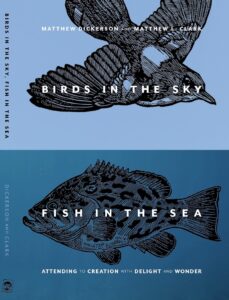
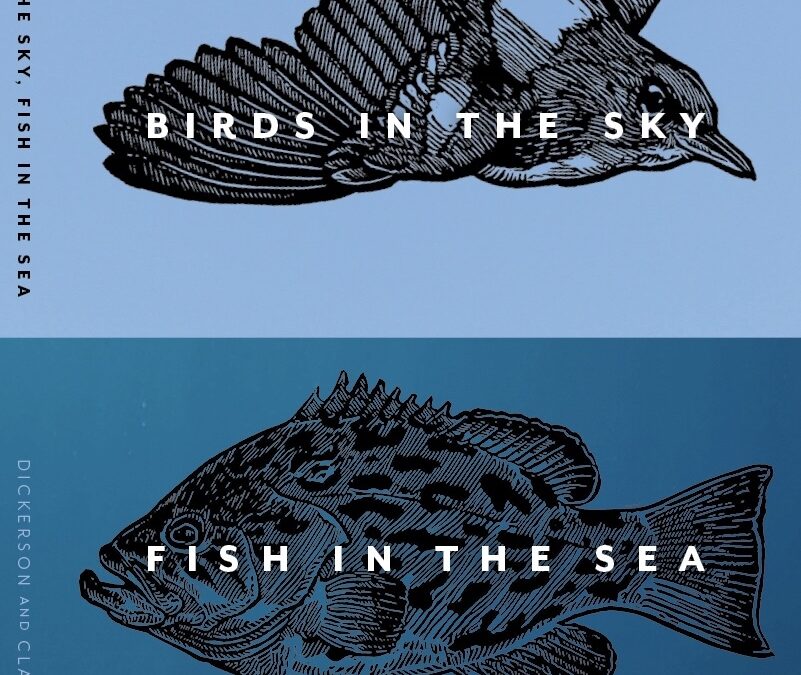
Matthew Dickerson is the author of “Birds in the Sky, Fish in the Sea: Attending to Creation with Delight and Wonder.”
Although exercise is certainly one possible benefit, the fact that you go outside rather than just burning calories on a treadmill suggests that a significant motivation for all of these is the place itself. As you move through that landscape, the world about you is continually changing, constantly bringing into focus new views and new creatures. Even a single step in the woods can reveal new scenes. Every tree is different. Not just locust from oak from beech from hemlock, but every individual maple from every other maple. Every patch of grass and flowers is a new scene. Every hill, mountain and valley a new vista. Even if you repeatedly canoe the same river, or hike or ski the same Vermont trail, it will change from season to season, from day to day, and even from morning to evening.
Now I’ll admit that — with exceptions such as skiing down a steep and narrow trail, biking in traffic, or canoeing challenging whitewater — it’s possible to do these things with only minimal attention, and to otherwise tune out the world about you, numbly walking the woods with blinders and earbuds. Yet even then, the world about you will continue to invite your attention, and the more you attend to it, the more it will reward you with delight, beauty, awe, wonder and insight.
If we turn to birding or wildlife viewing, we note that the whole activity is centered on attentiveness. We look and we listen. We attune our eyes and ears to the sights and sounds, and we attend to them. The more one practices, the better one gets at it: the more one observes and learns.
This is also true of pursuit sports like fishing and hunting. My favorite means of fishing is wading a river with a fly rod. If one considers catching fish as the measure of success, then in order to succeed one must learn to observe their surroundings carefully. What insects are coming off the water, landing on the water, or moving through the trees along the shore? What is the weather doing? What is the water temperature like and how is the stream flowing? What is growing along the shore? Where are the fish likely to be feeding, and on what? Answering questions like these is the first step toward getting a fish to take a fly. Some would even argue that the delight that comes from such attentiveness is itself the “success” of fishing.
Reading does something similar — and requires something similar — of us.
To be clear, I’m not speaking of “reading” a post on social media. In many ways, most of how I see people interact with social media seems like the opposite of attentiveness. It trains us to jump from one thing to another as fast as we can click a mouse or slide our fingers across a touch pad. Yes, our eyes may take in words, but it often feels more like a mockery of real reading. Rather than inviting us to think deeply, or observe closely, or even just to thoughtfully wonder and ponder, social media gives memes and sound bites that purport profundity while offering shallowness. And with the prevalence of content generated by artificial intelligence and foreign trolls, content on social media is increasing untrustworthy — and the fact that many people consider social media as their source of “news” is increasingly alarming. “Doom scrolling” is indeed a good name for it.
When I speak of the similarity between reading and being outdoors, I am speaking about the sort of reading we do with a newspaper or a book.
Consider the newspaper story. Your local newspaper is actually offering you thoughtful and trustworthy stories written by real people engaged in the local community. (Note that I am not speaking primarily of myself, a freelance writer who gives you one or two outdoor stories a month, but of the full-time professional journalists on the regular staff of a paper.) One of the things I mean by “trustworthy” is that the names of the real human writers are attached to the stories. They are not Russian trolls or AI bots. They are the folks you meet “on the streets,” attending the town meetings and high school sporting events, and interviewing the folks involved. The stories are real and true, and they inform you. (That’s one reason our community will miss Andy Kirkaldy’s stories.)
To read such a story requires you to be attentive for more than a few seconds, to follow a story and a sequence of related ideas, and very likely to connect several related ideas and perhaps thoughts from several different characters. It then further invites you to be attentive to the community around you. And in doing so, it also invites — perhaps challenges — you to consider something in a new way, or with a different viewpoint, and not simply from an echo chamber. To be attentive (whether to a river, or a bee, or a newspaper story) is to become informed.
A good book — whether fiction or non-fiction — does the same. Except often engaging your attention not merely for several minutes at a time, but for hours spread across days and weeks. At the very core of reading a novel is the imaginative exercise of seeing the world through the perspective of somebody else, which is at the very core of sympathy, compassion and understanding. Reading a work of biology, or history, or biography, or nature writing, when done with real attentiveness, similarly allows us to be informed by somebody else’s wisdom and knowledge, or to see through another’s eyes. To follow a story or a series of connected essays through several pages and chapters is like looking out at a river and beginning to make connections between the canopy of alders over the water, a red eft resting on the rock, the dragonfly patrolling the eddy, and spider on a web stretched between the hemlock branches just upstream.
Reading, like time outdoors — or time outdoors, like reading — helps to form us as more thoughtful, better-informed persons and communities.
- • • • •
In part because of one course I sat in on in the spring, and another I taught in the fall, 2025 was a good year for me to read and learn more about rivers — including about river ecology, native fish, how water moves through and shapes our landscapes, and how rivers and waters are important in our lives and imaginations. Here are a few recommendations from my recent readings.
A few years ago, fisheries biologist, river ecologist and retired Colorado State University Prof. Kurt Fausch published a beautiful book about river ecology and native fish titled “For the Love of Rivers: A Scientist’s Journey.” He has just published a new book titled “A Reverence for River: Imagining an Ethic for Running Waters.” I highly recommend his writing. I reread the first of these in 2025 and have now begun the second.
Fausch did his Ph.D. under one of the world’s most famous trout and salmon experts: the late Robert J. Behnke, who wrote the beautifully and colorfully illustrated masterpiece volume “Trout and Salmon of North America,” which I got to read parts of again this year when my wife found a used hardcover copy.
Kathleen Dean Moore is a philosophy professor at Oregon State University and also a well-known nature writer who has for years directed the Spring Creek Project environmental writing residencies. One of her beautifully written essay collections that was also on my 2025 list is “Riverwalking: Reflections on Moving Water.” Each essay in the collection was inspired by time on a particular river in Oregon, but the essays cover a wide range of thoughts and reflections. My students loved this book as much as I did.
I will continue to reread and recommend Wendell Berry’s essay “A Native Hill,” which I first found in the collection “The Art of the Common Place: the Agrarian Essays of Wendell Berry.” And for fiction, there is no work of American fiction that I have found more moving or more beautiful than Norman MacLean’s “A River Runs Through It.”
—————
Editor’s note: Matthew Dickerson is the Outdoor Columnist for the Independent and author of a new book about attentiveness to rivers and fish, “Birds in the Sky, Fish in the Sea: Attending to Creation with Delight and Wonder.”
More News
Sports

Four local wrestlers claim state titles
Two VUHS wrestlers rose to the top of their weight classes, as did a MUHS and Mt. Abe wres … (read more)

Sports

Panthers hockey teams progress in NESCAC
Both the men’s and women’s Middlebury College hockey teams won close games to make the NES … (read more)