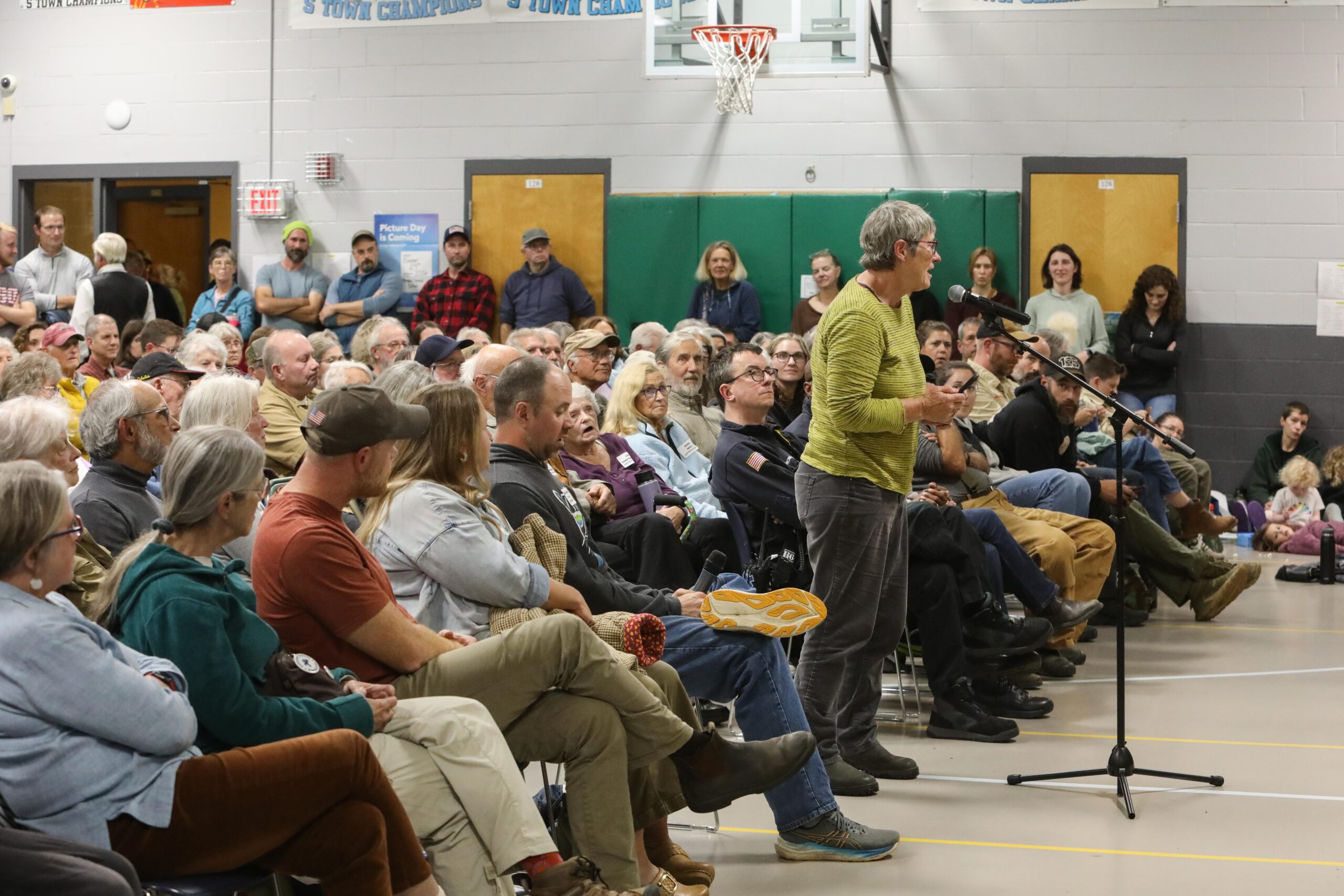

Change mostly gets made by volunteers who show up as citizens. — Bill McKibben
MIDDLEBURY — It was standing room only inside the Franklin Environmental Center this past Thursday, when members of the Middlebury College and broader community gathered for a discussion on educating students amidst the climate crisis.
The “Educating for (Climate) Change” event was the latest in the Woodin Environmental Studies Colloquium Series and served as the kickoff event for What Works Now, a three-day conference held at the college this past weekend. The conference offered an opportunity to reflect on climate initiatives spearheaded by members of the college community over the years, as well as contemplate future action.
“On the whole, it was an incredible gathering of alumni, students, staff, faculty, and community members,” said Minna Brown, Middlebury College Climate Action Program Director and alum. “Truly a time when it felt like we came together to learn from each other and catalyze further strategic action.”
Brown was one of four participants in Thursday’s colloquium, which also featured Bill McKibben, environmentalist and Middlebury College Schumann Distinguished Scholar; Jon Isham, director of the college’s Environmental Studies Program and professor of economics and environmental studies; and Dan Suarez, C.V. Starr Fellow in International Studies and assistant professor of environmental studies.
Throughout the discussion, speakers shared takeaways from their efforts to support students in engaging in climate work in and outside of the classroom. Following their remarks, panelists answered a few questions from the audience.
Reilly Isler, a recent alum and coordinator for the Climate Action Program, asked how educators and other professionals can let students know they’re allowed to dream beyond what they see as the possibilities and limits of climate work after graduation.
“It’s…useful to remember that even if you don’t want to or end up working in this stuff, change mostly gets made by volunteers who show up as citizens,” McKibben said.
Suarez shared a similar sentiment.
“Your engagement with climate solutions, climate action, doesn’t begin and end with what you can list on your LinkedIn profile,” he said.
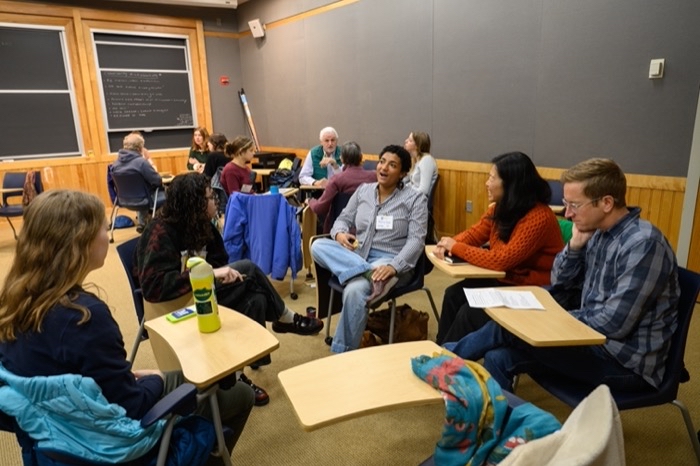
Photo by Daria Bishop Photography
Suarez recalled a former student of his who wanted to be a doctor but wrestled with the decision to pursue that profession “when all of this outrageously urgent stuff is going on.”
“And at a certain point it was just like, “Be a doctor,’” Suarez said. “There are so many ways that you’re embedded in all of these pressing opportunities to protect members of your community, to engage civically in all of the ways that are demanded right now.”
Brown agreed, and noted the value in acknowledging everyone’s unique contributions to this work.
“I think that that sense of the recognition of mutual value is so important,” she said.
Throughout the discussion, speakers credited several of those who’ve contributed to climate action at Middlebury College and beyond over the years. Panelists pointed to the work of past students who advocated for the creation of an Environmental Justice focus within the college’s Environmental Studies program, as well as the contributions of Franklin Environmental Center Assistant Director Janet Wiseman and Diane Munroe, assistant director for community-based learning.
As the discussion wrapped up, attendees looked ahead to other opportunities to gather throughout the weekend, such as during a Sunday Night Environmental Group (SNEG) welcome meeting that took place on Thursday evening. Ella Powers, a student and climate action fellow at the college who helped organize the conference, said students were looking forward to meeting with and learning from alumni at the meeting.
Attendees also highlighted efforts to enable more connections between students and alumni in the future, such as through an alumni network being developed by the student-run SNEG.
“Currently we are working on an alumni network…where we want to be able to connect the alums and students in a more interpersonal way, rather than a lot of these awesome, more formal institutions that we have,” said Sophia Galuppo, an external outreach coordinator for SNEG.