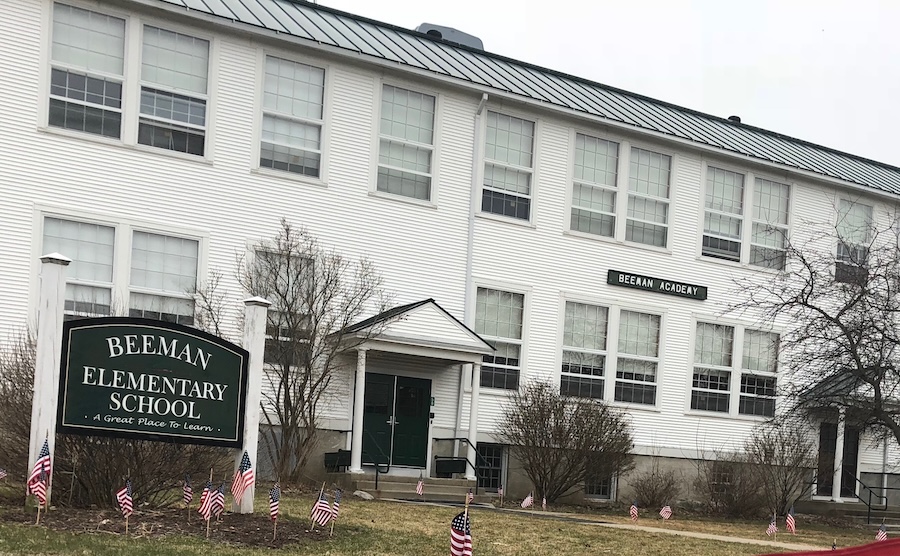

Qualification: Community Service: Mt. Abe High School Board, Starksboro Planning Commission, Community youth sports, Village water system. Counseling Service of Addison County, Addison County Regional Planning Commission, Save Our (community elementary) Schools, and a community coalition to pass the current MAUSD school budget.
Experience: Assistant Attorney General. Legislative Counsel staff attorney. General Counsel/corporate regulator protecting consumers.
My community service and experience in state government will allow me to represent the community well. I also have the temperament to be able to talk with everyone, regardless of their party or opinions. Good relationships and good will make for good solutions.
Education funding: Montpelier needs to fix the education property tax mess. Our children’s education is the highest priority of a decent and hopeful society, but we are in danger of losing public support because of a broken system producing extraordinary tax increases.
I’m willing to listen and learn, but from my perspective today, here are my values and suggestions for education tax reform: (1) Any tax increase paid by the community should reflect education spending approved by the voters. For example, if local education spending in a district increases 4%, then homestead property taxes should increase roughly 4%, on average. This year’s education spending increases in MAUSD and Lincoln were modest, yet taxes increased dramatically. (2) The quality of a student’s education should not depend on the wealth of the town where the student lives. This is a constitutional right (the Brigham case), and a societal imperative. (3) Community schools in rural Vermont have important educational benefits, especially for struggling students. Closing community elementary schools saves far less than reducing unnecessary or excessive costs elsewhere. (4) Tax revenue supporting the Education Fund has shifted away from corporate and individual income taxes. We should reduce our reliance on traditional property taxes to fund education. (5) We need to conduct a deep financial audit of spending from the Education Fund. A thorough audit would reveal whether all spending from the Education Fund is necessary, whether other sources of funds should pay for some expenses, and whether spending levels are reasonable. Some targets for a financial audit: Administrative costs. Mandates from Montpelier. Student behavioral health (Are public and private insurers paying their fair share of this necessary service?).
Housing: The cost of housing is one of the main reasons why our daughters and sons have difficulty affording to live and raise a family in Vermont. I was working with a young family a few years ago in a school advocacy effort, and they could not find a home for any price in our community, much less at a price they could afford. They had to move out of town.
We need a sense of urgency about the housing crisis in rural Vermont. It’s not enough to say, “I support affordable housing BUT …” (But, I want to retain the character of my neighborhood. But, manufactured homes should be located somewhere else. But, I want to limit the land available for housing in rural communities in order to preserve land for recreation.)
Montpelier has devoted considerable time, effort and public funding to support housing in cities and larger population centers. A similar effort should be made for rural Vermont communities. (1) Design housing programs that fit the scale of a rural Vermont community. Recently legislated programs incentivizing 75-unit projects are not relevant to most of rural Vermont. (2) Rural Vermont communities usually do not have public infrastructure, such as municipal sewer and water. Explore initiatives to help with water and septic systems for smaller scale housing projects. (3) Lower the cost of “starter” homes for young families. For owner-built homes, consider infrastructure assistance (septic, water, utilities, driveway). For manufactured homes, consider bulk purchase to lower per unit costs. (4) Reexamine the fee structure of permits to reflect the capacity of contractors for smaller, rural projects. (5) Public policy should not inflate land costs by reducing the supply of buildable land. Think twice before preserving land that is suitable and appropriate for housing.
Climate crisis: In my professional experience drafting legislation, the Clean Heat Standard is unusual. Act 18 set in motion a process for agencies to propose a program to reduce Vermont’s CO2 emissions. But unlike the typical process, the agencies’ proposal cannot take effect without a new law. All will depend upon Governor Scott’s proposal to implement the Legislature’s law, and the Legislature’s response to that proposal.
Still, voters deserve to know, in general, how I will respond to a yet-unknown proposal to reduce CO2 emissions. First, it’s incredibly important to reduce CO2 emissions. They are a big reason why we face the crisis of climate change. Second, the transition to less emitting home heating will require the use of more costly technologies such as heat pumps. Let’s have the long term benefits pay for the short term costs. Third, the transition to home heating that emits less CO2 needs to be fair for the typical household and small business.
I am encouraged that some opponents of the Clean Heat Standard appear willing to raise revenue in some other way to lower CO2 emissions, for example by expanded weatherization.
Other priorities: Get a grip on health care inflation with Universal Primary Care. When I worked for the Legislature as a staff attorney in the 1990s everyone agreed that health care inflation was unsustainable and unaffordable. When I worked to reform access to healthcare in the 2000s, everyone agreed that health care inflation was unsustainable and unaffordable. This year, a report commissioned by the Legislature agreed that health care inflation is unsustainable and unaffordable.
Since the 1990s, Vermont has had some of the strongest cost containment tools of any state in the nation, yet we have failed to control health care inflation. I am encouraged by the current efforts of the Green Mountain Care Board, yet based on Vermont’s experience there is reason to be discouraged that those efforts will bear fruit within a reasonable period of time.
Universal Primary Care can lower health care inflation, and offer better access to primary care for patients: (1) Vermont health care system costs would decrease as patients are better able to access primary care, rather than more expensive hospital or specialist care. (2) Universal care. Vermont residents would be able to receive primary care without health insurance enrollment or arbitrary limitations on treatment. (3) Primary care practices would not have the administrative burdens imposed by health insurance companies, and by the Burlington-based hospital network. (4) Healthcare system costs would not increase because of UPC (Universal Primary Care). Primary care would be paid a consistent and fair percentage of total system costs. (5) Primary care practitioners would have an incentive to stay in Vermont, and practitioners would be encouraged to come to Vermont.