

News
Nonprofit sets growth goals for Vermont
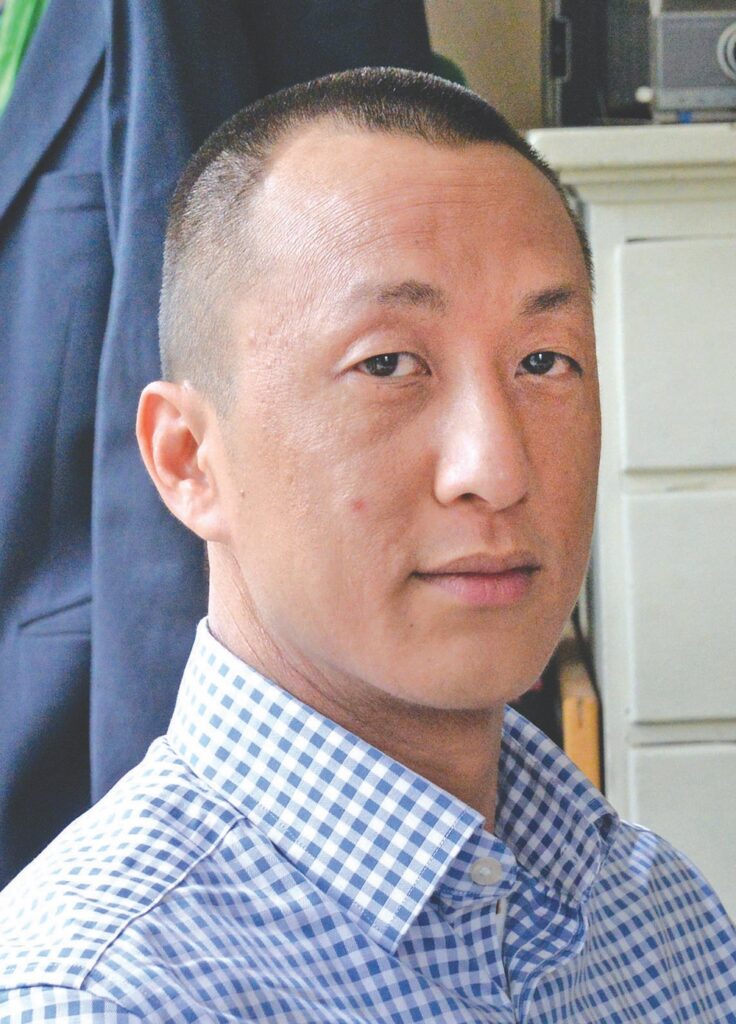
KEVIN CHU, A Middlebury College graduate, is leading an effort to promote major population and housing growth in the state of Vermont.
Independent photo/John S. McCright
MIDDLEBURY — You don’t need to be a math whiz or a statistician to understand that Vermont’s graying population needs a major infusion of new blood, or its economy will catch a major cold.
With that in mind, a non-profit initiative called the “Vermont Futures Project (VFP)” is busy writing a prescription it believes will preserve the state’s long-term health. The cure, according to VFP officials, is in large part predicated on the state boosting its population (from the current 646,000) to 802,000 people and its housing inventory (from the current 300,000) to at least 350,000 non-seasonal units by 2035.
“At the core of this is, ‘people are the solution,’” VFP Executive Director Kevin Chu said during a recent interview.
The VFP describes itself as an “independent non-partisan organization with a goal of providing a vision that supports and encourages long-term economic growth for Vermont, and providing data and recommendations to achieve this goal.”
It’s an advocacy effort governed by a board of directors and led by Chu — a grad of Middlebury College, where he currently serves as an assistant track & field coach.
Vermont has seen a big decline in its prime workforce demographic (aged 25-49), according to Chu. There are currently 192,830 in that population bracket, compared to 226,563 in 2000. Meanwhile, there are 135,000 Vermonters in the 50-64 age range — that’s 21% of the state’s total population that’s in the waning stages of employment.
At the same time, there are 139,827 Vermonters in the 65-plus category, and that segment is growing — not only in population, but healthcare needs.
Chu realizes change is tough for some people who’ve carved out their own piece of paradise in Vermont and aren’t keen on seeing it potentially affected by an influx of new residents. But the results of a recent state survey indicate that many current Vermonters don’t espouse NIMBY (not in my back yard) feelings. Of those who took that survey, 49% of respondents agreed that growing Vermont’s population size is essential to strengthening its workforce, while 38% disagreed.
And perhaps counterintuitively, older Vermont citizens appear most supportive of a population bump, according to the aforementioned survey. Around 59% of those advocating for a population surge were aged 75 and older.
On the other hand, 61% of Vermonters who voted “no” on a population surge were 18–34 years old — ironically, the very demographic the state needs to augment. Chu believes opposition from the younger set is based on their concern that they’d have to compete with more of their peers to acquire limited housing as well as higher-paying jobs.
The state could help assuage those concerns if it gets serious about increasing its affordable housing stock, according to Chu, who believes getting all categories of Vermonters on board with growth is going to be essential.
“I think it’s going to need broad buy-in, whether it’s the Legislature, local selectboards, or everyday Vermonters,” he said. “It’s about creating a collective vision we can all believe in and understand through data how growth benefits people who are already here, too.
“Growth makes this state more accessible and affordable,” Chu added.
So how much growth is VFP talking about?
Around 802,000 by 2035. That means adding 154,936 people — or roughly 12,900 annually — during each of the next 12 years. The VFP is recommending county targets for population surges, including an 8,998-person jump (around 750 per year) for Addison County by 2035.
Chu believes jobs will be there for the newly minted Vermonters. The state’s shallow labor pool is already a major lament among employers. Chu noted there are currently 18,000 job vacancies in the state compared to 7,500 jobseekers. Gone are the days when there were two workers competing for every job opening; the inverse is now true, according to Chu.
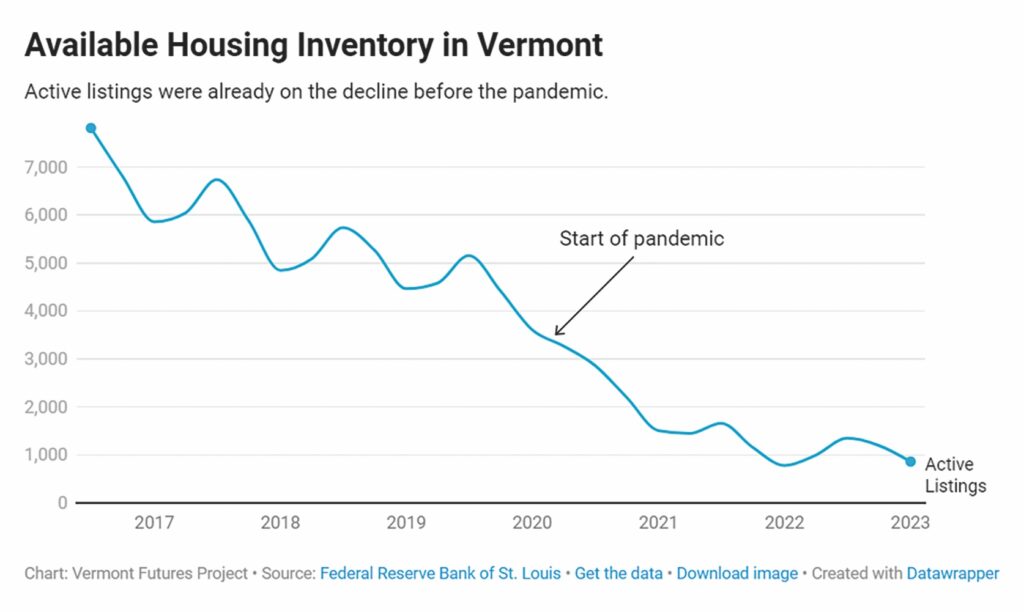
While there are plenty of jobs, there’s a major shortage of available homes in the Green Mountain state. And that deficit has been cited as the top impediment in Vermont’s quest to welcome young out-of-staters who are eager to relocate.
According to VFP research, compiled from independent surveys, the Vermont Department of Labor and the U.S. Census Bureau:
• In 2017, there were more than 7,000 home listings for sale in the state. There are now around 1,000, a decline that escalated during the pandemic.
• A recent housing needs assessment commissioned by the Vermont Agency of Commerce & Community Development revealed the state needs around 24,000-36,000 more homes within the next five years. Ideally, the VFP would like to see around 80,000 new units created by 2035.
VFP wants to see Addison County increase its housing stock by 358 units per year through 2035.
• In 2000, the median home sale price was around $200,000, while the median household income was approximately $49,000. The median household income is now around $72,190 and the median home sale price stands at $309,000.
The Legislature last session passed a series of bills aimed primarily at streamlining the permitting process for home startups. But such legislation hasn’t affected high inflation rates and high construction material costs.
“Vermont doesn’t set federal interest rates. The cost of labor and materials are influenced my regional market dynamics,” Chu said. “But the pieces that Vermont does have control over — things like land regulations, permitting processes, legal fees — are all within our control to be able to make housing more affordable for Vermonters.”
It’s a pretty tall order, and Chu is VFP’s only paid staffer.
“I alone can’t make this happen,” Chu said. “Ideas travel at the speed of trust.”
And that’s what he’s trying to do.
He’s working hard to impart his “Vermont must grow or wither” message to as many Vermonters as possible. He’s been delivering presentations throughout the state to selectboards, regional planning commissions, legislators, business groups, civic groups and just about any organization willing to listen.
He’s been grateful to find a receptive audience among the approximately 4,000 people to which he’s made his pitch so far this year.
“What I’m hearing from Vermonters is they’re really worried about affordability. They’re concerned about youth retention, being able to age in their communities and access services and healthcare. When we can anchor the goals of growth to the needs of Vermonters, we’ll have more buy-in.”
We in Vermont often hear the “I don’t want to see our state become like New Jersey” refrain. Chu noted there’s not much chance of that happening. New Jersey has a population of roughly 1,200 per square mile, while Vermont is at around 70. That number would go up to 87 per square mile if/when the state reaches 802,000 residents, according to Chu.
“We would need to grow to 11 million to reach New Jersey levels,” he said.
Chu also hopes Vermont will be able to increase its minority population. The state is currently 92.2% white. And if the state added 155,000 people of color to its current population (not that that is likely), Vermont would still be 75% white, Chu noted.
“Growth is beneficial from an equity perspective, from an economic perspective and it can be a solution from an environmental perspective as well,” he said.
Just as people moved to Vermont to feel safer from the pandemic, so too will they seek out Vermont to escape states that are most susceptible to climate change, according to Chu.
Vermont could get almost halfway to the VFP’s recommended goal of 150,000 new Vermonters by simply reclaiming population it’s lost. Vermont has 70,000 fewer residents than its historical high; Addison County, meanwhile, had 4,427 more residents at its peak, according to Chu.
And he noted area public schools have a lot of extra capacity to handle a hefty enrollment jump.
Doing nothing shouldn’t be an option, Chu stressed. If left unchecked, current demographic trends will likely result in an ever-shrinking workforce, loss of business, declining state revenues, cost-of-living hikes, surges in healthcare costs, skyrocketing education property taxes, and loss of community vitality, he said.
“Vermont needs more people, and more people need Vermont,” Chu said.
Reporter John Flowers is at [email protected].
More News
News

Winemakers celebrate Vermont’s unique grapes at Vinous Rebellious
The 2nd annual event featured more than a dozen area wine and cider producers, many workin … (read more)
News
Middlebury submits state’s first CHIP application
Through CHIP the town would be able to borrow money to build municipal infrastructure.
News
Farmers, Sen. Welch discuss legislation to support dairies
The ag community discussed industry issues with Sen. Welch.