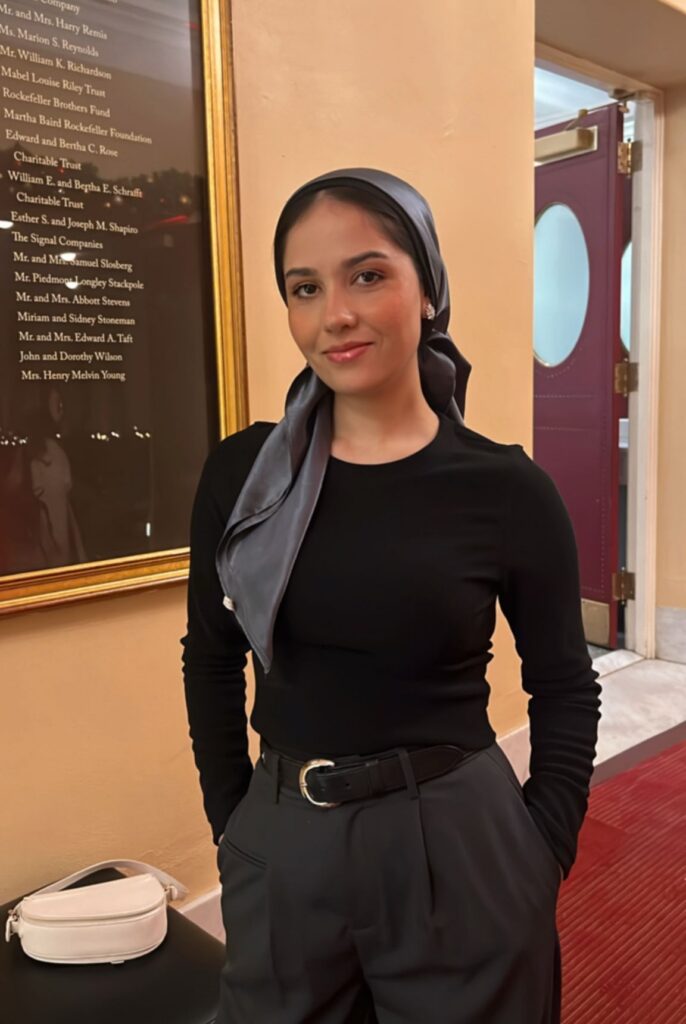
VERGENNES — Taniya Noori and Sodaba Faizi were among a very few girls to evacuate Afghanistan when the Taliban gained control in 2021; the two started at Middlebury College a few months later.
More than 6,000 miles from their native soil, Noori and Faizi couldn’t stop thinking about their sisters back home.
Their sisters and friends who weren’t as lucky, who were banned from school, from public spaces, from speaking outside of the house. The girls who would never get a chance to have an education like Noori, Faizi and their classmates were receiving at Middlebury. So in 2022, Noori started the Afghan Tutoring Network, where tutors teach girls in Afghanistan over the phone on a broad range of subjects.
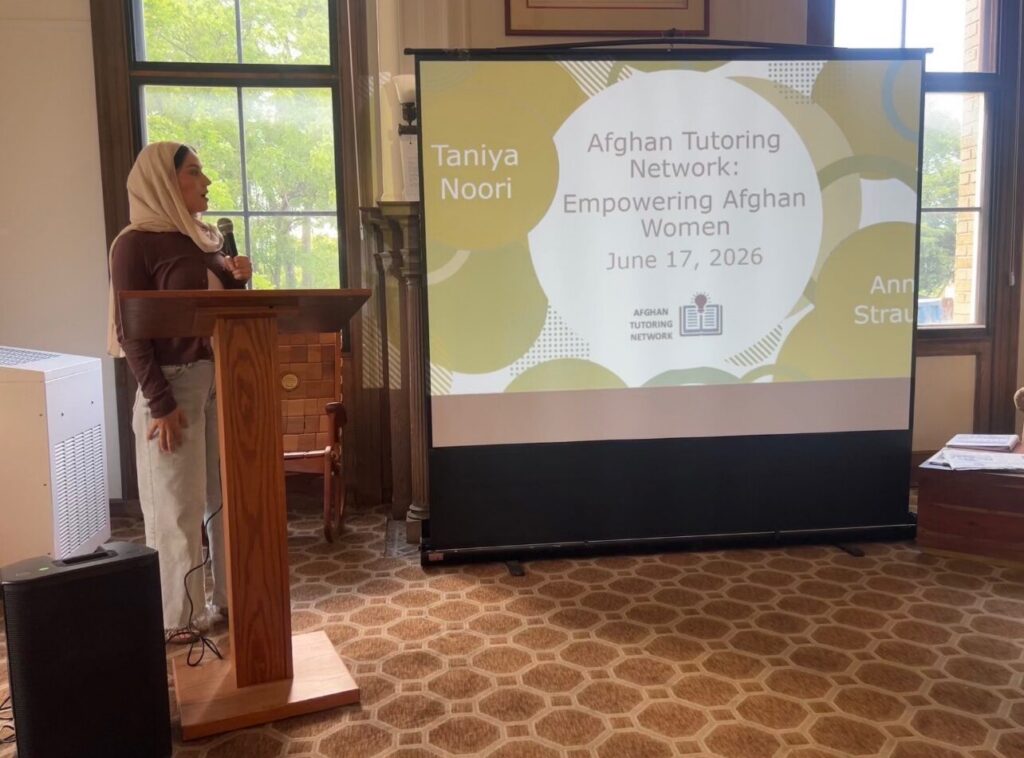
“We had survival guilt,” Noori said at an event about the Afghan Tutoring Network last week at Bixby Memorial Library. “Why do I deserve to have so many opportunities when at the same time, Afghan girls back home, they don’t have any of any kind of opportunities. They can’t go to schools, they can’t go to universities, and all kind of educational institutions are banned for girls right now, so no opportunities. So that’s why in 2022, I was a sophomore when I started this initiative, and we called it Afghan Tutoring Network.”
Noori, Faizi and co-director of the network Ann Straub all spoke at the June 17 talk sponsored by the Bixby Speakers Bureau and Amigas del Pueblo, a group of women in the area who are highlighting immigration stories by sponsoring a collection of books and speaker events at the Vergennes library. This was the first of their events and others can be viewed online at bixbylibrary.org/events.
Around 35 people attended the talk, including women from Amigas del Pueblo, five tutors for the network, and various community members.
‘Lifeline to Learning’
The Taliban, an extremely conservative Islamist group, controlled Afghanistan from 1996-2001. Then the authoritarian organization regained control of the South Asian nation on Aug. 15, 2021, destroying the gains in women’s rights achieved during the 20 years before.
Noori and Faizi were attending the first and only all-girls boarding school in Afghanistan, School of Leadership Afghanistan (SOLA), started by Middlebury College graduate Shabana Basij-Rasikh ’11. When the Taliban took control, it became clear the girls needed to leave to continue their education.
In a harrowing journey covered by “60 Minutes” around 250 girls and staff associated with SOLA evacuated Afghanistan late that August, first to Qatar and then Rwanda, where the school relocated. Classes resumed four days later. Noori, Faizi and other classmates were encouraged by Basij-Rasikh to apply to Middlebury, and by January 2022, they made it to Vermont, shocked by the cold.
Although the Afghan Tutoring Network isn’t associated with SOLA, many current tutees are relatives or friends of girls who attended SOLA. Faizi’s younger sister is one of them. The sister was 16 years old when she was forced to stop going to school, Faizi said at the event.
After Faizi and Noori, who both just graduated from Middlebury, introduced themselves and the network, co-director Ann Straub shared details about the program, stories of students and challenges faced. Straub, who now resides in Middlebury, previously worked at the Council for International Schools based in the Netherlands and the International School Bangkok in Thailand. When Noori asked Straub to help with the Afghan Tutoring Network, she got to work, finding tutors, training them and matching them with students.
Now the network has been going for three years. Straub explained that it started with only a few people and has expanded to 63 tutors (mostly American) and 39 students, who range in age from 13 to 32. Students live primarily in Afghanistan, but there are others in Pakistan, Russia and Rwanda.
None of the girls have laptop computers, Straub said, so the network has purchased internet for 17 students and phones for 19. Tutors and students meet for one hour weekly over WhatsApp, an end-to-end encrypted app, and students submit pictures of their work there. Tutors teach a variety of subjects, but mainly “literacy, meaning, writing, speaking and listening,” Straub said.
Although it may seem pointless to teach when the girls on the other end of the connection face serious obstacles accessing higher education, Straub said there are many reasons this work is important.
“Women are the change makers in their families so when women are educated, they will perpetuate the education and make sure their children are educated,” Straub said. “And education is something that’s in here [in your brain]. Nobody, nobody can take that from you. No matter what happens in your family, no matter what’s banned or what’s taken away from you, nobody can take that away. It’s always there.”
Straub also highlighted that most communicate by texting in English, so for girls and women to keep learning on their own, knowing English opens opportunities. The tutoring is vital for them, Straub said.
“It’s their lifeline to learning, right?”
Priceless relationships
Although learning is the primary goal, the relationships formed between tutors and students are just as important, Straub said.
“The relationships established with our students are just priceless, and you kind of forget everything in the world when you’re working with that hour, with your student,” she said. It can be challenging to make students comfortable and navigate cultural communication differences, Straub acknowledged, but the bonds established cross cultural divides.
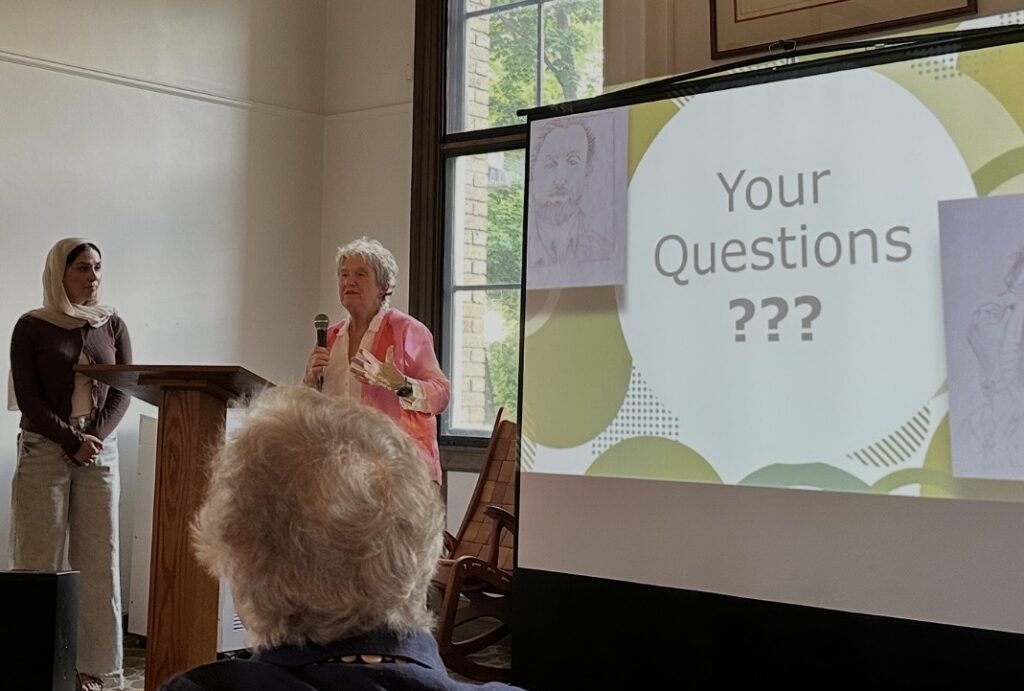
Tutor Mary Sullivan, a former teacher at Mt. Abraham Union High School and UVM professor, highlighted the meaningful relationships established at the event, sharing about her student Aisha.
“I think that one of the things she misses from her days in school, she was very young, was that sense of belonging, and I think that we have been able to build that in this tutoring network with our students,” Sullivan said. “And I see that, I see how she has blossomed and how she laughs, and we just have such a wonderful, wonderful time, and like I said, it’s truly a gift.”
Sullivan also noted the strong bonds she’s observed within Aisha’s large family. Aisha didn’t have a phone when they started, Sullivan said, but her four brothers took turns running home from work so she could use their phones for tutoring.
Each student’s father and brothers must approve of tutoring for safety reasons, Straub said. If members of the Taliban were to learn about the tutoring, it would be very dangerous for the girls and the program. Straub said they’ve only had to cut connection with one student when they learned her brother was in the Taliban. It was heartbreaking, she said, but it had to be done to protect the program and girls.
One student, who was just 13 when she started being tutored, recently had a book of poetry published called “Where the Light Enters” and also wrote the poem “A Girl Cries,” that was published in the Washington Post in an editorial by Basij-Rasikh. Straub read the poem aloud at the event. She also spoke about her student who started a secret school at her home in Afghanistan for 15 girls, teaching them reading, writing, sewing and connecting them with a psychological counselor.
“Most of all, she teaches them that they’re worthy, that they can learn and that they have value in their lives,” Straub said. “What she’s doing is pretty amazing. She is very interested in human rights and is trying desperately to get out of Afghanistan, go to college.”
Getting involved
The only qualifications for becoming a tutor, Straub said, are being able to write, speak and listen in English, committing to an hour meeting weekly, and wanting to establish a relationship with the student. Straub said anyone interested can email her at [email protected] or Noori at [email protected].
The group also has a GoFundMe that helps cover the cost of internet and phones purchased, which can be found at gofundme.com/f/support-for-afghan-tutoring-network.
One student, Bahara, wrote the following about the Afghan Tutoring Network, which Straub read aloud at the talk:
“I will be grateful for this opportunity and the teacher who supported me for the rest of my life. I am now giving back by tutoring a 13-year-old Afghan girl. Every success I have achieved and every goal I have reached is because of this class since I have no other way to learn. This opportunity is so important for Afghan girls, so please choose to support us.”