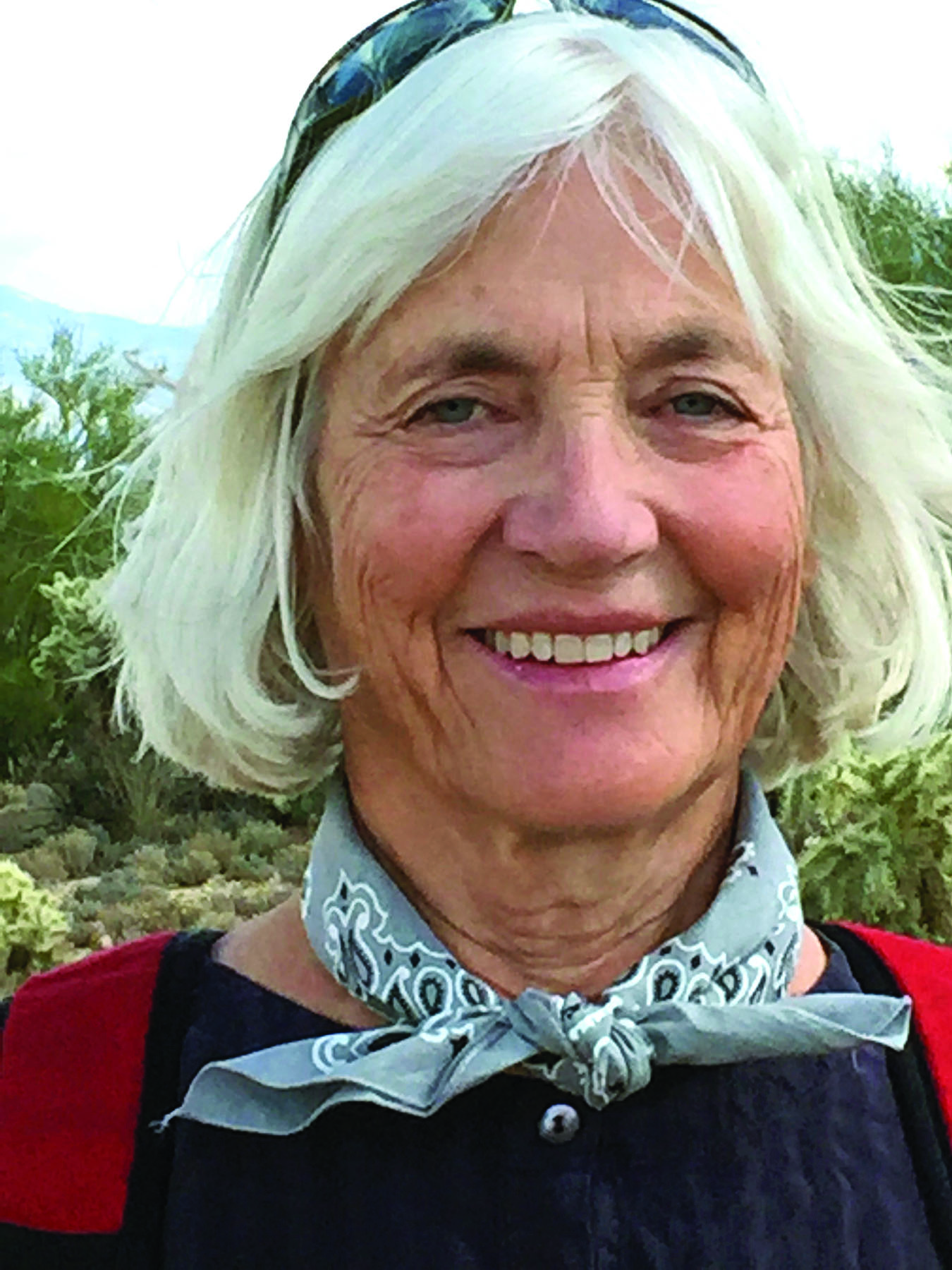
“Stay busy with beauty as well as outrage.”
That’s how Anaïs Mitchell answered a question I posed to her recently about the power of song to nurture social change.
“I remember going to demonstrations when I was young and noticing how expressions of beauty spoke just as loudly as expressions of outrage,” Mitchell said. “Both are valid, but music and art have a way of saying ‘Listen, look, it could be like this instead!’ That’s been a life lesson of sorts.”
For Mitchell, a renowned musician and playwright, song has been woven into her sense of justice since childhood. But for me, well… I’m a latecomer to this party.
The first time I experienced song as a form of resistance was last spring, on a bright, brisk day outside Burlington’s federal courthouse. A couple hundred of us were gathered there for Mohsen Mahdawi’s hearing. Two weeks earlier, Mahdawi, a peace activist and permanent resident of White River Junction, had arrived for his citizenship exam in Colchester only to be arrested by masked agents. Since then, ICE had been holding him in a cell at the Northwest State Correctional Facility in St. Albans. He was never charged with a crime.
At the courthouse on Elmwood Avenue, we stood in a loose cluster around the front entrance, awaiting the judge’s decision. Leaders from an alliance of nonprofits and student groups spoke on behalf of Mahdawi. Posters and banners and Palestinian flags danced above the scrum. The April sunshine felt glorious (it always does in Vermont), but unease stirred through the crowd. Inside, we knew a federal judge was deliberating. The decision he was set to hand down that day seemed like a bellwether for the country. Were we really going to allow masked thugs to snatch our peaceful neighbors off the street and shove them into unmarked cars? Was this who we had become?
Enter Joanna Colwell and Grace Oedel, two local song leaders. As the speakers finished their remarks and the breeze picked up, it would have been easy for the crowd to deflate, for people to grow tired of waiting for who knows how long. But Colwell and Oedel began to fill the space with song, teaching us through call-and-response a bevy of tunes—some old, some newly written for this moment of state-sanctioned violence.
As we sang, our nerves metamorphosed. Regardless of the day’s outcome, there was a feeling of something being created that could not be taken away. And that something was fellowship—all of us there together, held in the common cadence of song. Thanks to Colwell and Oedel’s invitation, we had created what Oedel recently referred to as a “pop-up community” sung into being.
I’d been part of plenty of protests before, when chants and songs were yelled amongst marchers. But this felt different. We were singing to the courthouse, hoping that those inside, maybe even Mahdawi himself, could hear us. And the message we were imparting was one of hope and love.
This was the first time I met Colwell and Oedel, women whom I now know as friends. All these months later, what stands out to me still is their luminous faces. As they sang amidst the darkness that had brought us together, and amidst the stakes that felt so very high that day, they smiled. And we smiled back.
SONG AS ANTIDOTE
“It’s really dramatic how in a tense situation, a song completely transforms the environment,” Colwell reflected recently, “including our inner environment.” Even in the throes of chaos, or police presence, or imminent arrest, as soon as someone starts singing, everything changes. “Before long, everyone is singing,” she explained. “And then we’re all breathing together.”
Singing calms our nervous systems. And that calm travels outward like the ripples of a de-escalation stone tossed into the center of a pond—or protest. For this reason alone, it’s no wonder that song has always been a part of social movements: from Civil Rights anthems to anti-war hymns; from the student-led Otpor Resistance in Serbia to the singing revolution of the Baltic States. Songs keep the calm.
They also help us to carry on.
After Renee Good and Alex Pretti were killed, when thousands of immigrant families in Minnesota hid in their homes, a new chorus of the age-old singing resistance rose up—from the ebullient “It’s Okay to Change Your Mind” sung to ICE agents to the solemn “Hold On” sung to locked-down neighbors (you can learn about the song’s Vermont roots on Rumble Strip). In recent months, the movement has swelled into a massive nation-wide ensemble. Singing Resistance is “building a mass movement of singers to protect and care for our communities in the face of rising authoritarianism,” the coalition explains. “We sing because song is an antidote to fear.”
And here lies the movement’s sustaining power—to “sing not only for the world we want to create, but to create that world right here and now.” Listen, look, it could be like this instead. Or, as Alice Walker once said: “Look closely at the present you are constructing: it should look like the future you are dreaming.”
SINGING “NO MORE” TO ICE
Next Friday, on May 8, thousands of Vermonters will gather in St. Albans to say “No More!” to ICE’s inhumane and unconstitutional actions. Hosted by ICE Out Vermont Alliance, the day’s demonstration will have two parts. First, we’ll convene at noon at Taylor Park in downtown St. Albans for a large, legal, and peaceful demonstration with speakers (including Lincoln’s beloved pastor Co’Relous Bryant), Bread & Puppet, and 1,000 singers. Next, there will be a non-violent sit-in at the nearby Customs and Border Patrol offices (participation limited to affinity groups that have attended the required training).
Singers from all over Vermont are converging to take part in the demonstration at Taylor Park, and we hope you’ll come, too—to sing or cheer or listen. With our crooning ancestors at our backs, we’ll be raising our chorus of voices to:
Put pressure on ICE to change their practices of arresting and detaining immigrants.
Raise public awareness about ICE’s illegal practices in Vermont and nationwide.
If you are interested in joining us in song, we would love to have you. Please know that:
You don’t need to “be a singer”! (I’ve never thought of myself as a singer, but have been singing with abandon at protests this past year.)
The song leaders will teach the songs as we go.
Please arrive at Taylor Park at 11:30 a.m.
All are welcome.
When I asked Anaïs Mitchell, who will take part in the singing on May 8, why she’s going to St. Albans, she talked about the courage of Minnesota. “I was so inspired by the brave resistance to ICE in Minneapolis, especially the clips I saw of folks singing together. I want to be part of this beautiful, creative, communal expression of resistance in my home state of Vermont!”
And these (soon to be) Green Mountains are still home to Mohsen Mahdawi, too. He was released that day last spring, into the singing crowd that was waiting for him outside the courthouse. He said he could, indeed, hear the songs drifting in—perhaps someone had opened a window to let in the April air. Free at last, he requested one of his favorites, “We Shall Overcome,” and lifted his voice along with ours.
Let’s sing together this spring, too, dear Vermonters. We hope to see you in St. Albans.
Note: Liza Cochran is a writer, teacher, and mother of two young daughters. A community organizer with Indivisible, she co-authors the Substack Brave Little Voices.