BRISTOL — As the Vermont State Climatologist, Lesley-Ann Dupigny-Giroux spends a lot of time diving into a topic one could easily find distressing — climate change.
But asked at a recent lecture in Bristol how optimistic she is when looking toward the future, Dupigny-Giroux pointed to what gives her hope.
“When I go into a room full of students who are asking me sophisticated questions I didn’t get the last five years, or the last 10 or 15 years, that’s part of where the hope comes from because it means the level of understanding and the appreciation of the processes and the dynamics continues,” said Dupigny-Giroux, who is also a professor of climatology at UVM.
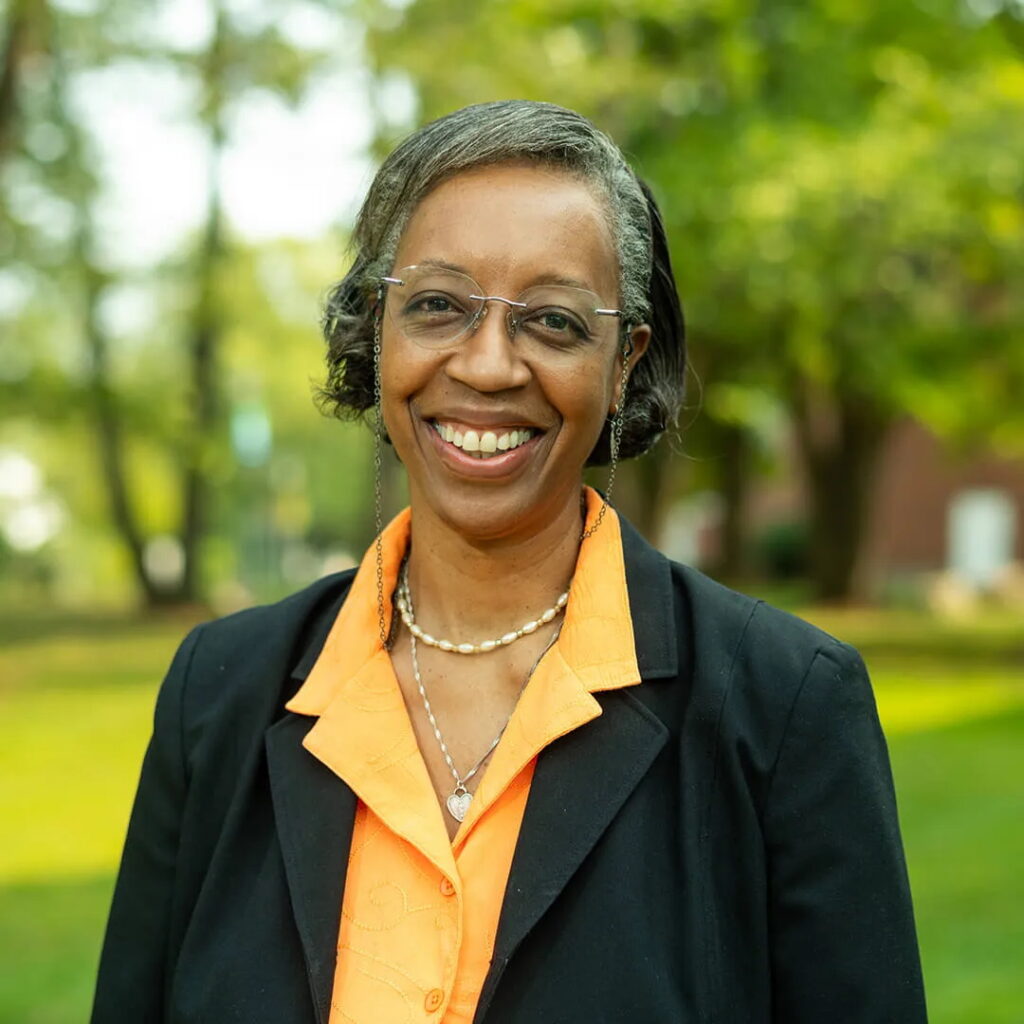
She added that seeing the science come out and the potential for new technologies to be used in positive ways for analyses also brings her hope.
“I don’t know if (life) will look exactly as it does today, but I know that there’s positive movement forward,” she summed up.
The “Climate Change in Vermont” lecture was held at Mount Abraham Union High School on March 19 and sponsored by Addison County conservation commissions. That evening, Dupigny-Giroux highlighted what climate change looks like in the state, related challenges and opportunities for individuals and communities to respond.
“Each of us can only do so much individually,” she said. “It takes a town, it takes a municipality, it takes a regional planning commission, it takes a watershed, actually, to try and get some stuff moving forward.”
Dupigny-Giroux noted one challenge is contending with multiple weather events taking place simultaneously or in close succession. She pointed to the summer of 2023, one marked by both wildfire smoke from Canada and destructive deluges.
“We were still dealing with the effect of smoke at the same time as trying to clean out from the floods themselves,” she said. “One of the things that we’re seeing that we have to work with and understand is that there can be more than one event going on either back to back or at the same time.”
IMPACTS
Dupigny-Giroux said that when thinking about what our changing climate looks like, it’s important to keep in mind that the earth and climate are a system.
“Everything is interconnected,” she said. “If you change part of the system, so let’s say you warm up the earth, then that’s also going to change other parts, like where your winds blow or how much rain falls.”
Dupigny-Giroux noted we can break down climate change into what is causing it (greenhouse gasses, changing land use, etc.), impacts we observe once it’s taking place and strategies to respond to and mitigate it.
She zoomed in on some of the impacts we’ve observed locally here in Vermont. Dupigny-Giroux encouraged attendees to use as many years as possible when looking at how the climate is changing. One slide included in the presentation showed the number of floods in the Burlington area from 1996 to 2025.
“If you only looked at the last five or 10 years, you’d say, ‘Oh my goodness me, there’s all this flooding going on,’ but if you look all the way back through time to the 1990s, you see we had some big flood events as well, including 1998 where we started off the year with an ice storm, and we had a really, really wet summer,” she said.
Dupigny-Giroux’s presentation also covered droughts in Vermont. She noted the state was drought-prone in the early to mid 1900s, but around 1970 started to become a wetter place.
“We are still prone to droughts, but they are not as extensive or as prevalent as the early part of the 1900s,” she said. “Doesn’t mean they’re gone, so we still need to know about them a little bit.”
The state weathered a particularly severe drought last year. Dupigny-Giroux noted Vermont saw decent amounts of precipitation and a wet May before experiencing its driest August on record.
“This is what a flash drought looks like — couple weeks no precipitation, high temperatures, lots of evaporation, and that’s what you get,” she said.
The state is still experiencing drought conditions, Dupigny-Giroux said. The U.S. Drought Monitor as of March 26 listed about 33% of Vermont in a moderate drought, with another 31% (including parts of Addison County) experiencing abnormally dry conditions.
This past February was the 10th driest on record, according to the monitor.
“We’re still in a drought, which means we still need to pay particular attention, especially from the (Northeast Kingdom) all the way down to the southern parts of the state and up into parts of Addison County,” Dupigny-Giroux said. “We still need to pay attention to how the moisture is being received and where is it going.”
She noted food security is an important thing to be thinking about, raising questions like where our food comes from and if there are food deserts in the state.
“All those things we need to think about because as our drought last year showed us, it doesn’t take too much for us to really start seeing depletions in certain crops and species,” she said.
Dupigny-Giroux pointed to a graphic included in the 2025 Vermont Climate Action Plan she worked on, which shows changes projected in various hazard risks and the confidence of those projections.
“For something like heavy rainfall, we know it’s going to increase, and we’re really confident about that,” she said. “Something like drought, also know it’s going to increase, but maybe not as confident about how that might play out as our heavy rainfall.”
OPPORTUNITIES
Dupigny-Giroux noted another aspect of climate change to consider is vulnerability.
“We can talk about it from a mobility perspective, we can talk about it from an income perspective, we can talk about it from a gender perspective,” she said. “There’s so many ways that we as humans, our systems, are vulnerable that we need to make sure we are making a note of.”
Dupigny-Giroux also highlighted opportunities for moving forward. She encouraged attendees to collaborate with her and her role as state climatologist.
“As a conservation commission, as a regional planning commission, come in and let’s have a chit chat so that we can see how some of my classes might be able to help you or put together stuff for you,” she said, pointing to her students’ work with the town of Underhill to identify climate change recommendations.
She also noted the opportunities of agroecology, an approach that applies social and ecological principles to farming systems.
“Stuff doesn’t have to be an ‘either-or,’ it can be an ‘and,’ and one way of doing an ‘and’ is to do agroecology, so both the ecological, ecosystem services but also in conjunction with agriculture and how can we do a win-win-win or a co-benefit,” she said.
The Community Collaborative Rain, Hail and Snow Network, or CoCoRaHS, is a network of volunteer weather observers. Dupigny-Giroux encouraged those interested to become a CoCoRaHS observer, part of the grassroots, volunteer network that works to “measure and map precipitation (rain, hail, and snow) in their local communities.”
She acknowledged the fatigue that comes along with this work in addition to other parts of life, leaving attendees with questions to consider.
“How do we work in that and help to honor us as humans, honor that we can’t be top-notch all the time, we do get tired?” she asked. “Doesn’t mean we give up, but we do get tired, and then how do you get up the next day and keep going at it? Because that’s the only way we’re going to build resilience everywhere.”