
News
Student’s death shines light on marginalized youths
MIDDLEBURY — Middlebury College senior Lia Smith was memorialized on Sunday, Nov. 2, in Atherton College — 3,000 miles away from the spot her body had been found 10 days earlier in a lonely Cornwall field.
And while Smith’s life ended at 21 following an act of self-harm, those who knew her — and who work with transgender individuals like her — pledged to remember her and ensure her death reinforces the fragility of human life and emphasized the need to inject more understanding and compassion for marginalized youths.
Authorities found Smith’s remains near The Knoll, the college’s organic garden, on the afternoon of Thursday, Oct. 23. She had been missing for six days, during which searchers, with the aid of drones, telecommunications technology and police dogs, scoured the campus for her.
Middlebury Police Chief Jason Covey was among those who searched for Smith.
“This was not the result we wanted to bring (the family),” he said solemnly.
Covey’s not exactly sure what led Smith to take her own life, but he was distressed by some of the insulting/bullying comments he saw posted on social media during the search.
“From our perspective, that certainly wasn’t helpful,” he said. “People should always have situational awareness. The comments we saw were divisive and just plain hurtful.”
The Lia Smith tragedy is sadly a recurring event in the U.S., according to recent data.
A 2023 study by the UCLA School of Law’s Williams Institute found that 42% of transgender adults in the U.S. had attempted suicide; 81% had “thought about suicide”; and 56% had engaged in “non-suicidal self-injury” during their lifetimes.
The overall U.S. suicide rate in 2023 was 14.1 per 100,000 population, according to the Centers for Disease Control.
An estimated 2.8 million people (age 13 and older) in the U.S. identify as transgender, according to new estimates from the Williams Institute. That number includes around 724,000 youth age 13 to 17 (3.3% of youth) and around 2.1 million adults age 18 and older (0.8% of adults).
Three-quarters (76%) of people age 13 and older who identify as transgender are younger than 35 years old.
Meanwhile, an estimated 5% of adult Vermonters identify as lesbian, gay, bisexual or transgender, according to the Vermont Department of Health. The department further proffers that 8% of high school students identify as lesbian, gay or bisexual.
Sometimes that identity can be difficult.
Sarah Dudek is an office-based clinician for youth and family at the Counseling Service of Addison County. Her caseload includes three individuals who identify as transgender, whom she helps navigate the emotionally taxing process of trying to fit into a society that — at the current federal policy level — shuns them.
“It’s a small community, for sure,” she said, adding, “there are also folks who are questioning (their gender) and feel unable or unsafe to come out to the people in their lives. So they might feel comfortable talking about it (during counseling) but not sharing outside of this room.”
The transgender experience is something Dudek views through a dual lens: that of a social worker, and as a parent. She’s mom to a child who identifies as transgender.
“My child spoke of being a girl from the age of two,” Dudek said. “As a parent of a young child, you think it’s a phase, or you’re just not sure. We supported her to express herself the way she wanted to throughout her life. At age 6, she was very adamant about ‘this is who she is’ and she was experiencing a lot of emotional distress, because she was wearing boy clothes and looking like a boy.”
Dudek said her child’s young peers have been “incredibly supportive of her. She’s really happy.”
LAWS ON IDENTITY
But being happy can be elusive as a transgender person, advocates stressed, particularly in light of recent state laws and executive orders signed by President Donald Trump.
According to the Trans Legislation Tracker, state legislatures (other than Vermont) have passed 123 bills in 2025 seeking to dilute or restrict services or rights for transgender individuals. Many of those initiatives are bans against gender affirming care for those under 18, against “males on female sports teams,” or stipulate that only those born with female anatomy can be allowed into women’s restrooms.
Among specific bills: Arkansas’s Bill HB53, which stipulates no state funds can be used for “a service that may be related to gender dysphoria that is not a mandatory service”; Iowa’s Bill SF418, which defines “‘Sex,’ when used to classify or describe a natural person, means the state of being either male or female as observed or clinically verified at birth”; and Oklahoma’s Bill HB1688, which states, “The biological sex designation denoted to a child at birth on the certificate of birth shall not be amended.”
Vermont is the only state on the Trans Legislation Tacker that doesn’t show any pending or passed legislation aimed at transgender folks. That’s a plus, according to advocates, but still not enough to make trans individuals feel completely safe and secure.
“Even in such a wonderful, supportive community that we have in Middlebury, there are still worries about safety and risk,” Dudek said, speaking in particular of young transgender youth. “There’s a lot of bullying that occurs in the schools; that can become emotionally and physically dangerous. There’s concern for safety.”
That concern was palpable while this article was in the works.
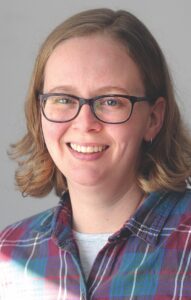
LINDSEY FUENTES-GEORGE
Lindsey Fuentes-George, a former Middlebury selectboard member, leads The Teen Center at 77 Mary Hogan Drive in Middlebury. The center attracts Middlebury-area teens from all walks of life — including some members of the LGBTQ+ communities. The acronym stands for lesbian, gay, bisexual, transgender, queer/questioning and anyone who feels part of the community.
Fuentes-George understands the angst that trans youth are feeling every day, and in particular after Lia Smith’s suicide.
“When the world is yelling at them constantly through social media and mainstream media — and when people in power are vilifying literal children for being themselves — it’s easy for them to think the world hates them, that they have to choose between being happy in their own skin or having a future in our society,” Fuentes-George said via email. “As a parent myself, I ache thinking that Lia may have felt this way. And as a parent, I ache knowing her family just wanted to see her grow into her best self, shine her unique light, and come home (at least for the holidays).”
Fuentes-George recalled one of the first requests she fielded from teens when she arrived at the center in 2021 was to hold a Pride event. This led to the founding of MiddPride, which hosts an annual gathering and special events for the LGBTQ+ communities. It’s been a rewarding and worthwhile effort, she said.
“Since we started MiddPride, we have seen fewer instances of self-harm among our teens,” Fuentes-George said. “We’ve seen more joy, more authenticity, and more confidence.”
Dana Kaplan is executive director of Outright Vermont, a nonprofit with a stated mission of “building a Vermont where all LGBTQ+ youth have hope, equity and power.”
“Organizationally, we were deeply saddened to learn of Lia’s passing, for sure,” Kaplan said.
But Smith’s death becomes more infuriating when one considers the hardening federal stance on trans issues, according to Kaplan.
“It’s impossible not to think about the current context that trans people — and specifically, trans youth — are navigating right now, in the U.S., in the midst of this (Trump) administration. You’ve got to be able to put this death in the context of what’s happening around us.”
Kaplan noted Smith’s past success as a diver and swimmer, who had “talked about how challenging it was to be able to play the sport she loved to play, because it didn’t feel there was a place for her. Or she tried to go to the locker room and didn’t feel like she could do what she needed to do to get ready for her (meet).”
Smith’s suicide, Kaplan said, didn’t come in a vacuum.
“We know this death came amidst attacks on trans athletes in schools and ways the administration has been restricting the rights of trans people in every aspect of their life,” Kaplan said. “We need to be aware of the impact that policies have on the lived experiences of young people.”
Outright Vermont holds special activities and events — including a summer camp on land it owns in Orwell and Benson — as part of its outreach to LGBTQ+ and trans youth.
“There are so many Lias out there,” Kaplan said. “It hits close, to know this was a young trans person at Middlebury College.”
HELPING TRANS YOUTH
Kaplan cited several ways to help trans youth feel more at ease. They include:
• Enjoying a level of family acceptance.
• Having a supportive adult — such as a teacher, or a neighbor — who “believes you and affirms your identity.”
• Having a friend group, or a peer who “you can be yourself around, who’s going to call you by your right name and pronouns.”
Gender identity is a protected category among Vermont’s anti-discrimination laws, Kaplan noted. But that hasn’t proven to be a panacea.
“We’ve got good protections for our community, but the lived experience that people are having on the ground does not match what the protections should be affording,” Kaplan said. “So the level of discrimination, the level of bullying that’s happening right now — some of it incredibly emboldened by this current administration — is off the charts.”
Kaplan challenged folks to imagine themselves living in a world “that either does not reflect your experiences and reality, or tells you that who you are is wrong. That’s the stress (of being transgender). For anybody who’s navigating their identity in a world that tells you who you are is wrong, or somehow, you’re going against the norm, it’s not easy.”
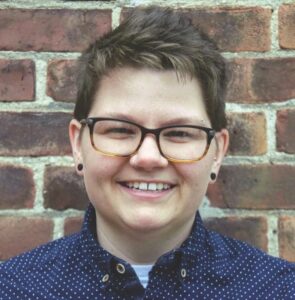
JESS VENABLE-NOVAK
Like Kaplan, Addison Central School District board member Jess Venable-Novak is a member of the trans community.
Venable-Novak didn’t know Smith, but wishes they had.
“When I heard the news about Lia, I was heartbroken,” Venable-Novak said through an email exchange.
Venable-Novak knows what Smith was likely going through.
“Transgender folks, especially youth and young people, have to overcome so many barriers that it is often difficult to know that there is hope to hold on to, especially in the political and social climate we find ourselves in today,” they said. “Every day we see and hear the lives of trans people being debated, refuted, negated and simply disrespected; hope can feel out of reach. I don’t know the details of Lia’s life or her story, but I’m sure she was impacted by the constant attempts to erase transgender people from society. I don’t know one trans or non-binary person who hasn’t felt the weight of that type of hate, myself included.”
Venable-Novak urged folks to check on their trans friends and family members, to see if they’re OK and be a compassionate listener.
“As a transgender person who has felt hopeless so many times in my own life, all I can share is that it does, in fact, get better,” they said. “Even amidst the hate-filled rhetoric, policies, and threats, there is space for so much joy. Inside every trans person is the most profound conviction, because we have chosen to be ourselves despite all the ways the world has tried to stop us. I have had the privilege of seeing that conviction blossom into joy and warmth and hope, and be impossible to ignore. At points in my own life, I have needed other trans people to be a mirror for me to see that. I hope that the trans people in our community, especially youth and young folks, know that there are other trans people here, like myself, who can be that mirror and can remind them that there is hope and joy and that things do get better.”
Stephanie Terry is a clinician/social worker at CSAC whose clients include children. Among her clients are young members of the LGBTQ+ community, whom she said have been expressing fear and trepidation about the extent to which marginalized groups could be targeted in an increasingly polarized nation.
“There’s a fear about being visible, seen for who they are,” Terry said. “‘How will I be perceived?’ ‘Will I be targeted for who I am?’ ‘Is it safe to hold my partner’s hand?’”
Terry was asked about the feedback she’s received from some of her clients in the aftermath of Lia Smith’s suicide. In addition to a sense of loss, Terry has heard clients express confusion and a sense of “This didn’t have to happen. What I’m probably hearing the most about is feelings of disgust (about hateful rhetoric), or ‘How could anyone treat anyone else this way?’ Like people in the LGBTQ+ and trans communities don’t matter.”
A STRONG COMMUNITY
Still, Terry takes comfort in her belief that Addison County is a strong community that looks after its own.
“There are lots of places where you can get support. It might feel like there’s nobody else, but there are a lot of people who understand,” she said.
Like Kaplan, Dudek believes that kinship, understanding and support are key supports for transgender individuals.
“Even in such a wonderful, supportive community that we have in Middlebury, there are still worries about safety and risk. It’s making sure they have a place where they feel safe,” she said. “Often, the real support they find the most helpful is being with peers, with people who accept them and love them for who they are.”
Dudek acknowledged MiddPride and other organizations where trans and LGBTQ+ folks can find peer support and plenty of sympathetic ears. They include Queerly Beloved, with meetings hosted by Middlebury’s Champlain Valley Unitarian Universalist Society, and a CSAC program called Interlude, based in the Marble Works complex.
These programs offer occasional emotional lifelines, but it can be a lonely road for trans and LGBTQ+ folks in the Green Mountain State, Dudek conceded.
“A thing that is huge is the social isolation in Vermont, in general, for young people,” she said. “Unless you’re part of a sports team, or in college, or part of a group, it’s really hard to make friends and meet young people, folks they feel safe with and that who accept them.”
Isolation can exacerbate mental health and feelings of depression. Dudek said several of her clients have voiced thoughts of self-harm through the years, and Lia Smith’s passing proved deflating for others in the trans community.
“(Her death) was so devastating for them — for everyone, really,” Dudek said. “For people who are thinking about ending their life, who are feeling hopeless, that experience of learning of Lia’s death was really painful. It highlights the enormous emotional stress they are feeling.”
What about those who believe transgenderism is a sham, that it’s a mental health condition?
“We will never know who a person is, more than they know themselves,” Dudek argued. “People know who they are, and we need to trust they know who they are. As a parent of a transgender child, my child spoke about being their gender from a very young age, before they even knew there was anything different about how they were feeling about who they are.
“We don’t fit into little boxes, as humans,” she added.
Kaplan believes society doesn’t focus enough on the “bright spots” of identity.
“The fact is that, actually, my being trans is a superpower. It makes me a more self-aware person, that I’ve had to go through this experience and I know deep down who I am.” Kaplan said.
What are the warning signs to look for in a person who might be considering self-harm? Growing withdrawal from their support system, a lapse in their daily routine, and or withdrawing emotionally or physically from the people and things they enjoy.
Suicide is preventable, and help is always available. At CSAC, you can call 802-388-7641, or you can call or text 988 to reach the 988 Suicide and Crisis Lifeline. You’ll be connected with a trained, compassionate counselor who can provide free, confidential support 24/7.
“You don’t have to be in crisis to call,” Dudek stressed. “If you’re feeling emotionally unstable in any way, you can call. It’s important that people don’t wait to reach out for help until they’re in the worst possible crisis.”
John Flowers is at [email protected].
More News
News
City councilor heads to Germany for Army job
John Montgomery would have liked to take on another term, but was recently deployed to tra … (read more)
Homepage Featured News
New report lists county prosecutor’s ‘significant failures’
Researchers commissioned by the Vermont Department of State’s Attorneys and Sheriffs descr … (read more)
News
See what’s on the ballot in your community this Town Meeting Day
From school budgets to selectboard seats, here’s what Addison County residents will be vot … (read more)