
News
Q&A: Author Ron Powers on the mental health crisis
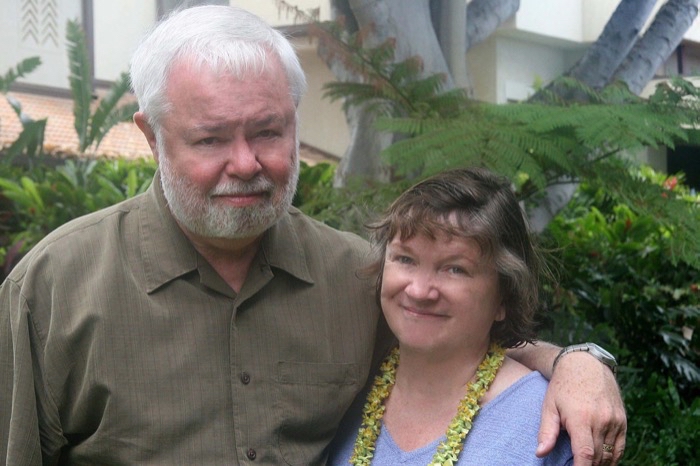
The documentary film “No One Cares About Crazy People,” directed and produced by Gail Freedman, was inspired by Vermont author and journalist Ron Powers’s acclaimed book of the same title. It examines America’s mental health crisis through the personal stories of families navigating severe mental illness — including Powers’s own story — and through the grassroots advocacy and policy battles that continue today.
The film will be shown at Middlebury’s Town Hall Theater on Saturday, Sept. 6, at 2 p.m. After the screening, Freedman, Powers and other members of the cast and crew will lead a discussion with the audience.
Powers spoke with the Independent about the issues at stake, weaving in both his research and his family’s lived experience. Here is the Q&A with Powers speaking in his own words.
What are the greatest barriers faced by people suffering from severe mental illness, or SMI?
Primal fear, ignorance and exclusion. Far too many Americans do not see SMI in anything but distant, abstract terms. It’s something that happens to somebody else. Too many people, including providers, politicians and law enforcement remain clueless about SMI’s properties. Hence “crazy people” in prisons instead of psychiatric settings. A big reason for this is the scarcity of public education about the disease. It should be taught in secondary school health classes and in college curricula.
Another barrier is blind criminal justice: Judges still find it convenient to throw SMI sufferers into prison than into treatment. Hospitals, after a few days of cursory treatment, literally throw them out onto the street and into the spreading maw of homelessness.
Perhaps the most frustrating barrier, though, is a “companion” affliction known as anosognosia, a Greek word for lack of insight. More than half of those affected with SMI suffer it. This evil intruder convinces victims that nothing is wrong with them and they stubbornly refuse medications or therapy. Our younger son Kevin contracted it and went off his meds, with tragic results. He hanged himself in our basement a week before his 21st birthday.
I’m sorry. How, exactly, do you define “mental illness”?
There is no “exactly.” Doctors (and “healers” and shamans) have been aware that certain people hallucinate, hear voices and behave oddly since the Middle Ages, when the rise of cities drew them out of cellars and attics and threw them into dense urban populations. Many went from there into atrocious insane asylums and dungeons. Yet the origins of what was wrong remained a mystery. A common assumption was evil spirits.
This sudden urban visibility triggered the first efforts to “cure” them, but “curing” usually meant chains and dungeons, drillings in the head to let the demonic spirits out, and — if they were seen as witches — hanging or drowning them.
Today, neuroscience still hasn’t discovered the ultimate cause of SMI. Doctors have learned to differentiate between treatable complaints — alcoholism, drug abuse, chronic anger, alienation — and SMI, of which schizophrenia (SZ) is the best-known. Serious mental illness is a disease apart and incurable. It’s the worst of the worst.
SZ is incurable. The gene-afflicted brain starts to produce an oversupply of the vital neurotransmitter dopamine, normally a positive substance, but an imbalance is thought to cause madness. Sometimes onset of the disease is triggered by something such as an infection, head injury, substances such as marijuana or childhood trauma, but often there is no apparent trigger.
How commonly does this disruption occur?
SZ strikes about 3% of the world’s population. Yet its damage far exceeds its numbers: disrupted families, depletion of the labor force, life savings lost to medications and psychiatric care, (misguided) prison-building, construction of psychiatric hospitals and care centers.
You say “misguided” prison-building.
The criminalization of mental illness is a national scandal. Victims of SZ have little control of their impulses or the means to figure out that they did something wrong. They are too often tossed into jails by ignorant or indifferent judges. There, they grow even crazier. They are beaten by wardens and other inmates and deprived of medication. And heaven help the misbehaving who are thrown into solitary confinement. Solitary almost guarantees deep madness.
Lawbreakers, especially violent ones, should be screened for SMI and placed under treatment in supervised hospitals and smaller centers — which, by the way, are cheaper to build and maintain than jails. With the right medications, they can be brought back a long way.
Are things looking better since you wrote “No One Cares About Crazy People”?
In certain ways they are. My book was published in 2017, twelve years after Kevin, then 20 and in psychosis, took his life in our Middlebury home. (Our surviving son, Dean, then 24, was showing advanced symptoms of his own SZ affliction. He still undergoes antipsychotic treatment.)
At about that same time, a wave of grass-roots social activism began to sweep across the country. The internet, still young, was a big enabler. It helped keep these volunteers, mostly parents and students, remain connected with one another and to organize online support groups. They knocked on doors, marched, held public meetings, grew adept at lobbying sleepy local government and Congress to press their demands for political, policy and criminal-justice reform.
Major cities have launched drives to protect and care for victims. Volunteer lobbyists have succeeded in increasing the number of treatment beds in communities. A network of local treatment centers is growing, with beds, security and staffs of enlightened doctors who apply strict protocols for antipsychotic treatment.
A recent tide of effective psychotropic medication in this century has helped millions of sufferers achieve functional stability. Without such psychoactive medication, victims can lose all self-awareness and become capable of violence to themselves and others.
So there’s hope.
I am sorry to raise a subject painful to you. Two years ago, your companion and wife of 47 years, Honoree Fleming, Ph. D., was shot and killed by a stranger as she walked down a hiking path in Castleton. Some speculate that the shooter was in psychosis. Years ago, your afflicted younger son Kevin took his life in the throes of the disease. And Dean, of course, is struggling. How in the world do you even manage to get up in the morning?
A character in a Samuel Beckett novel put it best: “I can’t go on. I’ll go on.” Our family was close-knit and loving through so many years. Kevin was a guitar prodigy. Dean is highly intelligent and a good writer and lion-hearted. And Honoree — well, you’d have to have known her. She was brilliant and sweet-hearted and so loving. We held hands for almost half a century. Dean has called her a secular saint. She was working on cancer research when she was killed.
Afterward, I lost memory and physical balance and concentration for well over a year. Dean went to pieces, but his lion heart carried him through. Me, I was motivated by these two wondrous dear people brought joy into our household.
Are you optimistic about the future?
The immediate future? No. Not with masked federal agents spreading trauma in our streets and homes, stoking a climate of terror. Not with our president slashing Medicaid funds intended for vital research and reclamation regarding mental illness.
Long-term? Maybe. Hopefully. A consummation devoutly to be wished. As the heroic sister of a horribly maimed and neglected SZ victim says in our film, “Things will get better. They have to.”
—————
Ron Powers underscores both the heartbreak and the hope that run through his work and through this documentary. While his answers are unflinching, they also point toward the possibility of change — through community activism, medical advances and above all, greater understanding.
Saturday, Sept. 6’s screening at Town Hall Theater offers the chance not only to witness these stories on screen but also to join the ongoing conversation about how our society responds to severe mental illness.
Tickets range from $5–$17 and are available for purchase at townhalltheater.org, by phone at 802-382-9222, or in person at the THT box office Monday through Friday from noon to 5 p.m. A portion of proceeds will benefit Middlebury’s Charter House.
More News
News
City councilor heads to Germany for Army job
John Montgomery would have liked to take on another term, but was recently deployed to tra … (read more)
Homepage Featured News
New report lists county prosecutor’s ‘significant failures’
Researchers commissioned by the Vermont Department of State’s Attorneys and Sheriffs descr … (read more)
News
See what’s on the ballot in your community this Town Meeting Day
From school budgets to selectboard seats, here’s what Addison County residents will be vot … (read more)