
Obituaries
Laurette Rolande (Quesnel) Cooke, 104, formerly of Bridport
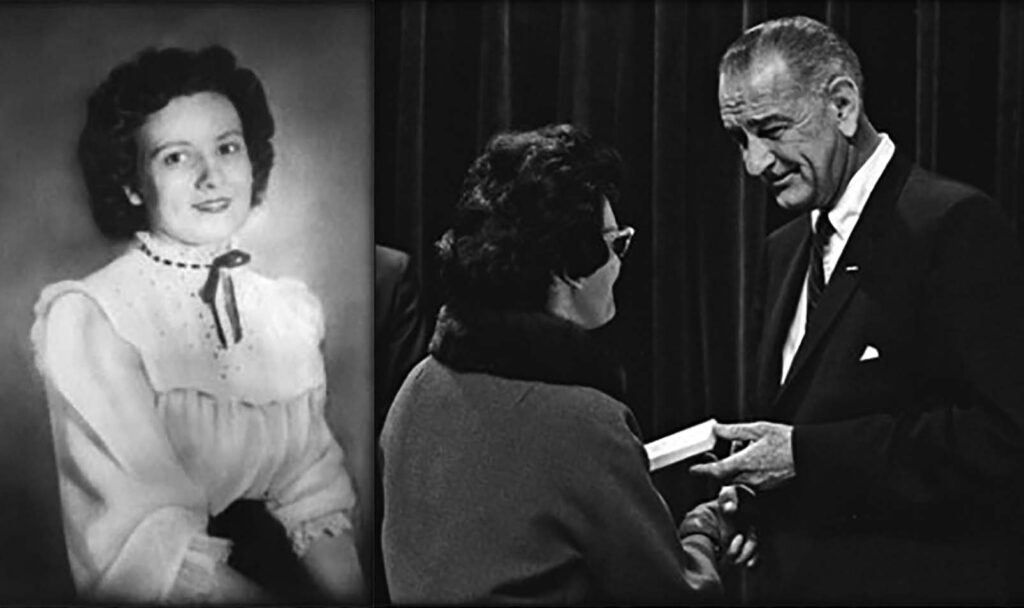
LAURETTE ROLANDE (QUESNEL) COOKE
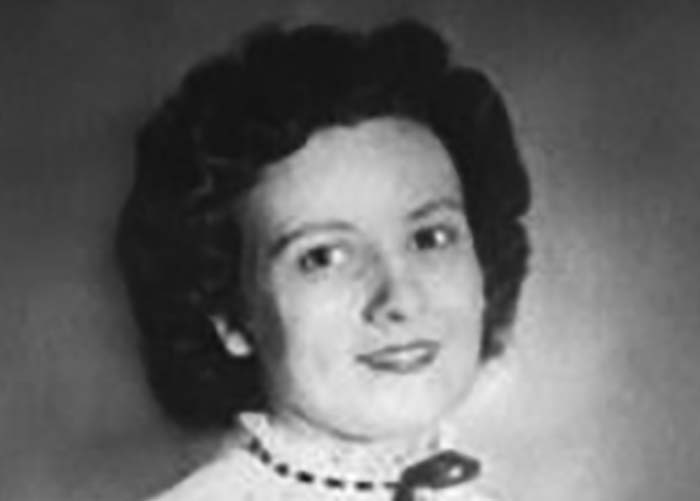
CHARLOTTE, N.C. — Laurette Rolande (Quesnel) Cooke was born Feb. 22, 1921, in Casselman, Russell County, Ontario, Canada. She died on Aug. 19, 2025, in Charlotte, Mechlenburg County, N.C. She was 104 years old. Cause of death: her body could no longer keep up with her spirit.
On Dec. 1, 1925, Laurette Quesnel’s first night in the U.S, she had an experience she never forgot. Dressed in the new clothes her mother made, the four-year-old was under arrest in St. Albans, Vt. While immigrating with her family from Cornwall, Ontario, to join relatives in Whiting, Vt., they were detained by U.S. immigration officials. The problem: whether her uncle could continue with them on their journey. In the morning, Uncle Damase was turned back to Canada because he was over age 16 and could not pass a reading comprehension test, e.g., to read and interpret Proverbs 13:10-13, in French in his case — as required under the recently rewritten U.S. Immigrations Act of 1924.
Though French was her first language, she and her young siblings attended the de facto English-only, one-room public elementary school on Route 7, south of Middlebury, Vt., near her father’s recently purchased dairy farm. She then attended Middlebury High School, to which she often had to walk or hitchhike. Her Franco-American determination to get a high-school education caught the attention of her classmates. They gave her a standing ovation when she received her diploma. Her hope to continue her formal education in fashion design after high school was deferred by her decision to become a mother and homemaker.
Like her mother, Laurette loved to make clothes. As a child, she made doll dresses by sight from pictures in the Sears and Roebuck catalogs. In high school she took home economics courses including dress making and got her picture in the newspaper during statewide clothing competitions. She was so skilled at dress making that her own home economics teacher paid Laurette to make her a rose-colored plain light-wool dress. Later, Laurette’s three daughters could count on a new dress for every occasion. She organized fashion shows as fund raising events for the St. Bernadette Catholic Church in Bridport, Vt. In retirement, the walls of her home in North Carolina were hidden behind her framed needle point pictures. Knitted sweaters were produced in near endless supply. With the help of cataract surgery, she could thread a needle well past age 100.
Laurette was the fourth daughter of David Alfred Quesnel-Fonblanche and Devina Huneault-Deschamps. Her siblings included Jeanne M. Charron, Lucienne M. Mayheu, Simone M. Duclois, Aurele J. Quesnel, Alphonse J. Quesnel, and Yvette E. Paquette. In April 1941 she married Stephen C. Cooke, a 3rd-generation Irish American dairy farmer from Bridport, Vt. The marriage ended in divorce in 1975. During her lifetime, Laurette welcomed her first 41 descendants. She said her highest personal accomplishments were the birth and upbringing of her five children: Gary S. Cooke, DVM; Shelley M. Cooke (Demars), R.N.; Stephen C. Cooke, Jr., Ph.D.; Kathryn A. Cooke (Connor), B.A., C.P.A.; and Ellen-Ann Cooke-Ross, B.A. Subsequently, Laurette was the grandmother to eleven children: Michael, Bryan, Christiana, Erin; Jeffery, Tracy-Ellen; Eli, Brice; Kelly, Kirk; and Natalie-Rose. She was the first great-grandmother to seventeen children: Mathew; Ian, Issac; Nicholas, Adam; Wes, Greer; Kimberly, Thomas; Luke; Korin, Moira; Jordan; Jacob, Emily, Jackson (formerly Megan), and Rachel. Then, she was the 2nd great-grandmother to eight more children: Elias; Samuel; Declan, Ila, Emmet, Wesley; Clayton and Nora.
Laurette herself was the descendant of nine generations of French Canadians from Quebec. For example, Laurette was born three hundred years after her 8th great grandmother Helene Desportes (1620–1675). Helene was the first French child born, baptized, and survived in North America. Helene was also a beneficiary in Samuel de Champlain’s will … because she was his wife’s godchild. Laurette’s other direct ancestors include veterans and survivors of the Iroquois War (1665-1666), the Deerfield Massacre (February 1704), the French and Indian War (1754-1763), and the American Revolution (1775-1783). More recently, Laurette’s Uncle Damase, who was turned back at the U.S. border in 1925, was a Canadian veteran of World War I. Her grandson Major Kirk was awarded The Bronze Star for his heroic service in Afghanistan (2006-2007).
Laurette loved to dance to big band music. To her, a man’s value was a direct function of his ability to dance or play the Swing. She was tough, full of common sense, and able to keep the end in view. She had “la survivance” (survivability). She also had a way of seeing the important within the confusion. For example, she found her marriage challenging. She maintained the relationship until her last child graduated from high school. She saw that compromise as a price she was willing to pay to give her children the opportunities she wanted them to have — a good education.
The civic highlight of Laurette’s life was working primarily with Fr. Benjamin Wysolmerski and U.S. Senator George Aiken to bring clean, abundant, affordable, and reliable drinking water to Bridport, Vt. Together these three different people initiated the Addison, Bridport, and Shoreham Tri-town Water Project. Her 2019 oral history materials on this topic are available at Vermont Folklife in Burlington, Vt. and the Silver Special Collections Library at the University of Vermont. There she explains why and how in 1963 she set in motion the events that resulted in the first joint federal, state, and locally financed rural water district in the nation: Tri-town Water District No. 1.
Highlights within this four-year drinking water project, included trips to Washington, D.C. where Laurette met with Vice President Hubert Humphrey, U.S. Senate Majority Leader Mike Mansfield, received a V.P. lecture on Dolly Madison and ate Senate Bean Soup in the U.S. Senate cafeteria. She was invited by the White House to attend the signing ceremony for the Aiken Rural Water Bill S1766 on Oct. 7, 1965. President Lyndon Johnson gave her one of the pens he used to sign the bill into law.
Laurette was particularly proud of hosting a reception on Jan. 4, 1966, at her home in Bridport, for Senator Aiken, U.S. Secretary of Agriculture Orville Freeman, and Vermont Governor Philip Hoff as well as members of the press, along with two or three dozen lawyers, engineers, clergy, and federal, state, and local officials responsible for making possible each element of the Tri-town Water project. Her life’s work became an interpretation by example of Proverbs 10:10-13, listen to good advice, act wisely, and be disciplined.
When Laurette was tired, she would say: “I’ve had the radish.” She would often end her telephone conversations by saying “Well, I don’t have anything else smart to say, so I guess that’s it!” So goodbye Laurette, thank you, we love you, we’ll miss you, we’ll remember you, go gentle into that good night (Dylan Thomas not withstanding) … so I guess that’s IT.
Now voila. Let the angels in the heavenly host that includes Saints Benny and Gene … Sing, Sing, Sing! SCC, Jr.◊
More News
Obituaries
Daniel Coolidge celebration of life
MONKTON — A celebration of life for Daniel Coolidge, who passed away Oct. 28, 2025, will b … (read more)
Obituaries
Charles A. Bolliger, 92, of Middlebury
CHARLES A. BOLLIGER MIDDLEBURY — Charles A, Bolliger, 92, died at Porter Nursing and Rehab … (read more)
Obituaries
Ralph Hamilton Shepard Jr., 81, of Ferrisburgh
RALPH HAMILTON SHEPARD JR. FERRISBURGH — Ralph Hamilton Shepard Jr. passed away peacefully … (read more)