Out on the roadways of America today, the natural world we see through the windows of our truck is mostly new and unfamiliar. However, much of what humans have wrought is depressingly predictable. National retailers and marketers have worked tirelessly to make shopping and dining experiences consistently identical. Thus, every Budweiser beer tastes the same. Every fast-food meal has identical portion sizes. Even the interior of every mega drug store is laid out in a predictable pattern. This obsession with similarity extends through the walls of retail buildings to the exterior architecture, making pharmaceuticals distinct from groceries which are slightly different from chain discount stores.
While forced familiarity may be good for retailers, we enjoy versions that are more rare and profound. Although not looking to purchase a second home, we certainly cherish the sense of belonging while being away for 3-4 months of the winter. Confirmed Vermonters, our primary residence will remain in Lincoln as long as our lives will allow. Judith’s vegetable gardens and my woodland walking trails have put our fingerprints on family land and are a pleasure to maintain. The central question we both ask ourselves while traveling is, “How long does this place have before it becomes something we don’t care to visit anymore?” While change is happening everywhere all the time, we are clearly drawn to those places that have shown solid endurance and adapt to their current reality with cautious respect for their core values.
The Forgotten Coast of the Florida panhandle is a unique environment that is spectacularly different from our primary address, but it has revealed features that help it feel homey and comforting. It is intensely rural, and during the winter months is almost devoid of competing visitors that can easily overwhelm native culture. The pace of life is relaxed and has left room for curiosity and friendliness to bloom between natives and visitors. It is the right blend of comforting familiarity sprinkled over a landscape that is startling and unique. We spent six weeks enjoying its many gifts while based at the same campsite without feeling any need to move on.
Our last full day in Eastpoint, Fla., was March 7, almost 13 weeks since departing Vermont. We had picked out a new and unexplored path home, running straight north through Alabama, Tennessee and Kentucky, then east through West Virginia and a final northward turn in Maryland to Vermont. This course would lead us through the middle of “tornado alley” for a month-long tour of some of the most beautiful, but tempestuous states in the country.
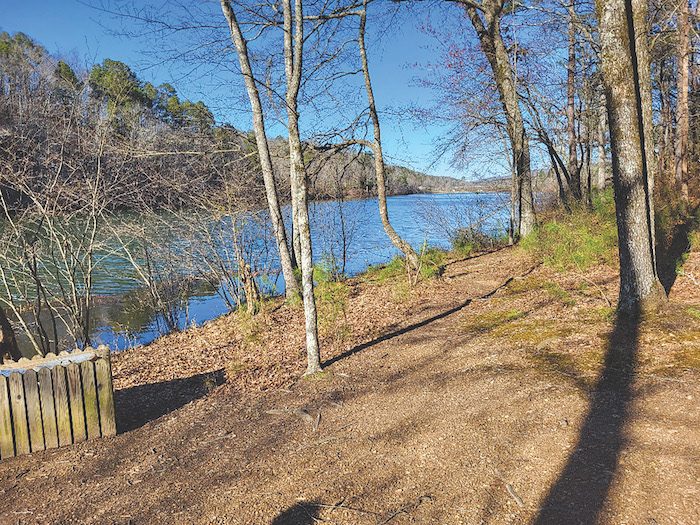
Our four-day leisurely drive through scenic Alabama involved some gentle rainstorms capped by a delightful surprise at a state campground just over 13 miles south and east of Birmingham. Oak Mountain State Park, Alabama’s largest, includes almost 12,000 gorgeous acres of the most diverse recreational activities we have ever encountered, including (brace yourself): dedicated horse riding trail and guest barns, a marina with boat rentals, sandy beaches for swimming on three large lakes, year-round catch and release fishing, a mountaintop rehabilitation preserve for wounded raptors, an 18-hole championship golf course, separate mountain bike trails and 60 miles of clearly marked hiking trails,
Oak Mountain is the first world-class family entertainment resort we have encountered in over 12 years of camping and it’s masquerading as a State Park in one of the least wealthy regions of the country. It stands alone at the top of our list of a camping destination worth visiting again.
Our next reservation was inside the city limits of Nashville, Tenn., buried behind a screen of hair-raising traffic on overburdened roads and near the municipal airport, which did not suggest it would compete well with the silence and beauty we had enjoyed during the previous few days in Alabama. But the campground was a second pleasant surprise. The Elm Hill RV Resort was built over 50 years ago along a narrow peninsula of limestone protecting an extensive municipal marina on an enormous reservoir. Our site was perched on a limestone cliff 40 feet above its surface looking south over three miles of the J. Percy Priest Lake. The second night we were there, we enjoyed a front-row seat for the full lunar eclipse of the “Blood Worm Moon,” quite a show performed over still, reflective waters. That’s when our traveler’s good weather luck ran aground.
The weather forecasts leading up to the Ides of March became increasingly concerned about an outbreak of spring atmospherics that quickly became named “the storm of the decade.” Southerners take these storms as a fact of daily life; we find the capricious violence they inflict terrifying. Rather than waiting to see what tornadoes and hail felt like on an exposed shoreline, we broke camp and fled north for the hills in Kentucky.
The following 48 hours lived up to the alarming predictions. Forty-four people were killed in five different states all around us, but none in Kentucky. For reasons that can only be credited to our weather luck, we had chosen a hilly location where tornadic winds never materialized. However, we were relentlessly lashed with five inches of rain in a two-day stretch that kept the three of us huddled inside our camper. While the tempest was slow to dissipate, our local version of the storm allowed us to push further north on Route 65 to the hamlet of Bardstown, Ken. It was a short trip made longer by a bridge that had been washed out and more shocking by fields full of standing water and debris flows of downed trees and flotsam of every description moving swiftly downstream in every water course we could cross.
Just south of Louisville, this handsome little village (population of 14,000) is home to a high concentration of distillers, both micro and macro. On our first full day in town, Judith sent me off to tour one of the largest for my birthday while she looked after our dog. Heaven Hill is America’s largest family owned and operated distiller. At their newly remodeled welcome center, I paid a $25 fee to join six other curious consumers in a tasting class. Our 76-year-old instructor Allen was a long-term employee of the company and took us through the company history (founded in 1935) and the flavor profiles of four different bourbons and one rye whiskey. For almost two hours, we were taught to drink and breathe properly to appreciate the new flavors and subtleties of a beverage that all seven of us thought we already knew. It was quite an education.
The word bourbon itself comes from the colonial era French for the House of Bourbon (The French King’s royal house). It was a name quickly assigned to the new, corn-based local hooch by colonial consumers in New Orleans as a less expensive alternative to the more traditional cognac imported from Europe. Heaven Hill is a heavy hitter that makes and distributes 500 different products, bottling 50,000 cases of product a day.
Since the post-prohibition American rebirth of legal distilling and marketing, bourbon has been defined by the federal governing bodies of distilled spirits as:
- Produced in the U.S. (which includes the 50 states, D.C. and Puerto Rico)
- Made from a grain mixture (mash bill) that is at least 51% corn
- Aged in new, charred oak barrels.
- Distilled to no more than 160 (U.S.) proof 80% alcohol by volume)
- Barreled for aging at no more than 125 proof (62.5% alcohol by volume)
- Bottled (like other whiskeys) at a minimum 80 proof (40% alcohol by volume)
Coexisting within these strict limits listed is a wide variety of recipes and approaches that have been explored by a myriad of new distillers currently elbowing their way into the consumer’s consciousness.
American federal and state governments have long been attentive to the spirit-distilling markets, especially as a source of “sin taxes”— currently siphoning 60% of the retail cost of spirits in America. The birth of revenuers chasing bootleggers goes well back into our history. Historically, getting between Americans and their favorite recreational inebriant has proven to be risky business. The “Whiskey Rebellion” of 1794 had President George Washington leading 14,000 troops into western Pennsylvania to put down violent resistance to America’s first federal levy. Since then, the U.S. government has interfered often in the production and regulation of strong drink. More than 23,000 Kentuckians make their living in the bourbon industry, and there are many more Americans that cherish what they make.
As we round the far turn and head for the finish line of another winter on the road, we find there are many features of our daily lives to think more deeply about. The landscape in Appalachia is placid and restful to the eye, but the spring weather is capable of inflicting great misery upon its people in abrupt and profound ways. As Howard Baker (Senate Majority Leader from Tennessee, ’81-’85) was fond of saying, “The truth is seldom pure and never simple”.
Steve and Judith Harris met on a construction site in Burlington 38 years ago. They were married in Lincoln, Vt., nine years later and have lived on 15 acres alongside the New Haven River ever since. They are the principals in a two-person consultancy (Harris and Harris Consulting, LLC) that represents owners through the design, permitting, contracting and construction of commercial and municipal projects nationally. When not on job sites, the bulk of their efforts are conducted from their home office or Airstream travel trailer through the evolving technologies (ha ha) associated with remote work. Well into their 70s, their retirement has become a long transition with some lingering professional engagements too much fun to resist. Steve originally wrote these entries on March 4 and 19, 2025. They have been edited and abridged to fit.