MIDDLEBURY — While many area health care providers are bracing for the impacts of looming cuts to the federal Medicaid program, the Counseling Service of Addison County (CSAC) could ironically see its Medicaid reimbursement rise.
The Counseling Service is looking to become a Vermont Certified Community-Based integrated Health Center, or CCBHC.
That’s a community-based mental health and substance-use disorder treatment provider that offers a wide range of services, including 24/7 crisis care, outpatient mental health and substance use disorder treatment, primary care screening and monitoring, and peer support services.
In short, achieving federal CCBHC status would allow CSAC to more accurately reflect and collect — through Medicaid reimbursement — the resources it needs to meet the demand and true cost of providing mental health services in Addison County.
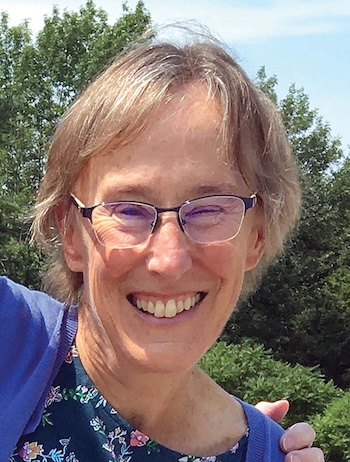
“It turns on its head how we get paid, which is potentially a really good thing,” said Cheryl Huntley, CSAC’s special projects coordinator.
She’s leading the agency through a lengthy CCBHC approval process that only two of the state’s 10 designated mental health agencies have completed thus far: Clara Martin Center in Randolph, and Rutland Mental Health Services.
“Quite frankly, we’re glad we’re not up first,” Huntley said. “There’s a lot of kinks in the system; they’re still working out the payment, still working out some of the details. We’re glad to have the time to engage with the community, to do the needs assessment really thoughtfully, think about potential impacts and where we want to put any additional resources we can obtain through this.”
CCBHCs were created through a national program to improve local mental health and addiction services. The feds in 2024 picked Vermont as an official “CCBHC Demonstration State,” promising extra Medicaid funding to expand mental health services and establish closer working relationships with other health care partners.
Mental health agencies seeking CCBHC status must commit to providing nine core services:
• Crisis mental health services, including mobile crisis teams and emergency stabilization.
• Screening, assessment, and diagnosis of mental health and substance-use conditions.
• Personalized treatment planning, with crisis and risk management.
• Outpatient mental health and substance-use treatment.
• Primary care screenings and monitoring of key health indicators.
• Targeted case management to support client goals.
• Psychiatric rehabilitation to help people live independently.
• Peer support, counseling and family support services.
• Intensive community-based mental health care for active-duty military and veterans.
CSAC already provides many of the services on this list, but the agency has faced major headwinds in meeting consumer demands for a variety of reasons, including limited state funding, a shallow labor pool and a burgeoning number of clients seeking mental health counseling (which became acute during COVID). The agency last year provided 800,578 service hours to Addison County residents of all ages, according to its 2024 annual report.
The Counseling Service, now in its 65th year, had a $29.6 million budget last year, of which 85.59% was derived from Medicaid fees.
As it stands, CSAC and its nine counterparts must haggle with lawmakers and the governor on a yearly allocation for the state’s mental health system.
“You build your staffing based on your financial allocation,” Huntley said.
But the CCBHC system, she noted, “turns (the funding process) upside down; you start with a community needs assessment, and the federal government tells you the set of criteria to meet, and they want you to meet the needs of your community. So, given those two things, they say, ‘Tell us what the staffing levels you need to meet the needs of your community.’ That’s a very different approach.”
Once the community needs assessment is done, CSAC officials will turn that data — along with federal criteria for CCBHCs — into a staffing plan achieve those goals. Those additional expenses will be reflected in a new compensation rate for CSAC services that will need to be absorbed by Medicaid funding, Huntley noted.
“When we provide a service to a client and we bill Medicaid, we’ll get paid a rate that’s reflective of our services — and the assumption behind it is, ‘You meet your goal for the number of services in a year, and you’ll obtain all the money you need to match your budget,’” Huntley said.
TWO NEW SERVICES
The Counseling Service currently doesn’t offer two of the nine mandated CCBHC services, including primary care screenings. This would require CSAC to hire a nurse to screen mental health clients for any physical ailments that might require medical attention.
Also not on CSAC’s current list: Intensive community-based mental health care for active-duty military and veterans. This would set up a new collaboration with area veterans’ organizations.
So how is CSAC proceeding with its quest to become a CCBHC?
It’s poring over the federal criteria and is performing a first-ever community needs assessment that’s included focus groups, individual interviews and surveys. Folks have until July 31 to complete a related community assessment survey, at tinyurl.com/mwzxynvp. Huntley said CSAC will send off its CCBHC application this fall.
“We’re really appreciated the community response,” Huntley said. “People are giving us great feedback.”
It’s clear the Vermont Department of Mental Health (DMS) wants to see all 10 designated mental health agencies achieve CCBHC status. Earlier this year, DMS chose four more agencies to go through the review, including Healthcare and Rehabilitation Services, which serves Windsor and Windham counties; Howard Center in Chittenden County; Northeast Kingdom Human Services for Caledonia, Essex and Orleans counties; and Northwestern Counseling and Support Services, which serves Franklin and Grand Isle counties.
DMS Commissioner Emily Hawes, in a press release announcing those four candidates, said “The CCBHC model is designed to break down barriers to care for Vermonters. Coordinating multiple appointments is one of the biggest hurdles folks face when trying to access care. Bringing services together under one roof, within the community, can truly change lives.”
Now CSAC takes its place in the CCBHC queue. Huntley was unsure exactly when the agency would begin its new CCBHC role.
Huntley cautioned that while CSAC could get improved Medicaid compensation by being a CCBHC, it could have fewer Medicaid patients on its list. The federal budget reconciliation legislation signed by President Donald Trump on July 4 cuts Medicaid by around $1 trillion over the next decade. It does this, in part, by new eligibility requirements.
“If there are federal cuts and fewer people are Medicaid-eligible, that will be different. That’s a variable we don’t have any way to assess at this point. That would affect us whether we become a CCBHC, or not,” Huntley said.
It should also be noted that Vermont must put up a financial match for each newly created mental health position, according to Huntley.
“If every agency requests more (staffing) than Vermont has the capacity to fund, that isn’t going to work,” she said.
Then there’s the question of how to fill newly created positions.
CSAC currently employs around 350 full- and part-time workers. A perusal of the agency’s website on Wednesday revealed 19 job openings, ranging from school-based clinical to executive director. Current Executive Director Rachel Lee has led the agency since 2019.
Addison County’s jobless rate last month was 2.2% — tied for the lowest in the state. Employers are having a tough time attracting workers, given the paucity of affordable housing.
“Are (applicants) out there in Vermont? (CCBHC) isn’t a panacea for how to resolve some of the needs of mental health services in Vermont. But it seems like it offers more funding stability, the potential for some expansion,” Huntley said. “It seems like it will help us move forward as a system. We’re hoping it works.”
John Flowers is at [email protected].