WHAT CROSSES THE GLASS
In Johannesburg, Gift Hlahane has seconds.
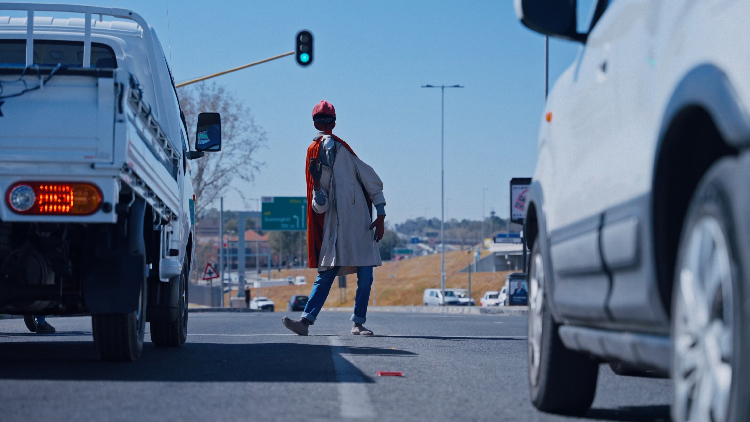
The traffic light turns red. Cars stop around him, and he moves between them, working the gap before the city starts again. In South Africa, we call traffic lights robots. Gift has spent years learning what can happen between their red and green.
A woman catches his attention. Through the glass, he asks where she gets her nails done. She smiles. Then the light changes, and whatever passed between them is carried away with the traffic.
This week, Gift’s story travels thousands of miles from that Johannesburg intersection to Middlebury, Vermont, where “Robots” will have its international premiere at the Middlebury New Filmmakers Festival on Saturday, Aug. 29, at 9 a.m., in Middlebury’s Town Hall Theater.
The film was selected from 566 submissions. Festival producer Lloyd Komesar calls it “a small gem,” a film whose strength rests on the human being at its center. “Gift is a gift,” he tells me.
At first glance, “Robots” appears to be a story deeply specific to Johannesburg. Its rhythms belong to the city: closed car windows, traffic, performers working intersections, the economic distance between the person behind the windshield and the person beside it. Yet the longer I sit with Gift’s story, the less certain I am that geography contains it neatly.
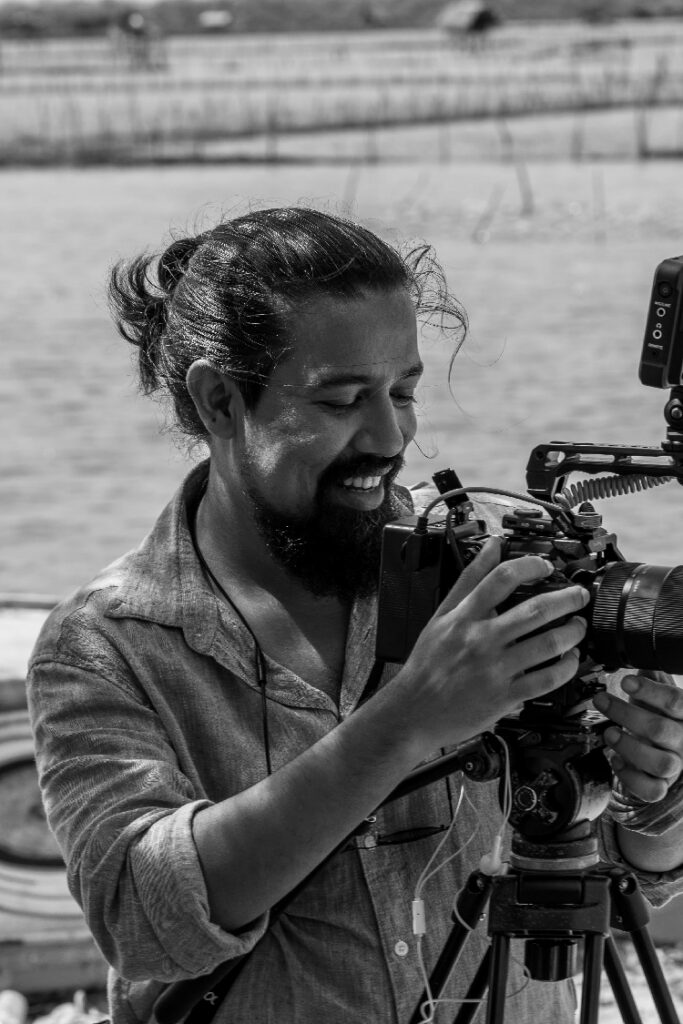
Not long after watching the film, I travel with its Sri Lankan director, Yaseen J. Khan, east of Johannesburg to Daveyton, the township where Gift lives with his family. It is a long drive, enough time for the city to loosen around us and for the questions the film has left with me to settle into conversation. Khan and I talk about what he thought he was filming when he began and about what happens when a camera is pointed at a life already vulnerable to other people’s assumptions. By the time we reach Gift, I am especially interested in what years at Johannesburg’s robots have taught him about the people inside the cars.
“They can understand body language,” he says.
Gift reads eyes and expressions. He knows when someone might respond, when somebody wants him gone, when a person inside a car is carrying something heavier than the traffic around them. Sometimes he sees women crying. He tries to make them smile and asks what happened.
Until then, the windshield had seemed to place the looking in one direction. I looked out. I made my private judgments. I drove on when the robot changed.
Sitting with Gift, I see the glass from the other side. I had thought I was watching him. All along, he had been watching me too.
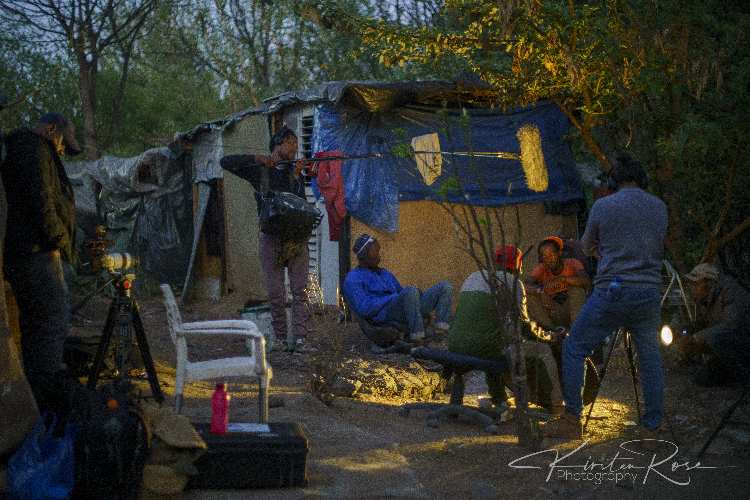
Khan first imagined a documentary about several people performing at Johannesburg’s traffic lights. Gift was simply the first man the team approached. Over more than two years, the story narrowed around him, moving beyond the performer into the life of the father, partner and man behind the act.
The conversation stays with me after we leave Gift. On the drive back across Johannesburg, Khan and I return to what the camera itself brings into an encounter like this. He was determined that the film should not become another story asking an audience to pity someone living with very little.
Now that gaze is about to travel.
Courtesy image
An American audience will encounter Johannesburg through Gift, but they will not arrive empty-handed. Distant places rarely reach us without previous stories attached to them.
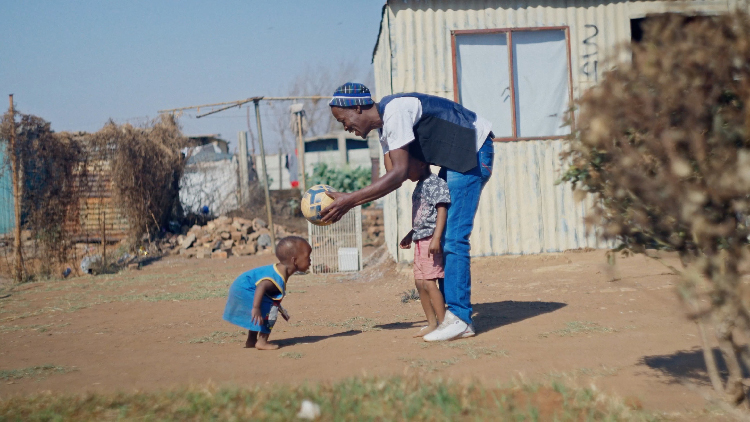
“Robots” enters that inheritance without pretending hardship away. Instead, it allows Gift to remain difficult to reduce. “I’m the happiest man on earth,” he tells me in Daveyton, tracing that happiness back to his children. They are also why he keeps returning to the robots. Some days he earns nothing. The following morning he returns and begins again.
It would be easy to call this resilience and leave it there. The word arrives readily in stories such as Gift’s, admiring enough to feel generous while asking little of the conditions that make such resilience necessary. Khan calls Gift “a reflection of South Africa,” speaking of the hope and determination he sees in him. Yet resilience can become something we admire in people whose lives demand too much of it. Gift’s optimism is real. I have sat opposite him and felt it.
Perhaps universality is not found by making one life resemble another. Perhaps it begins in allowing somebody else’s life to remain particular long enough for something recognizable to emerge.
Komesar believes that is where “Robots” finds its reach. The desire to support a family, he tells me, does not stop at a geographic boundary. Neither does our habit of deciding quickly what another person’s circumstances mean.
Courtesy image
In Johannesburg, that encounter happens across glass. Gift looks into cars while motorists look back at him. In Middlebury, the glass becomes a cinema screen, but the arrangement is not entirely different.
The temptation will be to believe that Gift is the person being revealed. I am no longer sure that is what “Robots” ultimately does.
At the robots, Gift has seconds before the light changes. In Middlebury, he gets 65 minutes. Long enough, perhaps, for the looking to move in both directions.
When I ask what he hopes someone in America might recognize after watching his story, Gift begins with Johannesburg. He wants them to know it is a good city. He hopes they might visit.
Then I ask what he hopes they might recognize about themselves. “You are blessed,” he says. “Don’t forget about those who aren’t.”
MORE ABOUT RYAN ENSLIN
Ryan Enslin is a Johannesburg-based writer, photographer and cultural observer whose work explores travel, art, food, culture and the life of cities. His writing looks beyond the visible subject to the histories, behaviors and social forces shaping how people experience place, with a particular focus on Johannesburg, South Africa and the wider African continent.