“Seriously? You’re kidding, right?”
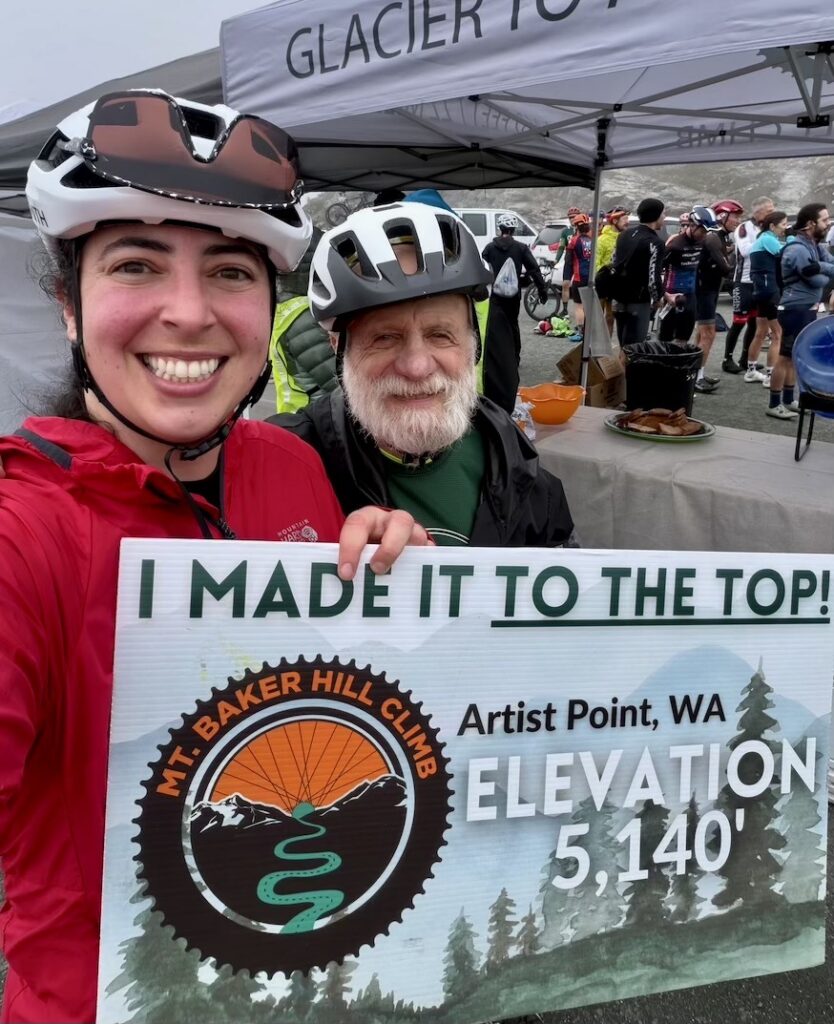
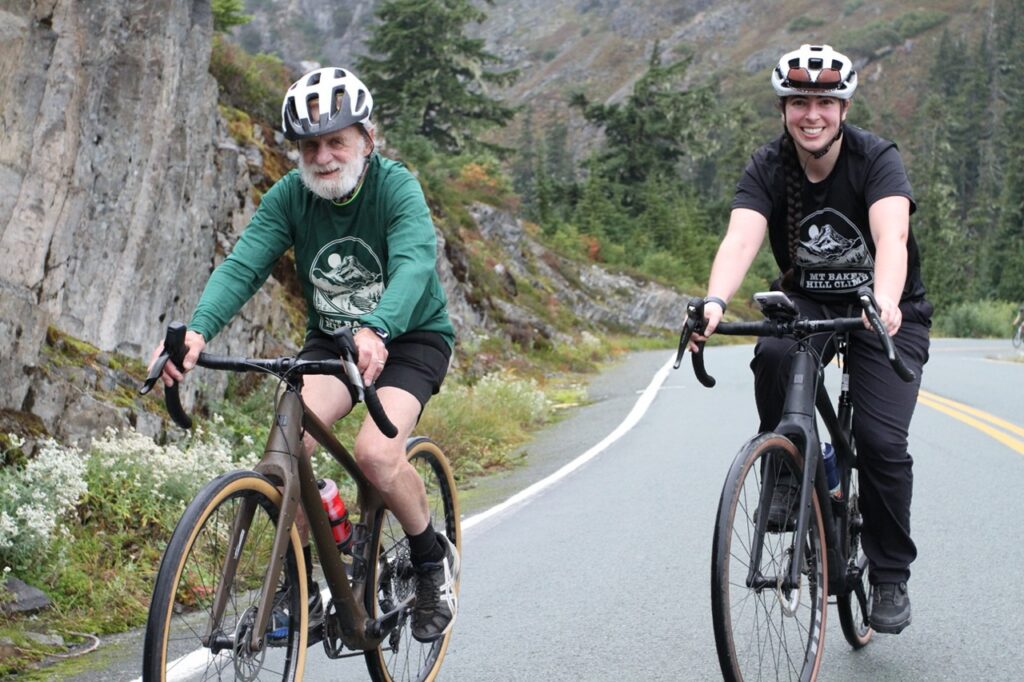
That’s all I could muster when my friend Peter Lebenbaum informed me of his plan to bike up Mt Baker in Washington state on September 13th with his granddaughter Maria Santiago and Seamus Collins, the 60-year-old son of Peter’s wife Marg.
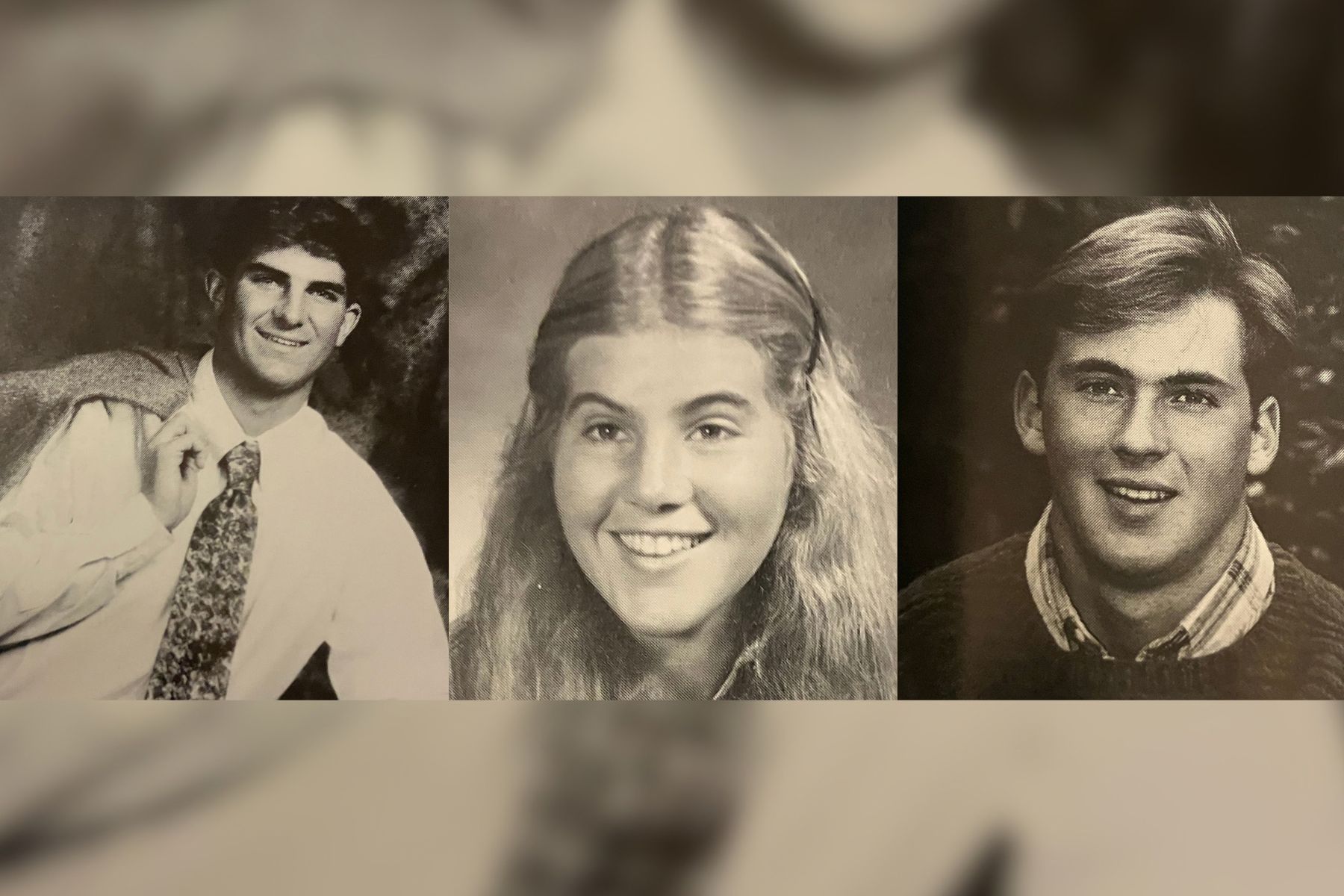
The event was the Mt. Baker Hill Climb. Maria, 37, grew up in Middlebury, attended MUHS, and now lives in Glacier, Wash., at the base of Mt. Baker in the North Cascades.
“Are they trying to kill you?” I asked.
“Actually,” Peter responded, “when she told me she was doing it, again this year, I asked if I could join them. It seemed like a good idea at the time.” This was in late June — Peter, 81, had just a couple months to prepare.
I checked the website for the “Mt. Baker Hill Climb” and my anxiety on his behalf was hardly allayed: “Climb approximately 22 miles and 4,500 feet . . . with steep grades, sweeping switchbacks and incredible mountain views.
“This challenging climb is not for the faint of heart! Experience the agony and the ecstasy!”
Peter Lebenbaum was my college classmate (Middlebury 1967) and has been my friend and fellow townsman for a long time. We meet for breakfast every Friday morning at Shiretown in Middlebury.
I returned to Middlebury to work at the College in 1976. Peter came back in 1980. After earning a Ph.D. at SUNY Buffalo and working there, Peter accepted a position at the Counseling Service of Addison County as a clinician in Youth and Family Services, a program he came in time to direct. He retired from fulltime work in 2012, then worked half-time at CSAC till three years ago (he still checks in to meet with clients and staff, pro bono).
For nine years (1990s), Peter was on the Town of Middlebury selectboard, the last three as its chair. “We got a lot done,” he says of that time. “I liked it. It regenerated in me a sense of the possibility of democracy. We had some difficult decisions to make with the college.”
Peter lives on 10 acres east of town in Middlebury on Munger Street with his wife of 45 years, Marg Collins, a beloved elementary school teacher who taught grades 1-4 for 27 years at Mary Hogan School in Middlebury.
For over four decades, Peter raised sheep, starting with just two lambs. Two years ago in August, he had to sell his flock of 32 after he injured himself in a fall in his cellar, breaking his patella into two pieces that had to be surgically reattached.
Before the surgery, the surgeon, knowing the physical emphasis of Peter’s life, had warned him that it would likely be “life-changing.” Peter acknowledged, “I knew I would not be able to manage the lambing after the accident.”
“But I have healed well. After six months I could hike but not run.”
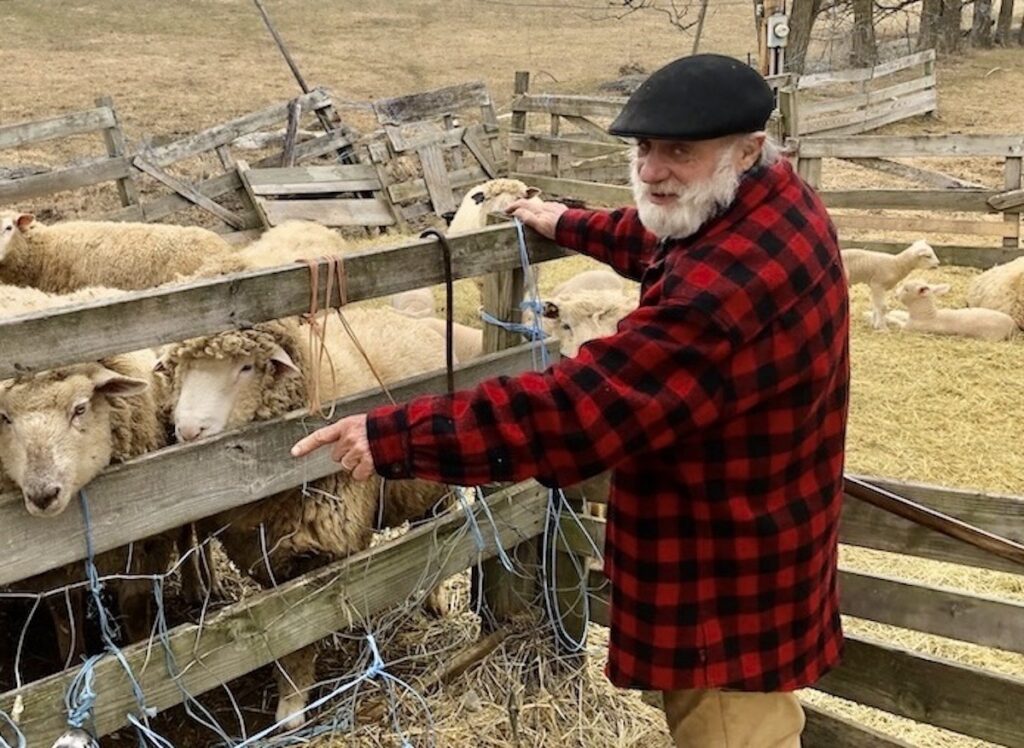
He misses the sheep, “but it was going to happen eventually,” he said. “I missed it especially when I went into the barn and smelled the hay. I miss the connection to the farming community — the vets, the folks who came and did the shearing.”
Peter started training for the Hill Climb in late June. The Middlebury Gap became his Mt. Baker. “At first, I couldn’t get up Sand Hill in East Middlebury on my $100 mountain bike,” Peter said. “Then I would park at the Robert Frost picnic area above Ripton and ride to the top of the Gap and come back.”
His final training rides were from East Middlebury over the Gap to Texas Falls and back. “That was the longest and hardest.”
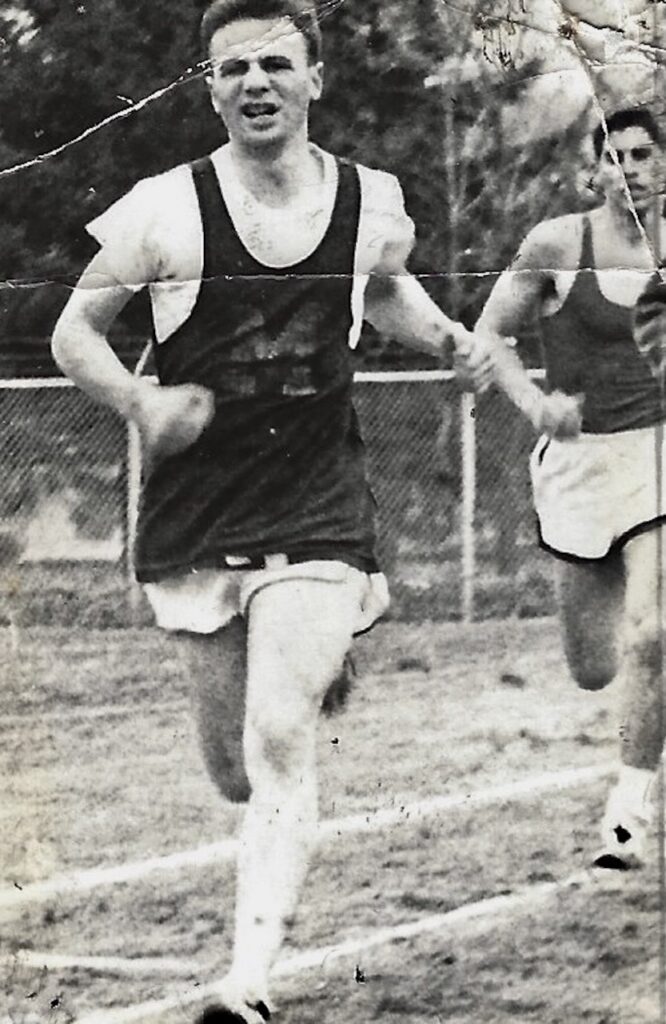
Peter is a life-long athlete. Small, compact and agile, he is built well for endurance challenges and has always remained fit, enjoying the outdoor life, running and hiking, cross-country skiing — and tending those sheep.
Peter was a successful athlete in tennis and track at Garden City (N.Y.) High School (“I won a fair number of races”). He consistently scored points for the Middlebury College track team in the mile and the two mile in the mid-’60s.
After serving in the Peace Corps in Africa (Malawi) and working in Burlington and St. Albans in the Neighborhood Youth Corps, Peter became serious about running marathons in graduate school in Buffalo during the running boom of the 1970s and ’80s.
“I got bitten by the bug,” he says now. “I ran a lot. I made it a big part of my life.
He ran his first marathon in 1976, the Buffalo Marathon (how convenient!), on a unique course that started in Buffalo and ended in Canada after crossing the Peace Bridge. For a first marathon, his time was astonishing, 2:36 (two hours and 36 minutes), an elite time. He finished 16th in a field of 1,800.
Peter ran the Boston Marathon twice, running a 2:31 in 1978, finishing 181st (of 5,000 runners). He also ran New York twice, once finishing 137th in a field of 11,000 entrants with a time of 2:37. His best time was in the New Orleans Marathon (1980), breaking an hour and 30 minutes at 2:29.52.
“I was insane, running 60-90 miles a week, writing my dissertation, working with kids at the Buffalo Children’s Hospital.” His weeks were punctuated by 20-mile runs in a park near his home on the weekend.
In a 10-to-12-year period, Peter competed in 14 marathons. Here in Vermont, Peter ran in the Burlington Marathon twice, finishing seventh in one race and winning his age group in the other.
So Peter was no stranger to endurance tests before the challenge of the Mt. Baker Hill Climb this year. But that was then — he’s 81 now! As it turns out, he was the oldest of 400 participants.
“It was going to be a three-generational ride, Maria, Seamus, and me,” Peter said, “and we were committed to finishing together. We didn’t see it as a competitive event. It was the first time I was not concerned about performance, my place or time. There was a certain freedom about that.”
“I was nervous the day before, worried maybe the old man couldn’t do it,” Peter said. “But I wasn’t worried at all the day of the climb, there with Maria and Seamus.” He was further reassured when he saw the bike Maria had rented for him: “incredibly light, carbon, with ‘Granny’ gears.”
Just before the start, Seamus blew out a tire and couldn’t start with Peter and Maria. They considered not going off at all but Seamus would hear none of it — and, the tire repaired, he was able to start an hour after they did.
The first 10 miles were not terribly difficult and Peter and Maria had “some great conversations.” Not so, the last 12 miles which had lots of switchbacks and elevation.
Peter would whisper to himself and then encourage Maria by saying “On Beyond Zebra,” a mantra Peter adopted running marathons from a Dr. Suess title, that came to mean to him, going beyond Z, the last letter, beyond discomfort, beyond exhaustion, to the finish.
Maria and Peter finished in three hours and 40 minutes with no stop other than at one water station. Seamus joined them shortly thereafter at the top and they celebrated. “I was elated!” Peter said. “We hugged each other. It was wonderful. I was very stiff, not sure I could get off my bike.”
Peter emailed me after we spoke and reflected on the experience. “I realized again the allure of the training routine. Considering the obligations of daily life it can seem so self-centered.
“It was perhaps justified this time because it was to participate in an event with family I love, rather than for another PR. And still, I felt the rewards of completing a daily training routine amid the uncertainty, the suspense of the outcome.”
They are already planning for next year’s climb.
Karl Lindholm, Ph.D., is the emeritus dean of advising, assistant professor of American studies (retired) at Middlebury College. He can be contacted at [email protected].